Audiobook Review: 11/22/63, by Stephen King

It took me nearly a month to listen to all 30+ hours of Stephen King's latest novel, 11/22/63, but I firmly believe that every single minute of this epic novel was worth it. King has masterfully recreated the "the Land of Ago," as our narrator, a schoolteacher in Maine named Jake Epping, fondly refers to it. Epping's first-person narration is captured on the audio version of this title by the impeccable Craig Wasson, whose skillful narration is steady throughout the text, though charged with emotion as appropriate. And it is often appropriate.

See, it all starts like this: Jake goes to his Al's Diner to celebrate the end of a school year, and one thing leads to another, and just like that, poof!, Al has lung cancer and his dying wish is that Jake go back in time to 1958 to stop the assassination of JFK. Sounds impossible, but a handy little rabbit hole that links modern times to September of 1958 makes it all possible.

And so, not to spoil anything, because it's pretty obvious, Jake goes. He tinkers, he tampers, he checks back on 2011 to see how his changes are holding up in the future. Or the present. Whatever it is. And he sets off to do just what Al asked him to: prevent the assassination of JFK on that fateful date, 11/22/63, in Dealey Plaza.

Jake lives in the Land of Ago for five years -- between the rabbit hole entrance of 1958 and that memorable date in 1963 -- and he has, to put it mildly, time to kill. This life he leads becomes as much the story of 11/22/63 as the mission to save Kennedy, as Jake finds himself pulled further and further into the obdurate past.

King explores the once-upon-a-time land of mid-century America in full detail, recounting a time in which the root beer is rootier, the milk is creamier, the people are more trusting, and the gender norms are vastly different. But 11/22/63 is about more than the past, encompassing territories that cannot be defined by any one time period: love, and loss, and fear, and knowledge, and community.

Given, too, that this is a novel of time travel, both King and Jake struggle with the implications of time travel, of how the past influences the future, how delicately the future is woven, and how important even the smallest of actions may be. These concepts, though not groundbreaking, are thought-provoking; if the butterfly effect is as real as we can imagine, 11/22/63 forces us to consider, what am I influencing right now by doing exactly what I am doing? Is there an alternate version of this reality in which I made different choices? Or took a fateful step one fateful second later, and changed the course of history?

I could go on and on about the subjects King explores here, but I won't, because unlike King, I lack the ability to ramble on in detailed sidepaths without losing my readers. And that's assuming you've even made it this far. So I'll sum up: King, in short, is a master of his craft. 11/22/63 is long, but never lengthy, detailed, but never tedious. Subplots and side stories abound, but each one is relevant in its own way.

King's clever use of foreshadowing throughout all the twists and turns of this complex story make him one sneaky bastard in my book, but this trick is successful in keeping the pages turning: each hint of what is to come, each delicate implication of how things might net out sent my heart a-palpitatin'. Maybe that's something King is known for; as this is my first King novel, I wouldn't know. But I do know that despite the 30+ hours (or 900+ pages, for those reading in print), I was sad to hear (or see, as the case may be) this one end, and I'll certainly be looking out for more King in the future.

---

Thanks to Simon & Schuster Audio for providing a copy of this title for my review, which, by the way, includes King himself reading the afterword.

---

Thoughts from other bookworms:
January Magazine
Jenn's Bookshelves
The Book Case

---

11/22/63 | Stephen King, nar. Craig Wasson | Simon & Schuster Audio| 9781442344280 | $75.00 Audio CD | 30 CDs, 31 hrs | November 2011 | Buy from an independent bookstore near you
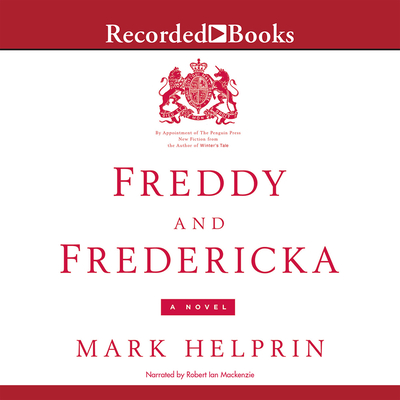
Audiobook Review: Freddy & Fredericka, by Mark Helprin

Ask me what my favorite book is, and I will attempt to avoid the question. Press me, and I will most likely answer One Hundred Years of Solitude or Winter's Tale, depending on my mood. The latter, considered by many to be a modern classic, was the sophomore novel of Mark Helprin, written in 1983. I've read it twice. It's fantastic. It's one of those books I could not begin to review, because all that would follow would be gushing, gushing, gushing. If you disagree, go away.

Given my love for Helprin's most famous novel, I've recently attempted to explore some of his others. Freddy and Fredericka was a re-read for me, but as it is the most recent of his novels (originally published in 2005), I decided to return to it on audio this summer.

Let me just start with this: I. Love. This. Book. I love Mark Helprin. I love his writing, his wit, his genius at crafting a sentence, a paragraph, a novel. And that's all an understatement.

Here, Helprin tells the tale of the Prince and Princess of Wales, sent to the United States to reclaim it as a territory of Britain in order to prove their worth for the throne. There's a lot more to it than that, but summed up in one sentence, there's the plot.

Along the way, of course, they learn a lot: about themselves, about life outside of royalty, about life and living in general. Their naivety becomes a cloak that they wear with pride, and as they gradually learn to live without the cloak, they begin to truly understand the meaning of life.
  

A careful balance of magical realism and an incredible sense of humor prevents Helprin's work from becoming too transparent in its mission to educate, and though the story can be uneven at times, the characters are a delight to come to know, and Helprin's sneaky sense of humor has a way of sneaking in to save the day.

With Freddy and Fredericka, Helprin has crafted a collection of sentences, stories and ideas and drawn together into one absurd but cohesive plot structure, all perfectly narrated by Ian MacKenzie, whose charming British accent is the icing on this novel's swoon-worthy cake. And as a particular bonus, the conversation between Freddy and his charmingly ditzy wife often capitalizes on word play and misunderstanding, making the audio even more laugh-inducing than the print.

Though not as good as Winter's Tale (and really, nothing ever will be), fans of Helprin, well-crafted sentences, and delightfully absurd stories will enjoy this foray into British-cum-American culture.

---

Thoughts from other bookworms:
The Captive Reader
Red Hot Eyebrows
January Magazine

---

You may also like:
Winter's Tale by Mark Helprin (bet you didn't see that one coming, didja!?)
An Uncommon Reader by Alan Bennet

---

Note: Many thanks to the AACPL for having an audio copy of this for my listening pleasure, especially since good friend JMOW has permanently borrowed my paper copy of this book, with all its precious underlines.

---

Freddy & Fredericka | Mark Helprin, nar. Ian MacKenzie | Recorded Books  | 9781419335914 | $49.99 CD | 25 hrs, 35 min | July 2005 | Buy from an independent bookstore near you

2011 in Review: Books I Wish I'd Read

Last week, I posted my favorite 2011 reads (of books published in 2011). This week, I'm still working on some older titles that I've been eying for far too long (American Gods, I'm talking about you), but I'm close enough to the end of the year to catalog those precious 2011 releases that I wish I'd read... but haven't. Yet. Consider this a rough guideline of must-reads for 2012. Of course, that doesn't include all the backlist titles I want to read, the classics, and the assigned books that I will review for Shelf Awareness. But it's a start:


Hemingway's Boat, by Paul Hendrickson: One of the goals on my 26 by 26 list is to read everything that Hemingway has ever written. I'm beginning to sense that I might fail in that regard (he's written a lot of books, and I have less than 2 years on this clock), but I'm still hoping to read this recent biography.

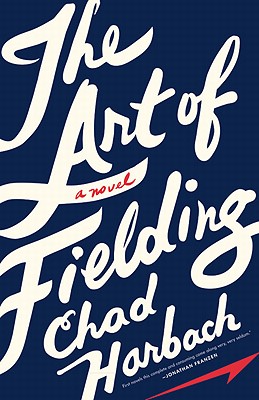
The Art of Fielding, by Chad Harbach: I've heard from every corner of the blogosphere that this book is amazing. Greg at New Dork Review of Books loved it, and cheered when Rachel at a home between pages read it. Brenna at Literary Musings raved, and Michael listed it as one of his best of 2011 on the year-end podcast for Books on the Nightstand. I have a copy on my shelf. How have I not read this yet!?

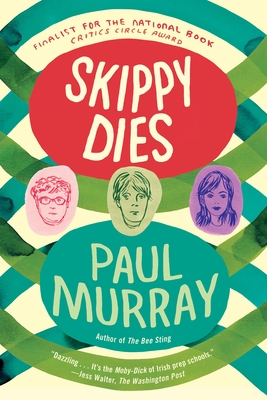
Skippy Dies, by Paul Murray: This is a bit of a cop-out, as Skippy Dies technically came out in 2010. But the paperback released in 2011, so I'm counting it. I've had my eye on this for two years now. Come on, self. Get on it.

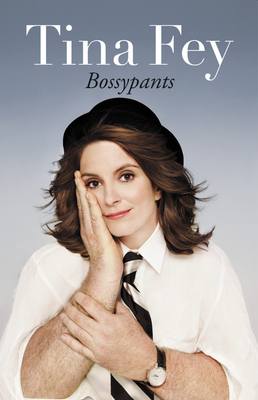
Bossypants, by Tina Fey: I've heard that the only way to read this one is to listen to the audio. That way I can laugh while driving to work, and hope that I can still see the road ahead of me as I do so.

 ---
There are lots, lots more that I could add to this list, but at least it's a start. What were your favorites of 2011 that I haven't read? And what 2011 reads are you wishing you'd had time for this year?


Merry Christmas!

For my family, Christmas begins today with a feast of seven fishes, in the Italian tradition. I should warn everyone to stay far away for the next day or two - we've already peeled & chopped 100+ cloves of garlic in preparation, so we'll be stinking up Maryland until we get that out of our systems.

I'll be offline this weekend, for the most part, but wanted to leave you all with a little taste of Christmas humor from the other side of my family -- my very, very talented sister-in-law singing a very, very hysterical Christmas tune. And I don't just say that because we're related. Trust me, you'll be laughing out loud:


MERRY CHRISTMAS!

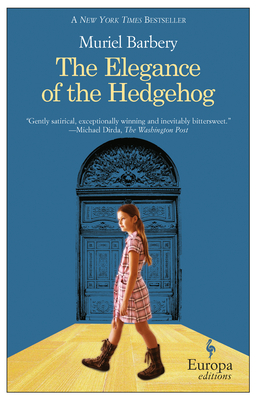
Book Review: The Elegance of the Hedgehog, by Muriel Barbery

There are certain books that require a slow reading, that cry out to be savored, to be loved, to be underlined. These are the kinds of books that prove the most difficult test of self-control: one part of our readerly brains cries out to go faster, yearning for more, because it is just so damn good, while the other part, the rational part, the conservative part, tells you to slow down, to appreciate, to take your time. Because once it's over, it's over. And once you know the ending, no re-read will ever be the same.

The Elegance of the Hedgehog is exactly that book. This is one that has sat on my shelf for nearly two years, after good friend and fellow blogger Emily sent me a copy as a birthday gift. And I'll admit, rather sheepishly, that I started the book on more than one occasion. I could tell immediately that it was the kind of book I would love, that I would lose myself in, that I would long to devour. And so I did not read it, because the timing was not right, and because it needed to be perfect.

When I finally sat down to open the first chapter for the tenth or eleventh time, it clicked. There it was, a full 325 pages of reading bliss that lay before me. It took me two days to read, and that was forcing myself to slow down.

What Muriel Barbery has presented with The Elegance of the Hedgehog, translated from the French by Alison Anderson, is a rich, complex story of two seemingly unrelated women: Renee, a concierge in an upscale apartment building, who cradles her secret intellectual life in quiet, and Paloma,  a precocious, eminently unlikable 12-year-old who is preparing to kill herself in order to avoid the tedium of adulthood. She argues, "“People aim for the stars, and they end up like goldfish in a bowl. I wonder if it wouldn't be simpler just to teach children right from the start that life is absurd.”

As their stories come together, as stories inevitably do, Paloma muses that Renee “has the elegance of a hedgehog: on the outside, she’s covered in quills, a real fortress, but my gut feeling is that on the inside, she has the same simple refinement as the hedgehog: a deceptively indolent little creature, fiercely solitary – and terribly elegant.”

Both characters, though not particularly likeable at first, are rich and extraordinary, and their disjointed stories are captivating and moving. With these two women, varied in everything from upbringing to age, Barbery forces readers to question what it is that lies beneath our assumptions of class, of intellect, of knowledge, and of love.

The Elegance of the Hedgehog is a book of slow-moving parts, of philosophical musings, of tangents and asides, and given its construction (alternating first-person narrative and journal entries), it is susceptible to lengthy monologues. But these are no a detraction or distraction; instead, they are some of the best parts. The slow pace and bittersweet nature of the story itself don't make for entirely uplifting reading, but the story itself is both hopeful and fulfilling. Just be sure to read with pen in hand, because there are innumerable passages here you'll want to remember.

“I thought: pity the poor in spirit who know neither the enchantment nor the beauty of language.”

---

Thoughts from other bookworms:

The Boston Bibliophile
A Book Blog. Period.
The Novel Word
Man of la Book
Vulpes Libris

---

You might also like:
Enough About Love by Henre le Tellier
13, Rue Therese by Elena Shapiro

---


The Elegance of the Hedgehog | Muriel Barbery, trans. Alison Anderson | Europa Editions  | 9781933372600 | $15.00 Trade Paper | 325 pages | September 2008 (orig. published 2006) | Buy from an independent bookstore near you

Book Review: The Man Who Invented Christmas, by Les Standiford

Last December, I sat down and read A Christmas Carol.  For the first time. Throughout the reading, I found myself musing on the familiarity of the text, the love I felt for Dickens' words before ever having read them, my new appreciation for the myriad film adaptations*. This year, I continued my newly-founded holiday tradition, and once again broke out my gorgeous edition of A Christmas Carol, a beautiful red leather-bound edition with gold-edged pages, and paper as smooth as velvet (which is sadly out of print).

Given my long-lasting and yet new love for Dickens' text, it seemed only natural that this December, I would turn my attention to the story behind the story, found in Les Standiford's slim history, The Man Who Invented Christmas, aptly subtitled How Charles Dickens's A Christmas Carol Rescued His Career and Revived Our Holiday Spirits.

What Standiford has done--and done quite well, I might add--is provide a history of Dickens' most beloved work within the context of his life as an author. Starting with Dickens' troubled childhood, and moving into his struggling career as an author, Standiford leaves no stone unturned in seeking motivations for Dickens' writing of A Christmas Carol. And once we've learned of its publishing, fans of the Victorian novelist are treated to insight into Dickens' pride over his work, his struggles to maintain its copyright, and its long-lasting impact on the Western world and our holiday traditions.

All of Dickens' feelings about iniquity, injustice, poverty, charity and a need for a shared sense of responsibility for those less fortunate than ourselves have flooded into A Christmas Carol, a book that Standiford maintains transformed a little-celebrated Christmas holiday into the full-fledged giving-fest that it is today. And as times today get tougher and tougher, and streets of occupiers cry for change, Dickens' messages of charity and goodwill become even more meaningful and important.

The Man Who Invented Christmas is one of the more successful literary histories I've read, though I cannot claim to have read many. The work is eminently readable and likeable, fact-filled but never dry; Standiford has a knack for color that many historians and biographers seem to lack, perfectly placing his quotes, trivia facts, and anecdotes in a way that keeps the story engaging. And its short length--just 220 or so pages--make it easy to fit in during the holiday season, even coupled with a re-read (or first read, as the case may be) of A Christmas Carol. Plus, now that I've re-read Dickens' original work and read The Man Who Invented Christmas, I figure I'm a pro at Dickens' Christmas writings,** and can flounce off to any literary party and show off with my new-found literary trivia tidbits.***

---

* I said it last year, and I'll say it again: the George C. Scott version of the movie is hands-down the best version ever made. Although lately The Muppet Christmas Carol has started making an appearance in this house as well.

**Not true, actually. Included in my lovely, out-of-print, gushworthy edition of A Christmas Carol are Dickens' two subsequent Christmas novels (he originally aimed to publish one each year): The Chimes and The Cricket on the Hearth. While I've read these two, I have yet to read The Battle of Life or The Haunted Man.

*** Did you know, for example, that Dickens essentially self-published A Christmas Carol? Or that one of Mark Twain's first dates with his eventual wife was to a Dickens reading in the United States? See? Literary trivia tidbits abound. 

---

Thoughts from other bookworms:

Season's Readings
Books on the Nightstand
The LA Times Book Review

---

The Man Who Invented Christmas | Les Standiford | Crown Publishers  | 9780307405784 | $19.95 Hardcover | 241 pages | November 2008 | Buy from an independent bookstore near you
Bookish Gift Bows

Just in time for the holidays! Because we all know that no matter how early we finish our shopping (or how late we start it), there's always the wrapping to follow. Modified from original instructions in Playing With Books, I've been trying my hand at some handmade bows made out of book pages:


Let me begin by saying this: I am not a particularly crafty person. I do not have a lot of patience for small, difficult things. Like knitting. I hate knitting. And anything that involves threading a needle. I like shortcuts. I like crafts that involve minimal steps, minimal supplies, minimal tools. If I can do this, you can do this.

To start, you'll need:

- Tape (preferably double-sided tape, but you can use single sided if that's what you have on hand. I did, and it worked fine. Just be prepared to roll lots of little tape circles so you can mimic double-sided tape.)
- Scissors
- A book you are willing to cut up (this is the hardest part, I promise).

Step 0: Take a deep breath. You are about to cut pages out of a book. My only recommendation for making this easier is to go to your local library and buy a book out front that you intend to cut up, which prevents forming any attachment to it. I chose The Naming of Names, a book about the history of plant names, because it had nice typesetting and a luscious, creamy paper stock, and is a subject about which I have zero interest. So.

Step 1: Cut 9-12 strips of book pages, approximately 3/4 in x 7-9 inches (you can be flexible in the size of your strips, but you'll definitely want them all to be consistent). If you cut longer strips, you'll most likely need more strips to fill in the bow. Longer strips = taller bow. Shorter strips = less required, but smaller final product.

Step 2: Place a small piece of double-sided sticky tape (or a small circle of single-sided sticky tape) in the center of the strip. Fold one end down, and twist end 180 degrees before affixing to the tape. Think of the twist in the Breast Cancer Awareness ribbons. Do that. Make sure that when you do this, you don't cover up all of the tape, as you need some to stick down the other end, too.


Step 3: Do the same thing on the other side. Note: If you don't think in 3 dimensions, as I don't, you might have to twist it a few different ways to figure out how to get the ends to align in the middle like this. You're not alone.

Step 4: Repeat step 3 over and over and over again.

Step 5: Place a small square of tape in the center of one of the loops, and place another inside it perpendicular to the first one. Place another piece of tape inside this next one, and keep layering loops on top of each other, varying the angle of the strips. They'll naturally push themselves up into a bow shape as you get taller and taller.


Presto digito! You have a book bow. Happy Wrapping!


---

As an aside, I'm counting this as one of my 100 lovely things on my 26 by 26 list. 

Playing with Books: The Art of Upcycling, Reconstructing and Reimagining Books | Jason Thompson | Quarry Books | 9781592536009 | $24.99 Paperback |152 pages | April 2010 | Buy from an independent bookstore near you