Showing posts with label re-reads. Show all posts

Re-reading as Foundation

It's been a whirlwind couple of weeks for this particular bookworm: I didn't spend a single weekend at home during the month of May, travelling for work and for family, and then I ventured to New York for a hectic, chaotic, wonderful trip to Book Expo. On returning from that trip, I gave my current employer two weeks' notice; this coming Friday will be my last day in advertising, followed by several weeks of funemployment and a new gig in the non-profit space. And a lot of travel mixed in with the rest of it.

This weekend provided an unexpected lull in the adventures of the last several weeks. I sat down to read yesterday and looked up to realize four hours had passed and it was well past my (and the dog's) dinnertime. I caught the newest episode of Orphan Black. I went to bed at 10 and slept for 11 hours. I'm sitting outside now, enjoying coffee, mangoes, and Tiny Beautiful Things, which I've been re-reading at random this week to give myself some kind of foundation as so many things I thought I had on lock-down shift around me. The shifting is that of my own creation, of course, which makes it wonderful; unlike some of those seeking Sugar's help, I did not lose a child or a parent, I do not have a life-threatening disease, I am not living without knowing where my next meal will come from.

But the beauty of Sugar's advice, as anyone who has read this book will know, is that it is so much larger than the subject matter at hand. In "A Shimmering Slice of Your Mysterious Destiny," Sugar talks someone through the pain and difficulty and sheer mass of detail involved in planning a wedding:
"We all get lost in the minutiae, but don't lose this day. Make a list of everything that needs to be seen to and decided and worried about between now and your wedding day and then circle the things that matter most to you and do them right. Delegate or decide on the other stuff and refuse to worry anymore."
Underneath this passage, I wrote:
"This is so applicable to so much more than weddings. This is all of life."
In "We Are Here to Build the House," a young woman writes to Sugar that she is broke, unemployed, and considering entering into an "arrangement" with a man to "rendezvous" once or twice a week in exchange for an allowance of $1,000/month. Sugar writes,
"It made me think about what's at stake when we ponder a gig. About what work means. About the fine balance of money and reason and instinct and the ideas we have about ourselves when we imagine we can be "meta" about our bodies and lives and the ways we spend our days. About what's at work when we attempt to talk ourselves into things we don't want to do and out of things we do. When we think a payoff comes from being paid and a price exacted from doing things for free. About what morality is. And who gets to say. What relation it has to making money. And what relation it has to desperation."
I am not desperate. I am not considering a form of prostitution, as the young letter writer was. I am not on the brink of poverty. I am not even unemployed. But Sugar's words on work and the power that work and our need to make money in life can have over how we spend our time and what decisions we make? Those words are meaningful to anyone who has ever put life on hold, even in some small, insignificant way, because work got in the way.

My copy of Tiny Beautiful Things still smells like the glue they use to bind trade paperbacks, and the spine has not yet broken. There are only a handful of dog-eared pages thus far, and a few dozen underlines through the entire book. But as I take this risk, and decide that I will move from the secure, comfortable world I have built so far and into something that carries more risk and promises a lower salary, but that offers the possibility of more reward, something tells me that this red cover will grace my nightstand more than it even did previously, that the pages will wear, that more underlines will appear.
"What's important is that you make the leap. Jump high and hard with intention and heart. Pay no mind to the vision the commission made up. It's up to you to make your life. Take what you have and stack it up like a tower of teetering blocks. Build your dream around that."
Or, put more succintly:
"The fuck is your life. Answer it."

Do you have a book you turn to over and over when things start changing? Or, more selfishly, I wonder if there are other books I should be picking up over the next few weeks of funemployment?

If I Don't Read It, It Can't End: Saying Goodbye to the Wheel of Time

In all my years of reading, I never thought it would come to this: I've encountered a series so important to me, such a pivotal part of so much of my reading life, that I can't bring myself to read it through to the end.

Let me rewind:

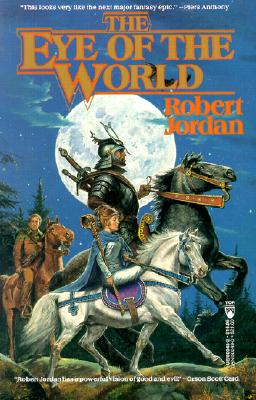
My father gave me a copy of the first book in Robert Jordan's Wheel of Time series, The Eye of the World, when I was 11, eager for more fantasy novels after discovering the joy that was Redwall. I read the first few volumes of the Wheel of Time that year, before getting distracted by other, less daunting novels--but the books stayed with me for years.


Nearly a decade later, I studied abroad for a semester in Paris, living for the first time in my whole life without a television and with limited internet connectivity. Out came the Wheel of Time books for hours of affordable entertainment. I re-read the first on the flight across the Atlantic, the second a few weeks later, and scrambled to find the third at Shakespeare and Co or other English-speaking bookstores (I later gave up and just had my parents ship me copies from home). I finished the series--all 9,300 pages that were written at the time--in just under six months that semester.

In 2007, my father and I jointly mourned the death of Robert Jordan, and fretted over the direction of the series. We had 11 books of the promised dozen. Later that year, Tor announced that Brandon Sanderson would be completing the series, writing the twelfth and final book in three volumes. He would be working closely with Harriet McDougal, Jordan's wife and long-time editor of the series, they said. He would be working from Jordan's notes, they wrote.


In 2009, I started the series again from the beginning to prepare for the release of Sanderson's first volume of continuation, The Gathering Storm. It was one of the first reading projects I undertook after graduating from undergrad (free reading time, ya'll!). I read past my subway stop on more than one occasion. I read while I walked to work. I once ran face-first into someone on the subway stairs because I was trying to read while exiting the station during rush hour. Imagine my surprise when I looked up from book eight or nine or ten or thereabouts to find a baffled guy standing in front of me, holding his place in the first book. How I envied that he got to meet these characters for the first time that year.

I read the second volume of the promised 12th book, The Towers of Midnight, in two days. It was the first--and only--time I'd ever taken a sick day in order to keep reading (I was already going to be late to work that day, having stayed up until 3AM the day I bought the book to read it).

By all intents and purpose, I should have finished the 3rd volume in the 12th book--and true final volume in the series--in January 2013, when it was released. I bought it the day it came out, but much to his--and my--surprise, I let my husband take the first read (he's also a fan). And then when he finished it, I let other books and other projects come first, until three months had passed.

In March of that year, we went to a signing to hear Brandon and Harriet speak about the process of completing the series. I stood in line for upwards of three hours to meet these two authors who had meant so much to me in so many different places in my life. I read the first few hundred pages in line that night (I really wasn't exaggerating when I said I stood in line for hours), and promptly set the book down again when I got home.

Now it is practically March of 2014, and I'm still no further than I was a year ago. What is it about this book? These are the characters I know I love; the stories I want to see resolved; the battles that have been building for over 10,000 pages. But no matter what I do, or how much I enjoy the opening chapters (which I have now read three times), I can't keep reading. Of the 909 pages in this final volume, I have read 459 of them. I've read them more slowly than I've ever read a WoT book in the past; my burning desire to know what happens is wildly tempered by my even stronger desire not to say goodbye.

I've always been a believer in re-reading; my re-reads of this series alone are evidence of that. But once I know the end, really know the end, will I ever read the rest with the same gusto with which I first approached new volumes? Was re-reading Harry Potter really ever the same after reading that awful epilogue? Is it possible to find the same romance on the pages of Gone with the Wind once you know how Scarlet's battles will end?

This time, I will keep reading--slowly, I'm sure, but I will finish it. I will find out what becomes of Rand, and Min, and Aviendha, of the Aiel, and the Ogiers, and the Seanchan. I will learn the fate of the White Tower, and the Black Tower. The Dragon may or may not be reborn. I will finally turn the 11,916th page of the series that has meant more to me than I could possibly put in one rambling, somewhat-incohesive post.

And then? Then I'll start at the beginning and work my way back through all 14 books again. And again. And again.

Pride and Prejudice: That Book Everyone Else Loves

Mug: Brookish Etsy Shop | T-shirt: Out of Print
There's something special about Pride and Prejudice. For reasons I can't quite fathom, people love this book. They adore it. They re-read it every year. They quote it. They have it on t-shirts and tote bags and cocktail napkins. They've seen every movie adaptation ever made. They can't imagine anyone but Colin Firth as Mr. Darcy (though to be fair, neither can I at this point). 

Pride and Prejudice is a book that people adore--loudly, from the rooftops, singing its praises--but it's a book I just don't like. While I can appreciate it as an important work of literature, appreciate Austen's wit and power with words, it fell flat for me as a story, failed to give me characters in which I felt invested, and ultimately proved to be a disappointment.

Not for lack of trying, mind you. I read it as an assigned title in high school (didn't like it). Because I try not to form permanent opinions of books I've only read as assigned reading, I re-read it just after college (didn't like it). I picked it up a third time and read the first thirty pages or so (didn't like it).

Maybe, I thought, Pride and Prejudice is just not the right Austen novel for me. I'll try Emma!
Bad idea. Where I mildly disliked Pride and Prejudice, I really, truly did not like Emma. I suppose I liked it in theory, with Austen driving home the point that the mundane details of everyday life are actually what make life interesting, but liking something in theory and actually liking it are two different things. I like kale in theory. I like vitamins in theory. I like going to the gym in theory. I like jumping in the ocean in the wintertime in theory.

I tend to shy away from voicing my Austen opinions. Every time I mention to someone that I don't like Pride and Prejudice, I'm urged to read it again. Or, even worse, I'm given the cliche statement that just because something is cliche now doesn't mean it was cliche when it was first done:
"It's not overdone when it's never been done before when it was first done that time before it was ever done before anyone else had done it."
Yes, thank you, I get that.

But I don't get Austen. I didn't like Pride and Prejudice any of the three times I read it, but I read Middlemarch earlier this year and thoroughly enjoyed it--and there are some definite thematic similarities between Middlemarch and what I know of Austen's works. So if it's not the subject matter or time period that's throwing me, it must be something else. Maybe it's the hype. Maybe I'm missing something. Or maybe it's my own pride and prejudice (I made a pun).

This is where I need the hive-mind help. Should I re-read Pride and Prejudice (perhaps as part of a readalong, supported by the wisdom and love of others as I read)? Should I try yet a different Austen novel (I've been told Mansfield Park is decidedly different from her other works)? Or should I just give up the ghost, declare myself a non-Austen fan, and move on to other authors?

People of the bookish internet, please help.

I Re-Read My Favorite Book, and Couldn't Finish It

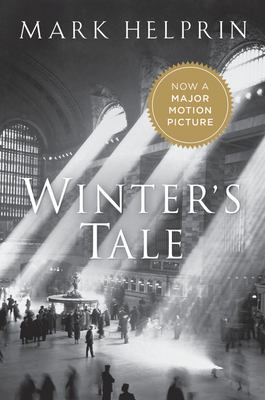
I have long declared Mark Helprin's Winter's Tale to be one of my favorite novels. I first read the novel the winter I graduated from college, when I was living in New York as a "grown-up" and not a student for the first time.

For as long as I can remember, I have been enamored with New York as a place. I loved my college years in Manhattan, but it wasn't until after school that I started to more fully appreciate the power and captivating beauty of a city so hard, so concrete, so fast. Winter's Tale took my new-found love of the city and reflected it back at me. Helprin's appreciation for the quirky nature of New York was palpable on every page, transporting me through the water tunnels beneath the city to the lakes upstate to the ceiling of Grand Central and back again.

But when I picked it up to re-read it this winter, with the chilly December air descending outside and perfectly grey skies overhead, I couldn't finish it. I've been stuck about 150 pages in since February, and it is breaking my heart.

Where is the book I cherished? Where is the story that gripped me so tightly from start to finish? Where are the characters I remember, the city I want to revisit, the adventures I want to relive?

I still appreciate Helprin's stunning way with words; it's hard to argue that he can't craft a mean sentence. And I am still in awe of his ability to recreate a city that feels at once very, very real and yet so far-fetched and impossible that we as readers know it cannot exist. But the book as a whole no longer grips me the way it did when I first read it.

Has the book changed, or have I?

Of course, this is a silly question. The book is the same; I'm even reading the same copy I read six years ago. So clearly I have changed. I have moved away from New York, no longer immersed in the city I once loved so dearly. I have grown as both a person and as a reader. I no longer demand the same things from my beloved novels as I once did. Six years ago, I had just discovered magical realism. I had spent the four years prior reading assigned texts with very little pleasure reading. I had not yet taken up blogging and reviewing, so felt more comfortable languishing in the pages of a novel for weeks on end. I had not yet begun reading more than one book at a time.*

In short, I am no longer the same reader I once was.

But I think it is more than that. I think, too, that part of the beauty I found in Winter's Tale lay in its ability to surprise. Helprin's variety of magical realism is subtle until of a sudden it is not; knowing what to expect and where I was going next took away just enough of that magic to leave me wallowing in the middle of the story, unable to finish.

Winter's Tale resonated with me so much on my first read that even my failed attempt to re-read it will not demote it from my list of favorite novels. This list, which exists in no physical form and changes on a daily basis, does not have to be a list of my favorite novels right now. Instead, it is the list of novels that spoke to me in such a way that they never really left me, changing me both as a person and as a reader. Winter's Tale is still that book to me, so while I'm sad to have lost something in my attempted re-read, I am still eternally grateful for my love of the book the first time around.

---

Has this ever happened to anyone else? Have you re-read a book you once loved, only to find you no longer do? Why do you think your opinion changed?

---

*The implications of reading as a blogger and reviewer, as a reader who reads multiple books at one time, and as a reader in the age of social media distraction are great enough to warrant an entirely separate post. Stay tuned.

The Magic of Re-Reading

I don't re-read often. Not because I'm against it, but because I generally have such a teetering stack of books to be read that I don't dare venture back into the land of those already read. The biggest exception to this "rule" (which is really more of a trend than a rule)? Fantasy novels, the crack cocaine of my reading existence.*

Most notable in this observation is my epic re-read of Robert Jordan's Wheel of Time series, which took me two years (the now thirteen- and almost fourteen-book series tallies in at nearly 12,000 pages). I've read them all twice... some even three times.

I'm facing a similar situation with George R. R. Martin's epic Song of Ice and Fire series, which now counts five books in its ranks. I've read 1-4, and am seriously contemplating starting over again from the beginning before tackling Book 5.

Lord of the Rings? Harry Potter? Redwall!? Let's not even go there.**

There are dozens of books I'd like to re-read. The Thirteenth Tale, for one, which has such a wonderfully convoluted plot that I'm dying to read it again from start to finish and look for the clues along the way. The Shadow of the Wind falls into the same category. Mark Helprin's Winter's Tale is what I generally go to as my "favorite" book, when I'm forced to pick just one, but I've read it only once. Most of Marquez' books fall in with Helprin's.****

Ultimately, though, it's the magic that pulls me back in. It's the act of stepping back out of my world, this world of 9-to-5s and car troubles and airport security lines and Hershey's chocolate and cell phone bills and into a world where wizarding is a profession, and cars can fly, and people can carve gateways in the air, and chocolate is animated, and people speak through fireplaces and everyone knows in their heart of hearts that magic, on some level, is real.

In re-entering these worlds, I feel myself slipping back into the self that I was when I first discovered these faraway lands. I can rediscover my amazement with the imagination of these now-famous authors, who once had an idea, and who grew that idea until it was the size of a world, and then put it on paper. Whether for 10 pages or 10,000, I suspect I'll continue to return to these places... even if it takes me years to do so.

---

* To be fair, I generally discount books that were required reading in middle-high school and/or college. Some of them I "read," in that I read enough topic sentences and chapter highlights to write a cohesive paper on them, and some of them I "read" in that I powered through them as quickly as possible because I had 500+ pages of reading assigned a week, and some of them I "read" in that I never actually bought the book and still wonder how I managed to pass that class. So. School-assigned reading? Not counted in the list of books I've already read.

** Ok, if we do need to go there, I'll just say this: I've lost count. I can recite the opening lines of Harry Potter by heart. I read Harry Potter in Latin. I first read Lord of the Rings when I was in elementary school, and have revisited it several times since. I've seen all the movies. When I was in middle school, my friend and I made a puppet video of Redwall. You get the picture.


*** As an interesting note, most of these titles contain elements of magical realism...

The End

I remember clearly my middle-school lessons on literary devices. These were the classes in which we learned to pick apart the writing in front of us. We identified similes, metaphors, and hyperbole, metonymy, synecdoche, and litotes. I found it fascinating, wonderful, exploratory. I’ve dissected my reading ever since, often unconsciously. Foreshadowing, though, proved a sticking point to my eleven-year-old mind:

foreshadow: to indicate, represent, or typify beforehand: PREFIGURE (Merriam-Webster)

To me, this meant one thing: giving away the ending before it happened. But what I could not grasp was why an author would do such a thing -- and intentionally, no less. Or, perhaps more crucial to my argument, why a reader would continue to read if they had been told how things would turn out.

I’m sure the fact that I spent my days reading the like of The Babysitter’s Club and Redwall has something to do with this opinion. While both series remain near and dear to me, neither rests on the laurels of its writing alone, instead being driven by plot and conclusions. Perhaps most middle-school grade reading is like that, or maybe it was just my tastes at the time.

As I work my way through Stephen King’s latest masterpiece, 11/22/63, I find my thoughts frequently returning to these days of learning literary devices. King, a master of foreshadowing, is connecting the dots for me. He frequently lets slip just enough of what is to come to make it purely impossible not to turn the page. Look what’s going to happen, he seems to be whispering. Don’t you want to find out how we get there?

And while the plot of 11/22/63 is engaging and enticing, it is this “how we get there” that proves the best part of King’s writing. Because in between each crucial event, each twist and unexpected turn, King reflects on the nature of 1960s America, on the differences between the recent past and today, on the nuances and difficulties of time travel. These are the morsels of his writing most worthy of devouring.

There are books where foreshadowing makes what follows all the more powerful. The final, heartwrenching scene of Steinbeck’s Of Mice and Men is not necessarily built on foreshadowing alone, but it is made all the more emotional because we, the reader, know what George must do. We know why he leads Lennie on in believing in the farm, and the rabbits, and their peaceful future together. It cuts to the quick, that knowledge. Gabriel Garcia Marquez’s aptly  named Chronicle of a Death Foretold opens with the announcement of a murder: “On the day they were going to kill him, Santiago Nasar got up at five-thirty in the morning to wait for the boat the bishop was coming on.” What follows in the next 120 pages is an account of how we got to this murder, this death we’ve known about all along. As a reader, we are curious: how do we move from a bishop to a murder? But knowing that it all ends in a death, we also see each mundane, everyday action tinged with the darkness of finality.

Knowing the ending, I’ve realized, does nothing to spoil the beginning and the middle. It changes the experience of reading, of course, but not necessarily for the worse. After all, what of re-reading? Readers tend to fall into two camps on this subject: there are those who do, and those who don’t. Those of us who do certainly do not do so in order to find out what happens. Presumably, we already know. We re-read to re-discover the beauty of the writing, the love we have for a story, the joy of immersing ourselves in something we already know we love.

 I no longer read such plot-driven work as I did in my middle school years, preferring instead the slow and steady pace of literature crafted with as much mind for sentence construction and imagery as for the plot itself. The Night Circus, criticized by many as meandering and slow, was just such a book. And Pete Hamill’s North River, a book of Depression-era New York City, is a gripping story, but as delightful for its setting as its outcome.

Perhaps this is why I find myself now more amenable to foreshadowing in a work. Or perhaps it is part of the art of learning to read--learning to appreciate the act of being in the story, rather than The End.

Re-Reading Repetition: Path of Daggers and Winter's Heart, by Robert Jordan

In case you somehow missed it, I'm in the midst of re-reading Robert Jordan's incredible - and incredibly long - Wheel of Time series. I've been listening to them in the car on my commutes to/from work. I'm up to Book 11. I started a year and a half ago.

The first time I read this series, I was living in France with no access to television and a limited supply of English-language books (at least until I discovered Shakespeare and Co., but that's another story). As such, Wheel of Time was my daily distraction; on the Metro, on the numerous flights and train rides I took to visit other parts of Europe, for countless hours between classes at the American University of Paris.

Despite the distractions of a European setting, I finished all 11 books currently in print at the time in a mere six months. That's approximately 10,000 pages.

In hindsight, I couldn't be happier that my first read of the series hit when it did; otherwise, I'm not sure I would have made it through Path of Daggers (Book 8) and Winter's Heart (Book 9). As much as I love Jordan and the impeccable world he has created with this series, Path of Daggers and Winter's Heart, are slooooow. And repetitive. Maybe it struck me more the second time through because it was the second time through. Or maybe it was listening to it (and therefore not being able to skim through the slow parts in a rush to find out what happens next). But if I hear one more time how Nynaeve pulls her braid, or Mat wishes for embroidery, or Rand needs to learn to laugh, I just might scream. The two books could have been consolidated into one, as the bulk of the 900-page volumes strikes me as repetitive descriptive one-liners and set-up for books 10 and 11 (and 12 and 13 and 14, I suppose).

Whew. There. That is the one and only time you'll hear me voice a complaint about Jordan. Now that I've got that off my chest, I can turn back to reviewing Crossroads of Twilight (Book 10) and powering through Knife of Dreams (Book 11) with clear conscience. And with any luck, I'll be up through Book 13 before the 14th - and last! - volume is released.

That said, if you enjoy epic fantasy novels and haven't read this series: What on EARTH are you waiting for?

How Book Selections Reflect Our Current State of Mind

I've been in a reading slump lately. It took me three weeks to finish Douglas Clegg's Neverland for review on Bookgasm - it's only 278 pages long - and I could only make it 30 pages into The Lost Summer of Louisa May Alcott. I've read 10 pages of Abraham Lincoln: Vampire Hunter, and have temporarily put that one down as well.

It's not that there is anything wrong with the books - Neverland was a perfectly haunting, creepy novel, and Lost Summer and Abe Lincoln were both interesting in both writing and premise, but they all just failed to captivate. And yet I have had no trouble plowing through my Wheel of Time Re-read, finishing Book 5 last week and now a few hundred pages into Book 6.

Instead of blaming the books, I'm blaming myself. I think am so frazzled with work, job hunting and planning a move that what little time I do find to read, I am either unable or unwilling to delve into new book territory. I feel I am too distracted, not doing the book justice, not giving it as much of a chance as I believe every new book deserves.

The comforting mass-market paperback pages of Jordan's Wheel of Time are familiar and captivating, though, giving me enough distraction from the stresses of every day and yet mindless enough - mostly because I've read them all already - that I don't feel I am missing out on the beauty of a story.

But it goes beyond the meat of the Jordan books - the suck-you-in plot paired with thousands of pages of distraction - and more into the familiarity of the text. I'm itching to re-read The Unbearable Lightness of Being, and Traveling With Pomegranates, and Freddy and Fredericka. I am excited at the prospect of poring over each title for a second or third time, catching things I've missed, discovering new ways of looking at the story, and remembering what I've forgotten.

Maybe this is a reading parallel to the beginnings of my goodbyes to New York City. Maybe it is a small way of digging in my heels as I face so many changes, of keeping something similar, familiar, comfortable. Or maybe I'm just in a reading slump, and it has nothing to do with all of the life changes in these few months, and I just need to find the right book to suit my quirky mood. The only thing I'm certain of in all of this is that now, more than ever, my book selections - or non-selections, as the case may be - have been incredibly dependent on my state of mind.

What about you? Anyone else have reading slumps, or strange urges to only re-read materials? Any get-out-of-your-slump reading suggestions?

Wheel of Time Re-Read, Part 1: Remembering, Recalling, Rereading

I have a sneaking suspicion that the topic of re-reading is about to come to the forefront of this blog as I embark once again on the epic journey of reading Robert Jordan's Wheel of Time Series.

To give a little background to those unfamiliar with this fantastic (no pun intended) series:

The Wheel of Time currently stands at 12 books, starting with The Eye of the World. The 12th book, The Gathering Storm, is described by the publisher, Tor, as "the first of three novels that will make up A Memory of Light," designed to keep the series within Jordan's original guarantee that it would be 12 books and no more. Sadly, Jordan himself passed away before he could complete the series, but did leave detailed notes for the ending. With his wife editing the final manuscript (as she did all the other books in the series), The Gathering Storm (released Nov 2009) was written by fantasy author Branden Sanderson. With each book pulling tome rank, weighing in at around 700 pages, I'm looking at over 8,400 pages of delicious, epic, classic fantasy reading.

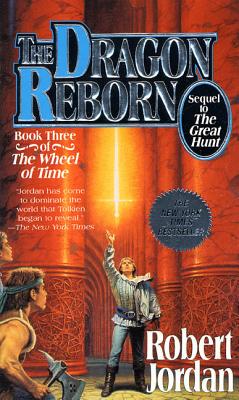
I'm now well into the third book (The Dragon Reborn, pictured below) of the series re-read, and so far have mixed feelings. I love the series just as much the second time around, if not more so, as I can catch important details that I missed the first time and tie events together with what I know will come in later volumes. I've spent so much time with these characters that at times I find myself wishing I could scream into the book "NO! DON'T DO THAT! TRUST ME, I KNOW WHAT WILL HAPPEN IF YOU DO!"

As I re-read, this familiarity with the characters, and with the overall development of the plot, is comforting. I am taking this journey with them as an omniscient follower, finding out where it will lead, each new chapter bringing back vague recollections of what is to come.

But I am simultaneously astounded - yes, astounded - at how much of the books I have forgotten. I read the series for the first time three years ago, so it's not as though it's been decades. The general storyline is there in my head, but the individual actions of each character are gone from my memory, and re-reading this series is not like hearing a familiar voice repeating words in my head (which is what happens when I re-read Harry Potter... but then I've read those dozens of times).

It is not necessarily a bad thing, this overlapping knowledge and troubling lack of knowledge. I know the characters, and I remember who lives, who dies, and the general arch of the plot. Forgetting the details - who, precisely, is batting for the other team, for example - allows me to relive some of the suspense of my first read. At the same time, it alleviating enough of the tension to give me a chance to slow down through read #2, taking time to enjoy the masterful details of Jordan's near-perfect fantasy world creation without sweating bullets over who will live to see the next chapter.

As I go forward, some of this is strict remembering (in that I remember exactly what I am reading, almost word-for-word), some is recalling (as memories are stirred by events in the story) and still other parts are true re-read (as I read them much as I did the first time around).

What about you? Do you remember details of past reads, or just have general impressions of the stories? Do you enjoy re-reading, or is it tediously dull to you (as I've heard some say)?