Book Tour: Joe DiMaggio: The Long Vigil, by Jerome Charyn

I'm going to be up front about this: I did not finish Joe DiMaggio. I meant to. Really. I just couldn't get into it. Which is not to say that the book itself is not a good one. It's incredibly well-researched, and Jerome Charyn is a skilled writer and biographer. Rather than simply regurgitating well-known (or even little-known) facts, Charyn inserts his own take on events where appropriate. He draws on myriad sources, quoting heavily when necessary and breezing through details when fitting. The book itself, part of Yale University Press' Icons of America series, is short, topping out at merely 146 pages, and thoughtfully organized, with sections dedicated to his pre-career days, his career, and a lengthy passage on his post-baseball days.

It was the post-baseball days that lost me. Biography is a genre of which I'd like to read more, and baseball is a subject about which I wish I knew more, so the combination struck me as a good candidate. Perhaps it was too far outside of my comfort zone to really strike a chord with me; I'm sure a baseball enthusiast would be more engrossed. Or a biography enthusiast. All in all, Joe DiMaggio is a short, concise biography that is sure to appeal to a certain audience; despite my best efforts, I found that I was not that audience. I'm looking forward to reading more of Charyn's work - it just won't be a baseball book.

Looking for more? Watch:


---

Thoughts from other bookworms:

Tribute Books Reviews
Stiletto Storytime
Reading Between the Lines
... and a whole host of others from the Tribute Books Blog Tour

---

More Jerome Charyn at his website, on Twitter, and on Facebook.

---

Many thanks to Nicole at Tribute Books for inviting me to participate in this tour and providing a copy of the book for review.
Making Time for Books (Week in Reading)

“No matter how busy you may think you are, you must find time for reading, or surrender yourself to self-chosen ignorance.” - Confucius

It's been a busy week or two or fifty-two, but I'm coming to terms with the fact that it's actually no busier than usual. This is the pace of my life. I should probably get used to it and make it work instead of fighting it and letting things slip for "someday when I'm not so busy." Like legally changing my name. And finally planting those thyme seeds. And starting on my list of 26 things I'd like to do by 26 (I did sabre open a bottle of champagne, which was on the list).

And reading. Always reading. My dad recently marveled to me that I manage to read as much as I do (which is not nearly as much as I'd like), wondering aloud how I find the time. His question contained its own answer though: I find the time. It doesn't find me. The demands on my time will only increase as I grow older, when I own a house, have children, work longer hours, etc. Without actively carving out time for books, it would be too easy to find that reading was the activity that offered least resistance in being cut from the schedule. Let me put it on the record: not going to happen.

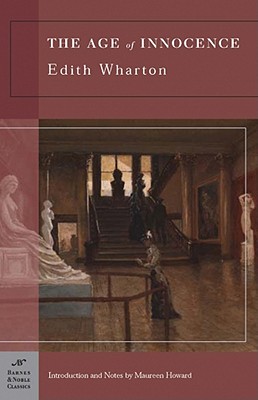
Book Reflections: Age of Innocence by Edith Wharton

I read this back in February for the Age of Innocence read-a-long hosted by bookworm meets bookworm, and, in true overbooked fashion, managed to post my Part I thoughts on time only to miss the Part II posting by 6+ weeks. But, to be fair, I did read the book on time.

Part I of Age of Innocence sets up Newton Archer as a high-Societyman struggling to identify his place in a stifling, hypocritical and often unfair Society. By Part II, Archer has identified the Society of New York, and recognizes in it its weaknesses and flaws; strengths and promises:
"It was the old New York way, of taking life 'without effusion of blood'; the way of people who dreader scandal more than disease, who placed decency above courage, and who considered that nothing was more ill-bred than 'scenes,' except the behavior of those who gave rise to them." (272)
In understanding this, Archer is then faced with a decision: conformity or noncomformity. He must choose between his place (and his duty) and his whimsy (and illicit love).

It is an eminently familiar situation: that battle between what we feel we must do and what we wish we could do; the contest between who we are and who we thought we would grow up to be; the struggle between making ourselves happy with what we have and longing after what we might have had.
"His days were full and they were filled decently. He supposed it was all a man ought to ask.

Something he knew he had missed: the flower of life. But he thought of it now as a thing so unattainable and improbably that to have repined would have been like despairing because one had not drawn the first prize in a lottery." (281)
Archer's tale is sad but not without hope; he is disappointed, and somewhat disappointing, but not to an extent that he becomes despicable. He, like so many others, has set out to do what he believes to be the right thing, and upon making his decision, is resigned to living with it. He does not buck (too much) or complain (too often). In that, he is actually rather stoic. Though it is tempting to view him as weak, does it not take some courage to give up a dream in the face of responsibility? And to accept the consequences that accompany it?

Despite some readers' disappointment with the final pages (and at a risk of giving away too much), I believe Archer's actions are instead a perfect reflection of his character: steadfast, courageous, dutiful, aggravating.

Bottom line: Wharton's Age of Innocence is the kind of novel that has sat on the edge of my consciousness for some time without me ever really focusing on it. Now that I finally have, I find it is also the kind of novel that is eminently quotable, easy to relate to, and transcends the both the era in which it was written and the era about which is what written in that perfect way that those books we deem "classics" tend to do.

---

Thoughts from other bookworms:

bookworm meets bookworm
The Story Girl Reviews
Literary Musings
The Novel World
That's What She Read

The Power of Words

Just a reminder that it's not always what you say, it's how you say it. Words are powerful things.

Reading to Review

There was a time, not too long ago, when I didn't actually write book reviews. I just read books I liked (lots of them) and then told anyone who would listen why they were or were not wonderful. I worked in a bookstore; I had a captive audience.

In the 2+ years since these little verbal reviewlettes became this full-fledged blog, I've come to love blogging. And reviewing. I've found other outlets for my writing - from reviews on Bookgasm to my recent article over at Bibliobuffet - and I am thrilled to have not only places to share my writing, but a whole host of things to write about.

It's that writing about that's starting to rub me the wrong way, though. I no longer read my daily newsletters solely for my own enjoyment. Instead, I read them with a mind to what might make an interesting post. And even worse, I read books that way too. Reviews quite literally form in my head as I read. Sure, it makes the reviewing easier, especially when I actually take the time to write those little review blurbs down for future reference - but part of me is starting to wonder what it is I'm missing by reading as a reviewer instead of as a pure reader.

Maybe it's not fair to say that's worse. Maybe I can be fair and say the verdict is still out on this. After all, I now read books sort of like I did back in college; I read with a critical eye and an analytic brain. But at what cost? Am I too judgmental, pushing for something to critique in every book I read? Am I missing the book for the page? Am I missing the success of one book by struggling to place the book and its author in context; or vice versa, am I missing the context by defining the book as a standalone item?

I feel like I'm treading into the waters of book-reading philosophy here, and I'm no philosopher. I love this blog. I love having my own corner of the interwebs in which to place my bookish thoughts. I love reacting to others' corners of the interwebs, or to others' reactions of my own thoughts. I love reading books. I love thinking about books. I love reviewing books. I even love reading and reviewing books I don't love.

But they say the grass is always greener on the other side, and right now, the non-analytic reading experience is looking mighty appealing. Too bad I can't seem to turn my reviewer brain off every now and again.

Quick Break

After a few weeks of sporadic posting (at best), I'm going to make it official and take a quick break from blogging. Just enough time to kick whatever stomach bug I seem to have, catch up on some lingering post ideas, and power through some books I've been meaning to get to for some time. I'll be back next week and promise to be refreshed and gushing over the Game of Thrones premiere this Sunday. With any luck, I'll also have finished the last two books in Robert Jordan's Wheel of Time series (Must. Find out. What happens.).

In the meantime, hope you are all enjoying whatever version of Spring is coming your way - whether it be April showers or 80 degree weather.

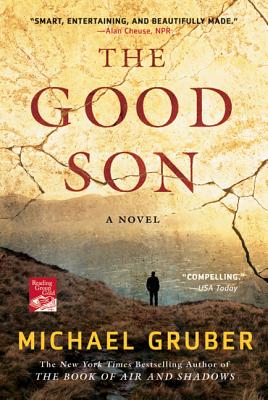
Book Review: The Good Son, by Michael Gruber (on Bookgasm)

"... Those looking for a ripped-from-the-headlines plot will get it, but those seeking a read with more depth than a traditional thriller will be pleasantly surprised by the breadth and depth of subjects offered up here through the lens of fiction."


Read my full review of The Good Son over at Bookgasm this week.