Review: The Deep Whatsis, by Peter Mattei

Eric Nye, the main character in Peter Mattei's The Deep Whatsis, is, quite frankly, an asshole. Hot-shot creative director at a high-brow ad agency in New York, he is being paid scads of money to woo clients for the agency (which he doesn't do), judge creative work created within the agency (which he does, but without applying any reason or sense to his judgements), and fire half the staff by the end of the year (which he does with gusto). He drinks $20 lattes, has fresh fruit delivered to his modern apartment, and prides himself on his detachment from any sense of morals or ethics in the workplace. He is completely unlikeable as a person, as a protagonist, and as a perspective character.

And yet somehow, The Deep Whatsis is hard to put down. Mattei's writing, sparse but powerful, is compelling enough to carry the story of Nye's escapades despite his despicable nature, despite the fact that no one, not even Nye himself, is rooting for Nye.

The story centers on Nye's brief but impactful relationship with a young girl he meets at a party, who shows up at his office the next day as the newest in a series of interns he is not allowed to sleep with. But all plans to avoid her fail, as she texts and calls and emails him, shows up at his office, his apartment, and in his mind, until he is fixated on her, unable to stop thinking of her. The two only meet three times over the course of the entire novel, but Intern (he can't remember her name) is a turning point for Nye, even though he can't put his finger on why that is.

Many readers, I'm sure, will be turned off by Nye's despicable self, and yet his story is powerful, capturing the absurdity of advertising and corporate culture. From bad creative ideas for new ad campaigns to ridiculous HR processes to the harsh realities of cutbacks and layoffs, The Deep Whatsis is the kind of uncomfortable novel I can't stand to read but can't put down. A quick read, it's worth considering for anyone stuck in corporate hell (which thankfully, I am not), immersed in the advertising industry (which I am, but not in an agency like Nye's), or generally questioning the absurdity of the career path and all the sacrifices required to get to the top.

---

Many thanks to the publisher for providing an e-galley of this title to review.
The Deep Whatsis | Peter Mattei | Other Press | July 2013 | Trade Paper | $15.95 | 256 pages

Review: The Blue Blazes, by Chuck Wendig

The Blues Blazes, newest novel from Chuck Wendig, introduces us to Mookie Pearl, whose name makes me smile because it belies the man that Mookie is: a big, hardass, thuggish, criminal demon-hunter whose descriptions of charcuterie could make a vegetarian drool. Sound intriguing? He is (and so is the novel).

Mookie is a bad guy (sort of), working for a crime boss in a New York that slightly resembles the city we know and yet doesn't, full as it is with demons and monsters and goblins and chaos and calamity and general insanity. Mookie's mob-like employer, The Organization, controls the distribution of a substance known as "Blue," a powder derived from a mineral found deep in the tunnels beneath New York City. In addition to giving users a surge of adrenaline and mad rush of energy and power, Blue opens users' eyes to the world of demons and monsters that live in said tunnels (and sometimes come up to surface level for a jaunt through the city that never sleeps).

Mookie is by no means the perfect father, model employee, or best friend, but he is, at heart, a guy with good intentions (if a lot of regrets), and so when his world starts to fall apart, we feel for him. His Boss is on his deathbed, leaving the Organization leaderless and in jeopardy. His daughter, who hates his guts, is starting her own distribution of Blue, countering the Organization at every turn. And he's been asked to hunt down a likely non-existent drug from the underworld known as Death's Head (or "the Purple"), which supposedly can cure any illness and perhaps-but-we're-not-sure bring people back from the dead.

If it sounds complicated and messy and slightly chaotic, that's because it is; but that's where Wendig excels, juggling competing storylines, multi-dimensional characters and downright fantastical creatures so skillfully that though the novel oozes the chaos of its setting, it never feels confused in and of itself. Wendig's characters are emotional, layered, and motivated individuals; his world-building is thorough and understandable; and his research into the actual tunneling under New York (a thing that is happening in the real world, according to our conversation at BEA) adds a layer of complexity to an otherwise other-wordly tale of goblins and monsters. For a non-urban-fantasy reader such as myself, this was the perfect entrypoint into the genre (and die-hard fans of the genre will want to make sure to pick up a copy sooner than later as well).

Also look for Chuck Wendig on Twitter @chuckwendig and on his blog, www.terribleminds.com.

---

Thanks to the publisher for providing an e-galley of this title via NetGalley.
The Blue Blazes | Chuck Wendig | Angry Robot | May 2013 | Mass Market Paperback | $7.99  | 400 pages

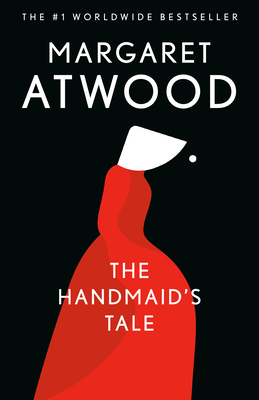
Thoughts: The Handmaid's Tale, by Margaret Atwood

Oh, The Handmaid's Tale. I first read this book in college, pulling it from the shelves when the kids I was babysitting had fallen asleep. When their mom came home and found me reading it, she graciously let me take it home rather than asking me to re-shelve it, for which I am eternally grateful. Because how could anyone put this down once they started? How could anyone begin reading Atwood and walk away from her?

For those who don't know, Atwood's tale takes place in a dystopian version of the United States, now known as the Republic of Gilead, in which big government has joined at the hip with big religion to subjugate women and create a kind of procreation caste system. The system "marries" one man and one woman, but gives important households a handmaid--essentially a concubine who has sex with the man of the marriage at pre-determined times to try to get pregnant. Sex is joyless, passionless, and government-mandated. Speech is limited, dissenters (including priests of certain unaccepted religions, scientists, gay people, loud people, and anyone who dares to be an individual) are hung, and handmaids are discarded if they do not get pregnant in a timely manner. It is a world based on terror, fear, and suppression, revealed to us in bits and pieces by Offred (literally "of Fred," handmaid to Fred). But when Fred shows that he himself doesn't always follow all the rules, Offred discovers a secret underworld that thrives beneath the polished veneer of government-approved activity.

While it seems far-fetched when summarized above, the beauty--and horror--of The Handmaid's Tale is in its roots in our reality. As Offred begins to reveal bits of her own past, we realize, slowly, how much her world used to look like ours--and how it was baby steps and small actions that led to the slow dissolution of society as we know it. First women lose access to their own money, then they are prohibited from working, and then, and then, and then. Until suddenly a world in which women are nothing more than child-bearing vessels is suddenly not so hard to imagine.

The Handmaid's Tale was my first exposure to Atwood (I fell in love), but it was also my first exposure to dystopian literature that was not the high-school assigned 1984. It was the first time I realized outside of a classroom how much fiction could teach me about the world. It was the first time I stepped outside my comfortable suburban bubble to think about the far-reaching implications of religion and political power. It was the first time I identified as a feminist, even if I was scared to use the word at the time.

Needless to say, re-reading it earlier this year was both thrilling and terrifying. What if it didn't live up to my exceedingly high expectations (which has happened to me before in re-reading my favorite books)? What if it didn't make my head spin the way it had the first time? What if Claire Danes' narration of the story was awful?

Luckily, none of these things came true. Claire Dane's narration of Offred was perfection; though I'm not always a fan of Danes' sometimes-simpering voice, it actually worked quite well for Offred's continuing uncertainty and confusion, for her bursts of rebellion and carelessness followed by bouts of anxiety and nervousness.

And The Handmaid's Tale proved just as haunting, just as important, and just as eye-opening the second time through as it did the first. With governments trying to define "proper" marriage on Tuesdays and states redefining abortion laws on Wednesdays and health departments making recommendations on the proper care and treatment of women's bodies for childbearing purposes on Thursdays, it is, sadly, just as relevant today as it was when it was first written--if not more so.

---

Of note: The Royal Winnipeg Ballet is doing a production of The Handmaid's Tale this October. If anyone is local enough to go see it, please let me know how it is!

Also of note: The Folio Society has an illustrated version of this book with some truly stunning art included. Worth checking out.

---

The Handmaid's Tale | Margaret Atwood, nar. Claire Danes | 11 hours | Available from Audible

#24in48: Wrap-up

Whew. The second (hopefully annual?) #24in48 readathon was this weekend, and it was just as lovely as I'd hoped it would be. A host of unforeseen but mostly unavoidable plans for the weekend meant I didn't get as many reading hours in as last year, but I still managed to read for almost all of Saturday and a good portion of Sunday.
My reading location for Sunday,
when the weather finally perked up.

Hours Spent Reading: 14 hours, 30 min

Pages Read: 676, plus 3 hrs, 30 min audio

Books Read:
  • Completed Fahrenheit 451
  • Read Lexicon in practically one sitting, stopping only to drive my husband to the car repair shop and then going so far as to read the last 15 pages in the parking lot of the shop rather than driving home
  • Made a bit of a dent in Gone with the Wind, which I am enjoying but having a hard time focusing on for some reason. Anyone else have this problem with the first 100 pages?
  • Made a pretty hefty dent in the 40 hours of narration that is Gabaldon's Voyager on audio.
  • Got completely hooked on the start of Night Film only to find it had started to get under my skin and I was jumping at every noise the house made and so I gave up reading and watched two episodes of Doctor Who instead (we're still catching up on the Matt Smith years).
Dollars Raised for Charity: As with past readathons, I'm donating $0.05/page read during the readathon to a literary charity of my choosing. In order to include audio, I count it as 50 pages for an hour of listening, which is imperfect math, but it's going to have to suffice. That's a $42.55 donation for FirstBook, an organization dedicated to providing access to new books for children in need.

... I need to set aside entire weekends to read more often, and not make plans in the middle of them.

#24in48: Master Post

It's here! It's here! Rachel's 24 in 48 readathon is upon us, and I am all geared up for a weekend of reading (with a side of yoga, brunch and a dinner party, because despite my best efforts, I did not succeed in keeping my weekend entirely free of plans). As with my most recent readathon, I'll be tracking my progress on Tumblr and linking to posts here throughout the weekend. I'll also be tweeting about my progress using the hashtag #24in48; follow me @ofabookworm.

Ready, set, go!

Saturday
The Starting Line
10:15 AM: Mid-Morning Update, I need a snack.
12:39 PM: Midday, Lexicon is as good as everyone said it would be
11:30 PM: End of Day 1, and well shy of 24 hours

Sunday
(during which I was away from my computer most of the day)
(and spent what time I did have near my computer with my nose in Night Film)
(meaning I only have one update from all of Day 2)
9:15 PM: Home Stretch

#24in48 Readathon: My Reading List

The 2nd 24 in 28 readathon, hosted by Rachel at A Home Between Pages, is nearly upon us! The goal is to read for 24 hours in a 48 hour window, but I'm going into the weekend with a sense that I probably won't get a full 24 hours of reading in; plans with a friend in DC and a dinner planned with my brother in Baltimore will mean distractions and less reading time (though I do plan to keep an audiobook on for both car rides, at the very least).

Regardless, I have quite the stack of books picked out for the weekend, and with the weather promising to be deeeeeeelightful, I'm planning on curling up in a hammock by the river and treating myself to some sunshine.

I'm trying to learn from past readathons and keep my reading options varied and fast-paced (War and Peace was a bad pick last time...). Here's what I'm considering at the moment (and yes, I know, it's far too many to choose from):

Recent Releases


Classics


Upcoming Releases


Non-fiction (Variety is the Spice of Life)


And Audio, for Said Car Rides


See? Far too many books, affectionately known from here on out as #tbrproblems. Still, any time set aside for dedicated reading is time well spent in my mind, so I'm looking forward to the weekend!

Looking Ahead: August Highlights

July was a much better reading month for me than June was, and I'm hopeful that August will even better as I wrap up the last of my summer reads. I have one more vacation planned this month, which means 6+ hours in the car each way (here we come, North Carolina), a week on the beach on my TARDIS beach towel (yes, I own this), and lots and lots of reading time. I hope.

Here's what I have my eye on this month:


Lookaway Lookaway, by Wilton Barnhardt (St. Martin's Press, Aug 20th): Ok, I've actually already read this one, and oh, it is marvelous. Barnhardt turns a critical but smiling eye to Southern culture, capturing its glossy veneer, myriad hypocrisies, and overly mannered behaviors. Told through the varied perspectives of the Johnston family, a family with Civil War ties and old, Southern money, Lookaway Lookway is at once heartbreaking and delightful, a romp through the South and yet representative of so many families in so many different places. Definitely one to look out for.

The Rathbones, by Janice Clark (Doubleday, Aug 6th): I actually don't know much about this besides the fact that it is described as a "gothic, literary adventure," has to do with New England, is blurbed by Erin Morgenstern, and is somehow inspired by both Moby Dick and Edgar Allen Poe. Now that I list all of that, I'm not sure what more I could possibly need to know...

The Virgins, by Pamela Erens (Tin House, Aug 6th): This was one of the titles I picked up at BEA this year (after falling madly in love with pretty much all of Tin House's catalog). Focusing on the romance between two unlikely boarding-school lovers, the blurb on this promises that Erens brings a fresh voice to the "tradition of the great boarding school novel." I'm a sucker for boarding school novels, for reasons unknown to me, from Chocolates for Breakfast to Prep, so this one seems right up my alley.


The Bone Season, by Samantha Shannon (Bloomsbury, Aug 20th): Another BEA acquisition, and this one compared to--wait for it--the Harry Potter series. The first in a planned seven-book series in a world that looks like our world but isn't, quite, this promises aliens and clairvoyance and prisonbreaks and and and and and. Already an Indie Next pick, film rights already optioned, already on buzz panels... and the author is younger than me. Hot damn, that's impressive.

Night Film, by Marisha Pessl (Random House, Aug 20th): Somehow I never quite fit Pessl's first novel, Special Topics in Calamity Physics, into my reading schedule, though I'm still intending to somehow. Regardless, her second novel, Night Film, has been collecting praise from pretty much every corner of my internet world, from people whose bookish opinions I try not to ignore.

Troubled Daughters, Twisted Wives, ed. Sarah Weinman (Penguin, Aug 27th): This collection of fourteen "chilling tales" from the 1940s through the 1970s promises crime fiction, hair-raising, and a tribute to a lost generation of women writers. Color me interested (plus, look at that gorgeous cover!).