Though I'll continue to write (in some way) about the books I discovered at Book Expo this year, this will be my last BEA round-up post. And I'm not saying I saved the best for last, but I'm not *not* saying that, either. What follows are the new releases and forthcoming titles from independent publishers and university presses I'm most excited for... and there are some gems, here:
When I asked the staff at Graywolf Press what book they'd be most eager to recommend, they pushed Riverine (August 2016); I don't know if someone working there has ESP or what, but I'm super excited for this memoir of social justice composed of "spellbinding essays on place, young love, a life-altering crime." Other stand outs at the booth included The Art of Waiting: On Fertility, Medicine, and Motherhood (September 2016) and Grief is the Thing With Feathers: A Novel (June 2016), which Shannon practically shoved into my hands (thanks, Shannon!).
Showing posts with label independent publisher. Show all posts
BEA Recap: Discovering a New Press
05 June 2013
I don't tend to focus on the publisher of a particular book as I read, but when I do fall for a press, I tend to fall hard (Other Press, I'm looking at you). This year at BEA, I found a new-to-me publisher whose titles I will most definitely be tracking more closely: Tin House. In fact, I fell so hard for their catalog that I left with more galleys from Tin House than any other publisher, and I'm excited about all four of them:
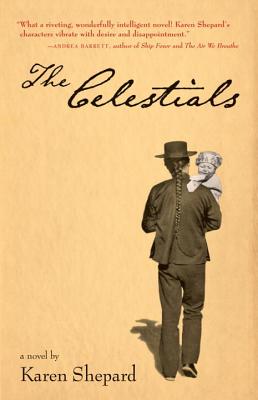
The Celestials, by Karen Shepard (June 2013): A reimagined tale of a group of Chinese immigrant workers brought to Massachusetts to work in a factory town, without knowing they were working as strikebreakers. The publisher promises "wide appeal to readers of historical fiction, relating the shared sense that we're all aliens of some kind — at home in no place."
The Virgins, by Pamela Erens (August 2013): How could one possibly turn up a galley with such a daring title? The Virgins is set in an elite boarding school, with one classmate regaling readers with tales of the school's power couple and their sexual exploits. Sounds provocative, to say the least?
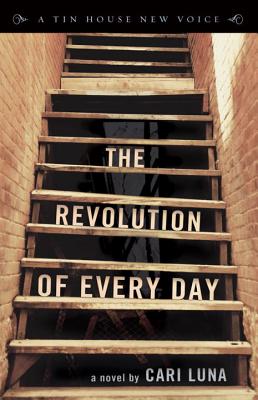
The Revolution of Every Day, by Cari Luna (October 2013): Apparently, in 1995, NYPD rolled an armored tank into the East Village to evict groups of squatters from buildings in the area. Author Cari Luna has imagined a group of five squatters from this time, promising to reveal to readers "a life that few people know about or understand." Seeing as I learned at BEA that there was--actually, is--a squatter building no more than 2 blocks from my old apartment in NYC, I'd say I'm definitely one of the ones that knows nothing about this lifestyle... and after reading the first 10 pages of Luna's novel, I'm more than intrigued.
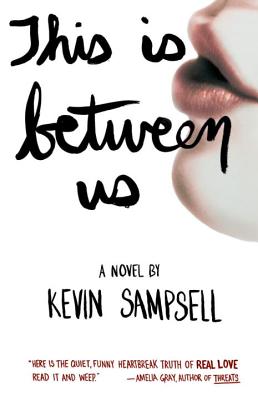
This Is Between Us, by Kevin Sampsell (November 2013): Five years of a troubled romance, from whirlwind affair to family to divorce. Jess Walter calls the novel "wry and wistful, strange and sexy, humming with desire, quaking with vulnerability," and my new-found love of Walter is going to temporarily trump my disillusionment with author blurbs in general on this one.
The Celestials, by Karen Shepard (June 2013): A reimagined tale of a group of Chinese immigrant workers brought to Massachusetts to work in a factory town, without knowing they were working as strikebreakers. The publisher promises "wide appeal to readers of historical fiction, relating the shared sense that we're all aliens of some kind — at home in no place."
The Virgins, by Pamela Erens (August 2013): How could one possibly turn up a galley with such a daring title? The Virgins is set in an elite boarding school, with one classmate regaling readers with tales of the school's power couple and their sexual exploits. Sounds provocative, to say the least?
The Revolution of Every Day, by Cari Luna (October 2013): Apparently, in 1995, NYPD rolled an armored tank into the East Village to evict groups of squatters from buildings in the area. Author Cari Luna has imagined a group of five squatters from this time, promising to reveal to readers "a life that few people know about or understand." Seeing as I learned at BEA that there was--actually, is--a squatter building no more than 2 blocks from my old apartment in NYC, I'd say I'm definitely one of the ones that knows nothing about this lifestyle... and after reading the first 10 pages of Luna's novel, I'm more than intrigued.
This Is Between Us, by Kevin Sampsell (November 2013): Five years of a troubled romance, from whirlwind affair to family to divorce. Jess Walter calls the novel "wry and wistful, strange and sexy, humming with desire, quaking with vulnerability," and my new-found love of Walter is going to temporarily trump my disillusionment with author blurbs in general on this one.
Book Review: The Dangers of Proximal Alphabets
19 September 2012
Every so often, there is a book that crawls its way into your heart and nestles itself there, almost defying explanation but demanding that it be shared with the world.
For me, A Danger of Proximal Alphabets is that book. Kathleen Alcott's debut reads more like linked vignettes than a straight narrative, moving through time in fits and starts and then in smooth progression in a way that mimics our own memory and recall of the past. The story takes its time in unfolding: Ida grew up across the street from Jackson and James. Ida's mother is dead, Jackson and James' father has left. Throughout childhood, the three are inseparable; where there is an I, there is also a J.
But, as Ida learns, that does not always mean that where there is an Ida, there will also be a Jackson--or a James:
As the three creep slowly into adulthood, their relationships morph and change but never completely disappear; James gets in trouble, Jackson and Ida move in together, Jackson's night talks become night walks become night problems. Though they are not family in the true sense of the word, they behave as one. That is, until they don't:
In this way, Alcott inches her way into questions of love and friendship and family and death. Can we redefine the traditional nuclear family, setting aside "mother," "father," "siblings," in favor of "neighbor," "friend," and "confidant"? Can love last forever, even if a relationship must end?
Alcott's simple prose is as capable of captivating the voice of children as it is the innermost thoughts of adults; her ability to play with language and imagery sheds light on the average and the everyday in ways we may not have done on our own:
---
Thoughts from other bookworms:
Publisher's Weekly
Lonely Owl Books
Real Simple
---
You might also like:
Day for Night by Rick Reiken
Letter to My Daughter by George Bishop
The Lover's Dictionary by David Levithan
---
Note: Thanks to Other Press for providing a copy of this title for review. Opinions, as always, are my own.
The Dangers of Proximal Alphabets | Kathleen Alcott | Other Press | Trade Paper | 224 pages | Buy from an independent bookstore near you
For me, A Danger of Proximal Alphabets is that book. Kathleen Alcott's debut reads more like linked vignettes than a straight narrative, moving through time in fits and starts and then in smooth progression in a way that mimics our own memory and recall of the past. The story takes its time in unfolding: Ida grew up across the street from Jackson and James. Ida's mother is dead, Jackson and James' father has left. Throughout childhood, the three are inseparable; where there is an I, there is also a J.
But, as Ida learns, that does not always mean that where there is an Ida, there will also be a Jackson--or a James:
"But even one letter changes a meaning entirely; no matter their proximity, different points of an alphabet refuse to be represented as the same: there's no guarantee that someone standing at precisely the same longitude and latitude as you will remember the view the same way, no promise that one person's memory of a moment or a month will parallel yours, retain the same value, shape the years of living that follow."
As the three creep slowly into adulthood, their relationships morph and change but never completely disappear; James gets in trouble, Jackson and Ida move in together, Jackson's night talks become night walks become night problems. Though they are not family in the true sense of the word, they behave as one. That is, until they don't:
"I had let myself forget: that honest-to-goodness, forever families are made of blood. That a history doesn't guarantee a future."How simple, and yet how heartbreaking--the thought that just because it has always been does not mean it will continue to be.
In this way, Alcott inches her way into questions of love and friendship and family and death. Can we redefine the traditional nuclear family, setting aside "mother," "father," "siblings," in favor of "neighbor," "friend," and "confidant"? Can love last forever, even if a relationship must end?
Alcott's simple prose is as capable of captivating the voice of children as it is the innermost thoughts of adults; her ability to play with language and imagery sheds light on the average and the everyday in ways we may not have done on our own:
"Autumn was decidedly adult: the nuanced colors--muddled oranges and browns, the uncertain gray of the clouds--were much harder to love, to understand, than the sticky pinks of popsicles, the confident thick greens of happy grass and plants, the haughty blue of the sky above it all."Ultimately, this ability to make us open our eyes to what we already know and see is what makes The Dangers of Proximal Alphabets as successful as it is, just as any novel is heralded as among the best of the best when it makes us reconsider the familiar. I'm looking forward to seeing more from Alcott in the future--she's definitely a talent to watch out for.
---
Thoughts from other bookworms:
Publisher's Weekly
Lonely Owl Books
Real Simple
---
You might also like:
Day for Night by Rick Reiken
Letter to My Daughter by George Bishop
The Lover's Dictionary by David Levithan
---
Note: Thanks to Other Press for providing a copy of this title for review. Opinions, as always, are my own.
The Dangers of Proximal Alphabets | Kathleen Alcott | Other Press | Trade Paper | 224 pages | Buy from an independent bookstore near you
Subscribe to:
Posts (Atom)