Showing posts with label science fiction. Show all posts

Book Review: The Mime Order, by Samantha Shannon

This review originally ran in Shelf Awareness for Readers. Reprinted here with permission.

samantha shannon, the mime order, the bone season, the bone season sequel
The Mime Order is the second novel in Samantha Shannon's Bone Season series, a planned run of seven books set in a dystopian future where half of the population has clairvoyant powers and is hunted by the government because of those powers. Shannon picks up where The Bone Season left off: Paige Mahoney is racing back to London after narrowly escaping Sheol I, where she had been held prisoner for months because of her unusual clairvoyant powers. In London, she must decide whether to rejoin her old crime syndicate or go it alone--with the full force of both the government and the criminal world set against her.

Shannon spends little time rehashing the events or explaining the world established in the previous novel, so those new to this world will likely want to start with the first book. Those eager to continue Paige's story will not be disappointed by Shannon's sophomore showing, which boasts all of the suspense, intrigue and mystery of the first volume as well as an addictive storyline that will leave readers clamoring for the next chapters in Paige's ever-intensifying life.

The series characters have matured, which means Paige and those around her are becoming more nuanced, and their motivations clearer, as the story unfolds. Similarly, and perhaps more excitingly, Shannon's prose has also matured, and this deft effort to build on the complex world she constructed in the first installment will solidify the series' rightful place among the best of fantasy, sci-fi and dystopian fiction.
(Read my review of the first volume in Shannon's Bone Season series, The Bone Season, here.)

---

Note: Thanks to the publisher for providing a copy of this book to review.
The Mime Order | Samantha Shannon | Bloomsbury USA | January 2015 | Hardcover

The Story About the Stories in Neil Gaiman's Trigger Warning

Neil Gaiman has an imagination that I can't imagine, a sense of wonder and awe and amazement with the world and the worlds he can imagine that turns head, catches attentions, and creates super-readers of his work. It doesn't hurt that he has a way with words, either, or that sly sense of British humour that leaves us knowing there's a joke somewhere, but not entirely convinced we're sure of what the joke is, exactly. Just that it might be funny.

This is the writer that shines through in full force on the pages of Trigger Warning: Short Fictions and Disturbances, a collection of short stories from the much-adored author of American Gods and The Ocean at the End of the Lane. Though most of the stories in the collection have appeared elsewhere, they have been published in such disparate places that the likelihood of any one reader having read them all is slim to none (the Sherlock-Holmes inspired story, "The Case of Death and Honey," for example, was written for the Sherlockian anthology A Study in Sherlock; "And Weep, Like Alexander" appeared in a collection inspired by Arthur C. Clarke, and boasts a character named Obediah Polkinghorn because of it; "Pearls: A Fairy Tale" was written as the caption to a photo of Amanda Palmer posing as herself dead, back before Gaiman and Palmer were married).


All of the stories in Trigger Warning are divinely strange. A young boy clamors for a bedtime story that's just a little bit scary, and the subtle creepiness of "Click--Clack the Rattlebag" that ensues will leave adults switching lights on in dark rooms before entering. Sleeping Beauty's well-known story is reimagined in the most clever way in both "Observing the Formalities" and "The Sleeper and the Spindle." "A Calendar of Tales" collects twelve stories inspired by strangers' tweets to Gaiman, while "Orange" is told entirely as answers to questions to which we are not privvy, the answers building a story of their own.

Perhaps the most fascinating piece in the collection, though, is Gaiman's introduction to his work, in which he explores the idea of "trigger warnings," and lays out for readers not only the story behind each piece in the collection (because, he writes, he likes it when authors do that himself), but why he has collected them together in one place. He writes,

"But so  much of what we read as adults should be read, I think, with no warnings or alerts beyond, perhaps: we need to find out what fiction is, what it means, to us, an experience that is going to be unlike anyone else's experience of the story.  
We build the stories in our heads. We take words, and we give them power, and we look out through other eyes, and we experience, what they see. I wonder, Are fictions safe places? And then I ask myself: Should they be?"

The fictions in Trigger Warnings are not safe places, and Gaiman does not shy away from that. Instead, he invites readers to lean into it, experiencing the risk and, in return, the full reward of the most speculative of fiction, the strangest of stories, and the wonder of words.

---

Thanks to the publisher for providing an e-galley of this title for review.
Trigger Warning | Neil Gaiman | William Morrow | Hardcover | February 2015

Book Review: How Star Wars Conquered the Universe, by Chris Taylor

This review originally ran in Shelf Awareness for Readers. Reprinted here with permission.


The Star Wars franchise is no small thing, with an estimated 1.3 billion tickets sold to the six theatrically released movies worldwide, $6 billion in VHS/DVD sales and $20 billion in merchandise sales. But how did it grow from the impossible dream of a young filmmaker to a multibillion-dollar franchise? Journalist Chris Taylor answers that question in How Star Wars Conquered the Universe, which covers not only the "past, present and future" of what might be the world's most ubiquitous franchise, but also how it has made an impact on--and been influenced by--its ever-growing fan base.

Taylor weaves George Lucas's biography with a history of science fiction and space fantasy in print and on screen, which he then fits into an exploration of Lucas's creative approach to each of the six films and the timely political undertones in each story. He then turns to the Expanded Universe (the body of Star Wars books, games, TV shows and other sanctioned stories) and how it interacts with Lucas's big-screen creations.

Taylor doesn's shy away from criticisms of Lucasfilm or the movies themselves, such as flaws in the plotlines or tensions on the film sets. But at its heart, How Star Wars Conquered the Universe is a love letter to a franchise that has become entrenched in contemporary culture in more ways than we could possibly count (just think how difficult it would be to find someone, anyone, who does not know the identity of Luke's father), and a testament to the power of space fantasy to capture our imaginations.

---


A copy of this title was provided by the publisher for review.
How Star Wars Conquered the Universe | Chris Taylor | Basic Books | Hardcover | October 2014


Book Review + Giveaway: World of Trouble, by Ben Winters


Ben Winters is back with World of Trouble, the conclusion to the Last Policeman trilogy, which is just as heartfelt and thoughtful and occasionally hilarious as the previous two volumes in the collection. The novel again follows Detective Henry (Hank) Palace, who is still trying to solve crimes even with the meteor Maia only weeks from impact.

In World of Trouble, the crime is he trying to solve is more personal than ever before: Palace is looking for his sister Nico, last spotted flying in a helicopter out to an unspecified location, where she and a group of fellow conspiracy-theorists were going to alter Maia's path and prevent it from hitting Earth. Suffice it to say that Nico does not want to be found, while Hank very much wants to find her, which leaves him tracing sketchy clues to even sketchier locations: an abandoned clothing store that once had a rogue internet connection; an empty police station in the middle of Ohio; an Amish farm.

World of Trouble continue the excellent philosophical narrative that Winters established in The Last Policeman and Countdown City. It asks big questions--What would you do if you knew the world was going to end? How would you protect the ones you love?--and offers up scattered answers: You might pretend the world was not going to end, or set out to horde as many supplies as possible. You might go Bucket List or take your own life. You might cut your family off from all communications to let them live their last days in ignorance of the coming events.

And buried within this philosophy is a mystery novel like any other, as a committed detective follows obscure clues to get to what he wants: answers. Where? Why? How?

It's no small task, setting a mystery in a world that is about to end, but Winters has pulled it off with panache. Seriously, if you haven't read these books already, stop everything and go pick them up.

Or just enter to win all three (courtesy of the publisher, Quirk Books) using the form below:


Good luck, and happy reading! And check back Friday for a post from Winters on how reading mystery novels shaped his writing, and what books he recommends for aspiring mystery writers.

Book Review: The Girl in the Road, by Monica Byrne

Originally published in the June 13, 2014 issue of Shelf Awareness for Readers. Reprinted here with permission. If you don't already receive it, sign up here to receive a bi-weekly dose of readerly goodness in your inbox.

In her debut novel, The Girl in the Road, Monica Byrne introduces a near-futuristic Earth where global
power has consolidated in East Asia and political tensions are shockingly high. In India, a young woman named Meena wakes in her bed with snakebites on her chest. The orphaned daughter of Ethiopian parents, she assumes political antagonists are out to kill her and decides to flee. She heads for a manmade energy bridge known as "the Trail" that spans the sea between Mumbai and Djibouti, planning to brave the thousands of kilometers alone, on foot--a journey that no one has ever completed. At the same time, Miriama, a young slave girl in western Africa, runs away from her master and seeks refuge in a truck convoy carrying oil to Ethiopia.

The Girl in the Road alternates between Meena's and Miriama's stories, highlighting the significant differences between the two women, but also making their commonalities apparent. Given the first-person narrative, it is easy to confuse the two protagonists as their timelines become blurred, but it's hard to believe this was unintentional. While the stories of these two women are enticing in their own right, what is most impressive about Byrne's debut is the way she builds a story without ever telling readers outright what they are encountering. In this elusive way, she explores sexuality, memory, honesty and self-discovery. The Girl in the Road moves forward to a conclusion that offers as many questions as it does answers, but the one thing no reader will doubt is Byrne's place as a strong new voice in science fiction.

---

Thoughts from other bookworms:

"Girl in the Road is a Dizzying Journey," NPR Books
"Book Review: The Girl in the Road," Leswamme's Blog
"WORD Bookstores Books of the Week - May 21, 2014," Largehearted Boy

---

The Girl in the Road | Monica Byrne | Crown Books* | May 2014 | Hardcover | 336 pages

Book Review: The Girl with All the Gifts, by M.R. Carey

Originally published in the June 13, 2014 issue of Shelf Awareness for Readers. Reprinted here with permission. If you don't already receive it, sign up here to receive a bi-weekly dose of readerly goodness in your inbox.

It's tempting to believe that the post-apocalyptic zombie novel has been done to death, but M.R. Carey (The Naming of the Beasts, writing as Mike Carey) proves that the genre has life in it yet. Carey's The Girl with All the Gifts opens in "The After," which is what survivors call the new era after the outbreak of an unknown and uncontrollable virus that, yes, turns its victims into the walking dead. Here, 10-year-old Melanie wakes each morning in her cell, climbs into her wheelchair, and waits for soldiers to strap her in and wheel her off to school.

When a rival clan of survivors seeking food and resources attacks the cellblock in which Melanie lives, she finds herself launched out of her secluded life and into the dangerous world outside, full of abandoned towns, ransacked grocery stores and hundreds upon hundreds of the infected, known as "hungries." Luckily, she's not alone--she is with Miss Justineau, her favorite teacher, as well as two soldiers and a scientist. But as the small group ventures farther into the land formerly known as England, Melanie finds within herself a hunger she never knew existed, and her slow and steady approach toward self-awareness becomes as suspenseful as the small group's dangerous journey toward safer land.

The Girl with All the Gifts functions like a set of nesting dolls: Melanie's coming-of-age tale sits within her story of self-realization, resting inside a novel of scientific discovery, cradled by an impressive re-imagining of a post-apocalyptic world. All together, those pieces combine into one zombie novel impressively steeped in human emotion.
---

Thoughts from other bookworms:

Liberty Hardy (at Book Riot): 5 Books to Watch for in June
Niall Alexander (at Tor.com): Subject Number One: The Girl with All the Gifts by M.R. Carey
Clare McBride (at the Literary Omnivore): Review: The Girl with All the Gifts

---

The Girl with All the Gifts | M.R. Carey | Orbit | June 2014 | Hardcover | 416 pages

Book Review: My Real Children, by Jo Walton

Originally published in the May 27, 2014 issue of Shelf Awareness for Readers. Reprinted here with permission. If you don't already receive it, sign up here to receive a bi-weekly dose of readerly goodness in your inbox.


Patricia Cowan is very old, and, according to her medical charts, very confused. As she lies in her nursing home, uncertain of the day or the week or even the year, she recalls distinctly two lives: one in which she married her college boyfriend and had four children, and one in which she never married and raised three children with a woman named Bee instead. She remembers a world torn apart by nuclear warfare, and a world at peace. She remembers a wedding on the moon; she remembers Russia, the U.S. and Europe fighting over proprietary space technology.

My Real Children is an exploration of both of Patricia Cowan's lives, or rather, an exploration of what happens when one life splits in two possible but completely distinct versions. Jo Walton (Among Others) uses the two lives of Patricia Cowan to explore the consequences of decision-making: What would have happened had you chosen another option? Though it can feel heavy-handed at times, Walton's exploration of not only the what-ifs but the what-could-have-beens is brought to life by the multilayered lives of Patricia Cowan, whose experiences as a woman, a mother and a partner are at once incredibly different and yet strikingly similar. Both lives unfold at a rapid pace, but the nuance of the characters, family dynamics and political situations in each keep the two story lines distinct--at least until Patricia's own memories collapse into one, leaving readers and Patricia to ponder the question: What if?

---

My Real Children | Jo Walton | Tor | May 2014 | Hardcover | 320 pages

Book Review: The Word Exchange, by Alena Graedon

Originally published in the April 18, 2014 issue of Shelf Awareness for Readers. Reprinted here with permission. If you don't already receive it, sign up here to receive a bi-weekly dose of readerly goodness in your inbox.

The Word Exchange, Alena Graedon's debut novel, introduces readers to a not-so-distant future in which the oft-predicted death of the book has come to pass. As people become more and more dependent on their "Memes"--devices similar to our current smartphones, but with more predictive functionality--books, newspapers and dictionaries have become increasingly obsolete. Perhaps it is because of the obscurity of his work that lexicographer Doug Johnson has started to become paranoid about his safety--but when he goes missing, his daughter, Anana, is forced to accept that his fears may not have been unfounded.

As Anana probes deeper and deeper into her father's disappearance, it becomes clear the missing lexicographer lies at the heart of a larger problem: a "word flu" that is threatening the world's ability to communicate.

The Word Exchange is a riot of a read, asking big questions about our present and our future; Anana's investigations force readers to consider the ever-increasing role technology plays in our day-to-day lives and the importance of language in shaping our identities and communicating with the world around us. Graedon's clever incorporation of obscure vocabulary will leave those reading on paper reaching for the nearest dictionary--while those reading on devices will think twice about clicking on the words on the screen to look up their definitions.

---

The Word Exchange | Alena Graedon | April 2014 | Doubleday | Hardcover | 384 pages

Book Review: The Bone Season, by Samantha Shannon

Samantha Shannon's debut novel, The Bone Season, is a sci-fi dystopian tale with almost as much world-building in the first 100 pages as there has been hype around the book. First in a planned series of seven, Shannon has been called "the next J.K. Rowling," the book was optioned for film before it even hit stores, and it was selected as the inaugural title for the Today Show's new book club.

If you come to The Bone Season looking for the next Harry Potter, you'll be sorely disappointed. Where Rowling's world was based predominantly on myths and historical elements, Shannon's leans into the future; where Rowling's characters start young and relatively naive, Shannon's are grown-up, more complicated; where Rowling's novels dabble in relationships and take their time leading up to the deaths of characters we care about, Shannon shies away from neither sex nor violence.

What The Bone Season is is a complicated, fast-paced novel set in 2059, in a world based loosely on the London and England we know today, but with one marked difference: clairvoyance. Clairvoyants (called simply "voyants") are everywhere, but they are also inherently illegal. As such, those voyants not already captured by the government are most commonly found in crime syndicates--like the one in which we find Paige Mahoney, a 19-year-old voyant. At least until Paige is captured and sent to the Rephaites, who occupy the campus and town of Oxford as a kind of militaristic camp designed to train voyants as weapons.

It's all incredibly complicated and rather hard to lay out in a summary, which explains why Shannon never tries it herself. Remember how Hagrid explained wizardry and the wizard world to Harry throughout the first Harry Potter books? Yeah, this is not that.

The Bone Season throws readers right into the mix of things with little explanation. There's enough detail weaved into the actual fabric of Shannon's plot to bring the world she has imagined to life, you just have to be willing to work at it.

And once you do, once you see the world in front of you, with its myriad layers of voyance and the multitude of competing groups, The Bone Season will sweep you away. It's a smart novel that moves with steady footing between the worlds of science fiction, fantasy and dystopia, and carries enough emotional weight to keep the characters--even the alien ones--interesting to the last. Shannon brings a new, young voice to the world of science fiction, and though the ending of The Bone Season isn't entirely satisfying--it is the first in a series, after all--it's enough to leave me interested to see what comes in the second book.

---

Thanks to the publisher for providing a galley of this title for review.
The Bone Season | Samantha Shannon | Bloomsbury | Hardcover | August 2013 | 480 pages

Book Review: Lexicon, by Max Barry


Lexicon was one of those books that grew out of seemingly nowhere; I'd heard nothing about it, then I saw it everywhere. It was on blogs I read, mentioned on the radio, featured in a podcast. And when I browsed the shelves of Politics and Prose with Rachel from Home Between Pages (Note to self: Browsing a bookstore with a fellow book blogger is bad for the budget.) and found a signed copy, it was destiny: we were meant to be together.

I ended up reading the entire novel in a day. I've since recommended it to several other people, two of whom have come back and told me that they read the entire novel in a day.

That could probably suffice as enough of a a review, but in order to truly do the book justice:

Lexicon is a story about the power of words. In a construction that is at first reminiscent of the recruiting scenes of X-Men, eerily talented professional something-or-others travel around the world looking for people with a certain skill. Though the details are fuzzy at first, it becomes clear that it has to do with persuasion: the ability to persuade, and the ability not to be persuaded.

When these recruiters find Emily Ruff, she is taken to an elite school in northern Virginia, where she learns that every person can be categorized, and each category influenced by a different set of words. In order to remain unpersuadeable, she can never let anyone truly know her--which is all fine and dandy until she falls in love.

Armed with the knowledge of the school, a fierce desire to be left to her own devices and a broken heart, Emily is a force to be reckoned with--and reckon they will. Except, all of a sudden, it's unclear who, exactly, "they" are. Who is on what side? And what are they fighting for--and against?

Max Barry, author of two previous novels, has created a world in Lexicon that is stunning and spellbinding, weaving a fast-paced novel that is as smart as it is action-packed. Written before Snowden's name was known across the globe, Barry's novel also raises key questions about data, privacy and identity--who is tracking what, and what trails do we leave in our virtual--and non-virtual--lives? It is a story that is at once hard to read but also impossible to put down, rushing at a breakneck pace to a thoughtful, and thought-provoking, conclusion.

Don't miss this one. Just make sure you have a whole weekend free before you start it, to be safe.

---

Lexicon | Max Barry | Penguin | Hardcover | May 2013 | 400 pages

Audiobook Review: Red Moon, by Benjamin Percy

This review originally ran in the Tuesday, July 2nd issue of Shelf Awareness for Readers. If you don't already subscribe, sign up here to receive a bi-weekly dose of readerly goodness in your inbox.

The world of Benjamin Percy's Red Moon is eminently recognizable as our own and yet entirely another, resulting in a story that succeeds as a work of science fiction, a thriller and a political allegory all at once. Percy (Wilding) reimagines the world as steeped in werewolf, or "lycan," mythology. The United States is still conducting a war on terror--except it is a war on lycans, a population that has been colonized, subjected to mandatory medication that prevents their transformation and required to register with the government. While this may seem too much to pack into one novel, Percy pulls it off--and his own gravelly narration of the audiobook makes his story all the more chilling as it unfolds.

Red Moon weaves together the stories of Patrick, the only survivor of a lycan attack on a passenger jet, Claire, a lycan on the run after her parents are brutally murdered by government officials, and Chase, a politician who has sworn to defeat the lycan "threat," giving listeners a diverse set of perspectives from which to take in this complex alternate reality. Percy's narration is slow and steady, offsetting the fast-paced plotlines in such a way that listeners can practically feel the charge in the atmosphere Percy has created, bound to explode with the strike of a match. Explode it does, pulling these three key characters together before sending them out to fight in battles, aid in revolutions and change the world they know--for better or for worse.

---

Red Moon | Benjamin Percy, nar. Benjamin Percy | Grand Central | Unabridged Audio | 18 discs, 22 hours | Buy from an independent near you

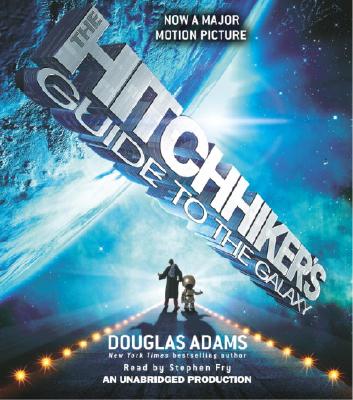
Audiobook Review: The Hitchhiker's Guide to the Galaxy, by Douglas Adams

I might, just possibly, be one of the last people on earth to read this book. And good thing I got around to it, too, because according to Douglas Adams, there is a very real chance that an alien race may just be planning to demolish Earth, simply because it is in the way of a proposed transportation route.

The premise of  The Hitchhiker's Guide to the Galaxy, the first of a "trilogy in five parts," is actually quite simple: Earth is destroyed, and Ford Prefect (an alien previously stuck on Earth for lack of a ride on which to hitch-hike) and Arthur Dent (a normal human, just like you and me) are the only two survivors. Eventually, they find their way to the lone, abandoned planet of Magrathea, previously known for its planet-building exploits--except that it is not so lonesome and abandoned after all. The resulting storyline is comical in its twists and turns and most unlikely of coincidences (conveniently explained away by the existence of a devise meant to make the most improbable solutions probable after all), as Ford Prefect, Arthur Dent, a depressed robot, the two-headed President of the Galaxy, and a bunch of mice try to figure out the meaning of life.

What is so strikingly glorious about The Hitchhiker's Guide to the Galaxy, besides the fact that the first book is narrated on audio by none other than Stephen Fry himself, is the humor and the wit and the philosophy contained in what is otherwise a series of bizarre coincidences and strange plot turns. Adams can make one laugh out loud and think for long periods of time, all with the same sentence, and I'd argue there's not many an author that can do that (just as there are not many narrators who could have so well highlighted this humor as Fry does).

I'll definitely be back in to pick up the rest of the trilogy/series/whatever it is best called, and will continue to scold myself for having waited so long to finally start. Also, 42.

---

The Hitchhiker's Guide to the Galaxy | Douglas Adams, nar. Stephen Fry | Random House Audio | 2005 (originally published 1979) | Audiobook | 5 hr 51 min | Buy from an independent near you


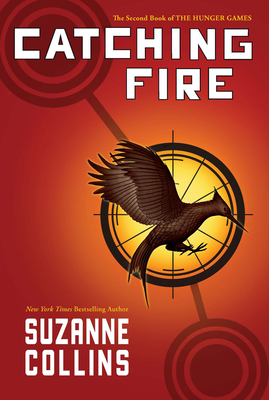
Late to the Party: Catching Fire & Mockingjay, by Suzanne Collins


I'm way late to this party, I know. Not only did I read the books after everyoneelseintheworld, but I have now waited nearly four months between reading the books and writing about them. Oops?

I read both of these on my Nook back in April when flying to and from Italy. They seemed like perfect travel reading to me: easy to get into, easy to get hooked on, and easy to get lost in. What more could you need for 7+ hour flights with crappy in-flight movies as an alternative?

I was right on all accounts. The books are easy to get into (though you definitely have to have read the first to get the second and third), easy to get hooked on, and totally make the time fly. Collins builds further on the world she developed in The Hunger Games, bringing back some favorite characters, introducing some new characters, and giving life to characters previously mentioned only in passing. There's guts, there's gore, and there is, of course, a healthy dose of sappy romance.

Overall, I'd still call The Hunger Games my favorite of the three, but the trilogy works as a whole. I'll never call these great literature, but they are definitely great stories (despite some obvious plot flaws in Mockingjay).

And for those wondering, I'm all about Team Peeta. FTW.

---

Catching Fire | Suzanne Collins | Scholastic Press | September 2009 | Hardcover | 400 pages | Buy from an independent bookstore near you

Mockingjay | Suzanne Collins | Scholastic Press | August 2010 | Hardcover | 400 pages | Buy from an independent bookstore near you

Audiobook Review: 11/22/63, by Stephen King

It took me nearly a month to listen to all 30+ hours of Stephen King's latest novel, 11/22/63, but I firmly believe that every single minute of this epic novel was worth it. King has masterfully recreated the "the Land of Ago," as our narrator, a schoolteacher in Maine named Jake Epping, fondly refers to it. Epping's first-person narration is captured on the audio version of this title by the impeccable Craig Wasson, whose skillful narration is steady throughout the text, though charged with emotion as appropriate. And it is often appropriate.

See, it all starts like this: Jake goes to his Al's Diner to celebrate the end of a school year, and one thing leads to another, and just like that, poof!, Al has lung cancer and his dying wish is that Jake go back in time to 1958 to stop the assassination of JFK. Sounds impossible, but a handy little rabbit hole that links modern times to September of 1958 makes it all possible.

And so, not to spoil anything, because it's pretty obvious, Jake goes. He tinkers, he tampers, he checks back on 2011 to see how his changes are holding up in the future. Or the present. Whatever it is. And he sets off to do just what Al asked him to: prevent the assassination of JFK on that fateful date, 11/22/63, in Dealey Plaza.

Jake lives in the Land of Ago for five years -- between the rabbit hole entrance of 1958 and that memorable date in 1963 -- and he has, to put it mildly, time to kill. This life he leads becomes as much the story of 11/22/63 as the mission to save Kennedy, as Jake finds himself pulled further and further into the obdurate past.

King explores the once-upon-a-time land of mid-century America in full detail, recounting a time in which the root beer is rootier, the milk is creamier, the people are more trusting, and the gender norms are vastly different. But 11/22/63 is about more than the past, encompassing territories that cannot be defined by any one time period: love, and loss, and fear, and knowledge, and community.

Given, too, that this is a novel of time travel, both King and Jake struggle with the implications of time travel, of how the past influences the future, how delicately the future is woven, and how important even the smallest of actions may be. These concepts, though not groundbreaking, are thought-provoking; if the butterfly effect is as real as we can imagine, 11/22/63 forces us to consider, what am I influencing right now by doing exactly what I am doing? Is there an alternate version of this reality in which I made different choices? Or took a fateful step one fateful second later, and changed the course of history?

I could go on and on about the subjects King explores here, but I won't, because unlike King, I lack the ability to ramble on in detailed sidepaths without losing my readers. And that's assuming you've even made it this far. So I'll sum up: King, in short, is a master of his craft. 11/22/63 is long, but never lengthy, detailed, but never tedious. Subplots and side stories abound, but each one is relevant in its own way.

King's clever use of foreshadowing throughout all the twists and turns of this complex story make him one sneaky bastard in my book, but this trick is successful in keeping the pages turning: each hint of what is to come, each delicate implication of how things might net out sent my heart a-palpitatin'. Maybe that's something King is known for; as this is my first King novel, I wouldn't know. But I do know that despite the 30+ hours (or 900+ pages, for those reading in print), I was sad to hear (or see, as the case may be) this one end, and I'll certainly be looking out for more King in the future.

---

Thanks to Simon & Schuster Audio for providing a copy of this title for my review, which, by the way, includes King himself reading the afterword.

---

Thoughts from other bookworms:
January Magazine
Jenn's Bookshelves
The Book Case

---

11/22/63 | Stephen King, nar. Craig Wasson | Simon & Schuster Audio| 9781442344280 | $75.00 Audio CD | 30 CDs, 31 hrs | November 2011 | Buy from an independent bookstore near you

Book Review: The Hunger Games, by Suzanne Collins

Or, the post in which I admit that I read a YA-bestseller that wasn't Harry Potter and actually liked it.

You'd have to have been living under a rock for the last few years to not have heard of The Hunger Games trilogy at this point. It's so ubiquitous that it is even making appearances in the #Occupy movements. At least it did this one time, at any rate. Because it is so everywhere-and-in-your-face-and-read-me-read-me-read-me, I did the only natural thing a book snob like myself could do: I avoided it.

That is, until a good friend and fellow blogger sent me a copy and insisted - yes, insisted - that despite all the things I thought I knew about it, I had to read it. She coupled this argument with the fact that I would be able to finish it in an afternoon. Figuring I had nothing to lose but a few hours and some of my pride at insisting that it wasn't for me, I took a stab.

What I found between the unsuspecting pages of The Hunger Games was a fast-paced, imaginative and creepy in that this-is-all-too-possible kind of way story. I won't go into the details of the plot, because in all likelihood, anyone reading this has already read the whole trilogy anyway, but for those who don't know the premise:

In the country of Panem, which sounds shockingly like a country that used to be known as the United States, The Capitol dominates. And, somewhat inevitably, there is an attempted revolution. And also inevitably, in a world of dictatorships and dominatrixes, The Capitol thinks up a twisted punishment for this revolt, which doubles as a constant reminder of their power and control: The Hunger Games. Each district must send one boy and one girl to compete in the games each year, in which children are pitted against a series of man-made challenges - and each other - in a fight to survive. Last child standing wins. All the others... well, they are dead, and thereby have not won.

See? I told you it was twisted. I can understand some of the parental objections over the book (although I maintain that attempting to ban a book because it gave your child nightmares is just outrageous), for there is some heavy stuff in there: the importance of family, the concept of sacrifice, the making and breaking of allies. And death. There's all that stuff about death.

Ultimately, Collins' imagination is the savior of the book -- her writing is not. Conversations feel stilted and forced, and characters develop unevenly at best. And don't get me started on the sentences that aren't really sentences.

Despite all of the flaws, though, I'll go back for seconds and thirds with the next two books in the trilogy. Collins has succeeded in creating a masterful world, a world of centralized power and dictator-ship like rule that is all too possible to consider, and a world to which I'd like to return. I'm eager to find out what happens of the whirlwind media storm created by the Games featured in this first installment, and I really do want to know what happens to certain characters-who-shall-not-be-named-but-if-you-read-the-book-you-know-what-I'm-talking-about.

So. To sum up. Maybe not the most well-written book I've read, and certainly not my favorite of ever or even the year, but I've got a soft spot for imagined futures (see my recent review Margaret Atwood's The Year of the Flood), and The Hunger Games fit right in there. Thanks to Emily for the recommendation, the insistence, and then going so far as to send me my own copy of the book -- and for proving that sometimes I don't know what's best for my own reading tastes.

---

It seems I'm on a dystopian, re-imagined future kind of kick. What should I look for next?

---

Thoughts from other bookworms (sharing the same I-read-this-and-SURPRISE!-I-actually-kinda-liked-it feelings):
another cookie crumbles
Dead White Guys
Frederation

---

You might also like:
The Handmaid's Tale by Margaret Atwood
The Year of the Flood by Margaret Atwood
The Hunger Games Companion by Lois Gresh

Book Love for Your Fridge (or Other Magnetic Surface)


Bottlecap booklover magnets from PendantLicious, $6.95 on Etsy

Book Review: Among Others by Jo Walton

Remember back in January when I said I was throwing my reading goals out the window so I could read Among Others, a book I hadn't heard of until it released but immediately knew I had to read?

Man oh man, am I glad I did. This, after all, is why I don't believe in strict to-be-read piles, lists, or limits. There are just too many books out there that I don't yet know about. How could I possibly limit myself to a list?

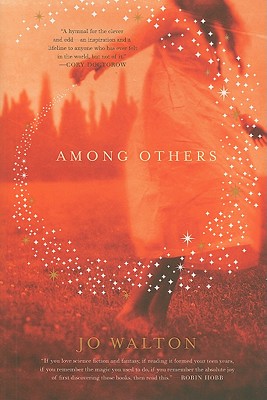
Among Others, despite its somewhat cliché cover design, is a an unusual and compelling of a young girl struggling to find her place in the world after the death of her twin and separation from her mother. Through her diary entries, we are entered into Morwenna Phelps' world: a world of twins and half-existence, fairies, estranged family member. Morwenna is different, but like any teenage girl, she is trying desperately to figure out where she belongs, what she will grow up to be, and who she is.

Many of the themes here are familiar: a twin fighting for a sense of identity and independence; the child of divorced parents examining a past relationship; an orphan looking for a family; a schoolgirl looking for friends; a cripple seeking acceptance. But told all together in a world in which fairies influence events, magic can be seen and understood by those willing to look for it, and books provide a powerful force in shaping young adults' lives, Jo Walton's novel is nothing familiar.

On reading the first pages, I was disappointed to find I had signed up for 250+ pages of journal entries. Again? We've done the teenage-girl-diary before; Anne Frank cornered that market. But Walton pulls it off, moving things along nicely enough but peppering entries with those standard high-school concerns: cheating, boys, grades, holidays, and status.

Despite an occasionally slow pace, the insight we get into Mor's thinking is worth waiting around for. Her world revolves around the fairies, making sense of what happened to her sister, and the science fiction books she devours by the week.

Magical forces are laced through every experience she has. But this is not a world of fairy-godmother figures and wands and spellcasting. This magic is of an earthy sort, with fairies that may or may not speak any intelligible language and spells that are innately tied to the earth and the inherent magic of place and the connections we have with things, places, people:
"It wasn't that we didn't know history... It just didn't connect to the landscape. And it was the landscape that formed us, that made us who we were as we grew in it, that affected everything. We thought we were living in a fantasy landscape when actually we were living in a science fictional one. In ignorance, we played our way through what the elves and giants had left us, taking the fairies' possession for ownership." (p. 34)
It is a magic of coincidence, of setting things in motion, of preventing one small event that will change the outcome years down the road:
"It's like if you snapped your fingers and produced a rose but it was because someone on an aeroplane had dropped a rose just at the right time for it to land in your hand. There was a real person and a real aeroplane and a real rose, but that doesn't mean you have the reason you have the rose in your hand isn't because you did the magic." (p. 40)
See? It's no expelliarmus or expecto patronum or anything with wands and wizard hats and spells and wards. But it is still magic, and despite the fact that it is a crucial factor in shaping Mor's self - it is published by Tor, after all - Mor's existence is perhaps even more dominated by her reading. She discoveries books and libraries and reading and the escape that they provide in the way that we all wish we could revisit for the first time:
"Interlibrary loans are a wonder of the world and a glory of civilization. Libraries really are wonderful. They're better than bookshops, even. I mean bookshops make a profit on selling you books, but libraries just sit there lending you books quietly out of the goodness of their hearts." (p. 59)

"They could take all the money from building enough nukes to kill all the Russians in the world and give it to the libraries. What good does an independent nuclear deterrent do Britain, compared to the good of libraries? Somebody has their priorities wrong." (P. 246)
Don't you want to rediscover the wonder that is the library, a home for books to be shared?

Bottom line: Mor's story starts out with the end; like Tolkien, her idol, she understands "the things that happen after the end" (p. 60), and her end is the death of her twin. But slowly, through new relationships, books, and yes, magic, Mor comes to understand that this is just an end, not the end. She matures, her reading matures, and her writing matures, culminating in a satisfying conclusion that still manages to leave much to the imagination.

Among Others is a must-read for anyone who has ever been touched by the magic they read about in books, or ever felt that there is something more to this existence than meets the eye. This coming-of-age story takes a step back from the standard high school experience, deftly blending science fiction and the very real experiences of high school (friends, family, money, grades, and dating) in a book that is sure to carry you along in its currents. Not to mention the list of books merely mentioned will triple your reading list in the few short days it will take you to finish it.

---

More from Jo Walton:

Farthing (Tor, 2006)
Ha' Penny (Tor, 2008)
The King's Peace (Tor Fantasy, 2002)
The King's Name (Tor Fantasy, 2001)

---

Thoughts from other bookworms:

Stainless Steel Droppings
Things Mean A Lot
Fantasy & SciFi Lovin News & Reviews
io9 - Loving books and doing magic might just get you through puberty

---

Many thanks to my husband for providing my copy of this book.

Audiobook Review: Dracula in Love by Karen Essex

Karen Essex is, as far as I can tell, an author noted for the incredibly well-recreated periods of her historical fiction novels. After reading (ahem, listening to) Dracula in Love, I'm surprised the historical fiction aspect of these novels has been impressed on anyone's minds, as the rather explicit sex scenes pretty much dominate one's imagination - and memory - of the book.

I suppose it's unfair to judge an author's previous works based on only the one, so from here on out I will keep my comments limited to just the one.

Essex' latest novel, Dracula in Love, retells the "true" story of Dracula from the perspective of Ms. Mina Murray, orphan, schoolteacher, proper British lady, sleepwalker, and Dracula's love interest. Essex cleverly works in several appearances of a "red-headed gentleman," whom we can only assume must be Bram Stoker, who is perverting the facts and the story to create the tale we still read today. But Mina's story - one of love and loss, misunderstanding and madness, otherwordly powers and the very human Count Dracula - is, we are told, the accurate version of events, transcribed by Mina herself to set the record straight for her children, if not for the greater reading public.

By carefully twisting the plot elements presented by Stoker, Essex has, in fact, successfully recreated the story of Dracula. While the early pages of the book closely mirror that of Stoker's original story, the plots quickly diverge, yet never far enough apart that one fails to see Essex' inspiration in her telling. And, as other readers before me have noted, Essex is a master at historical (romantic) fiction; she captures the details of Victorian England near perfectly; relates the culture and speech of the time as accurately as one who had been there; and even details the fashions and dress of the time as one who is well-studied in the era might.

Despite all of this - a gripping plot, a masterful reworking of given storylines, and a well-researched account of a time period - the end result fills like little more than a romance novel. Why, you ask? Well, I am no prude - I love a good steamy scene as much as the next reader - but the sheer mass of erotic content in Dracula in Love sadly overshadows the otherwise well-done novel.

Bottom line: Perhaps I might not have been so disturbed by the erotic nature of Essex' work if the book had not been recommended to me by my 15-year-old sister, but as it stands, the novel was ultimately discomforting. Still, Dracula in Love is a well-told, engaging retelling of the popular Dracula story, perhaps most appreciated by those already familiar with Stoker's work, but still promising to be enjoyed by lovers of historical fiction, supernatural and yes, pure romance novels.

A note on the audio: Read by Bianca Amato, the audiobook of Dracula in Love is, like the novel, well-done, as well as well-read. Amato's voice is clear and easy to understand, and for a long novel - nearly 13 hours - rarely, if ever, unintelligible.

Book Review: The Reapers Are the Angels, by Alden Bell

I find it suiting that I am writing this review as my husband unlocks the zombie level of the new Call of Duty: Black Ops. As zombies overrun the White House and threaten JFK, I contemplate debut author Allen Bell's thoughts on human nature in the face of a zombie plague. And so, with gun shots and zombie groans rambling through my ears...

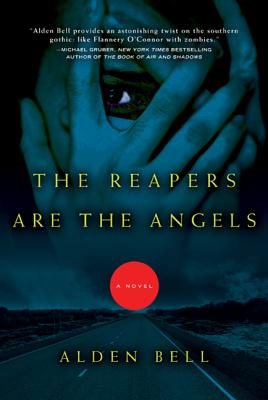
The Reapers Are the Angels is a well-crafted and unique first novel, detailing the life of Temple, a girl who finds herself alone in a world plagued by zombies. From a young age, she has fended for herself, learning the swift one-two knife stroke required to kill and keep dead a zombie before she even learns to read. She repeatedly rejects the company of other survivors in favor of solitude, in part because of her personality, and in part, we learn, because she is punishing herself for the evil she believes lives inside of her.

As she grapples with questions that no teenager should have to face, let alone face alone, she longs for the days of sunny outdoor cafes, and holds a trip to Niagara Falls as her ultimate goal in life. She moves from a lonely island to a colony of hundreds of survivors to a camp of hunters to a train full of fugitives, but despite her efforts at loneliness, she is pursued by another survivor, aiming to settle a debt. In the end, the definition of friend and enemy is blurred, leaving Temple to determine what is good and what is not in a very grey-toned world.

The Reapers Are the Angels offers a fresh voice in the zombie genre. The book, relatively light on plot but heavy on thought, stands out among a myriad of middling zombie currently books flooding the shelves of our bookstores. Though not at all lacking in the blood, guts and gore that are the standard of this genre, Bell takes a more philosophical - almost religious - look at human nature in the face of a zombie plague. How does a person react to a world turned upside down? Some surrender, some fight, some hide, some turn the other cheek, some pretend that all is perfectly normal. Some, like Temple, see the evil of the world reflected inside themselves.

Despite the demons she carries around in her heart, Temple moves into the mind of the reader and makes herself a little home there. She is misguided, misunderstood, and miserable; though she doesn't seem to understand, the reader is privy to the fact that she is, in fact, a person with a good heart. Her story is powerful, despite the slow pace of the plot, as we see the world through her eyes and define it through her perspective.

Above all else, Temple's story resonates with the nature of the world around her. Though cities - and civilization - have crumbled and fallen to dust, the beauty of the ocean, the sky, the forest, the trees, the world still remain, and that beauty, in a way, is Temple's beauty.

Bottom Line: Bell's smooth writing, a narrative that reflects the inner voice of a troubled and determined young girl facing a world of zombies. Although it ranks one among many zombie novels released in recent years, The Reapers Are the Angels is unique. The philosophical considerations of a zombie-infested world, the reflections on nature's persistent beauty in spite of the evil that strides across it, and the struggles of Temple as she looks for her place are not the standard markings of a zombie novel; paired with the guts and gore that one expects when killing the un-dead, this is sure to be enjoyed by zombie lovers and by those a bit skeptical of the genre to begin with.

---

Note: I received a copy of this title for review from the publisher, Henry Holt.

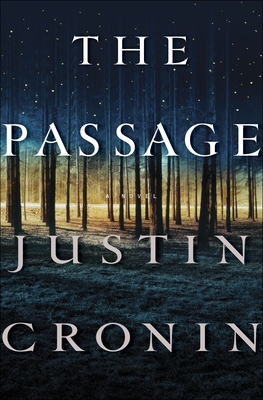
Book Review: The Passage by Justin Cronin

Let me begin by apologizing, because this will be less a review and more an all-out rave. After all, with the incredible collection of bloggers that have already covered The Passage, I'm not sure I have too much more to add, at least not anything too original. So what proceeds will be pure gushing, followed by some commentary on other reviews floating around out there.

Put simply, this book is astounding. It is glorious, brilliant, wonderful, a joy, a pleasure, a feat. The 800-page tome stemmed from Cronin's daughter's suggestion that he "write a book about a girl who saves the world." And, in a roundabout way, that's what this is: Amy, a six-year-old girl with virtually no ties to the world, is injected with an advanced form of a virus that makes her somewhat super-human. When the test subjects for the earlier form of the virus escape from a military compound, bringing down most of humanity with them, Amy is left utterly alone in a post-apocalyptic world in which "virals" roam the land, killing off the population and leaving the United States an empty shell of what it once was.

Worried that I said too much? Don't. That summary is about the first 50 pages. Maybe 100. So there's plenty more to come.

Cronin's imagination must be the size of the Milky Way; he has a stunning ability to look at the world around him - the war against terror, the existing highway system, our dependence on vehicles and foreign oil, the mass populations in cities, the power of the military - and see what could be. In this manner, The Passage is terrifyingly real; more than real, it is relevant.

Charles Taylor, reviewing the book on the B&N blog, argues that Cronin's book is a service: "He's working for the reader, he wants to immerse whoever picks up the book and, to quote from Stephen King's advance praise, to make the ordinary world disappear." To me, that's just what he did. My ordinary world was taken up by Cronin's prose, and now I want to sleep with the lights on. I'm afraid to walk home from the subway at night. Last night, after finishing the novel, my roommate and I heard a weird noise in the kitchen - and proceeded to huddle together to see what was moving out there. It was the cat. Yes, we were that freaked out.

Ron Charles, at The Washington Post, calls it "a macabre pleasure to see what a really talented novelist can do with these old Transylvanian tropes" - and he's not wrong. Sure, it's a "vampire novel." But to call it such is to lump it in with the world of Twilight, True Blood and even Dracula, and The Passage is So. Much. More. Than. That.

Blogger Rachel on Home Between the Pages called the book "totally uncategorizable." She hit the nail on the head. It offers, all in one lump 800-page clunker, a mystery, adventure, horror, thriller, sci-fi, fantasy, post-apocalyptic, futuristic, romance, action, and so much more.

Not everyone loved it, though. Diane at Bibliophile by the Sea couldn't finish it, and Caitlin at Chaotic Compendiums found it disjointed and far too long. I would disagree (in case you couldn't already guess that) - yes, the book is long and a bit daunting, but it sweeps you up, carries you along in a forceful current of events that require attention and puzzling out and mulling over. And yes, the first half is beautifully done, with character and world development happening seamlessly, and by default, it gets more complicated after the world has been established and the plot takes over the wheel. And yes, the book is somewhat disjointed, in that it carries within it multiple stories, characters and over 100 years of history - but isn't that, to an extent, what an epic does?

Bottom line: I'm still just gushing. I found this worth the 3 lbs it added to my bag (for the two days it took me to finish), worth the 2 solid days of reading I gave it (I devoured it). Forgiving a few cliche cliffhanger chapter endings, the writing was strong and original. For the first in a trilogy, the book is startling satisfying - tying up enough loose ends to leave the reader content to re-trace the storyline and try to puzzle out what has happened - and yet enough questions go unanswered to provide a solid set-up for the next books in the trilogy. I am literally sitting on the edge of my seat thinking about the next two in the trilogy. Write faster, Mr. Cronin, write faster.

What about you? Thoughts? Have you read it? Will you read it? Are you put off by the hype (I was, but I'm glad I got over it), or the vampire element (don't be)?

-----

Note: Thank you to Random House for sending me an ARC to review.