Showing posts with label classics. Show all posts

Reading Joyce for "Fun"


I had a dentist appointment a few weeks ago, and the doctor saw me a full 45 minutes late. I had rushed out of a meeting to get to the appointment on time, and forgotten my phone, and realized I left my wallet at home, so had 45 minutes of time to sit and steam a bit. But actually, I didn't steam. Because even though I'd forgotten essentials like phone and wallet, I'd managed to grab my current book, Dubliners. So I had 45 uninterrupted, unreachable moments to sit and read Joyce's short stories. What a gift.

When the doctor did finally come in, she apologized briefly for "running a bit behind," and struck up the requisite small talk when one has a book in her lap: Oh, what are you reading?

Dubliners.

Are you a student?

No.

Why would anyone read Joyce if it wasn't for school?

The Classics Club, Redux(ish)

In September of 2012, a younger, more optimistic me joined the Classic Club, hoping to motivate myself to read 50 classics over five years (ending September 2017).

It's well past September 2017, and suffice it to say, I did not read 50 classics. I did read 24, though, so rather than calling this a bust, I'm readjusting my goals, and planning to read the remaining 26 over the next five years.

Here's what I've read so far:

  1. Emma by Jane Austen
  2. A Study in Scarlet by Sir Arthur Conan Doyle
  3. The Sign of Four by Sir Arthur Conan Doyle 
  4. Middlemarch by George Eliot 
  5. The Grapes of Wrath by John Steinbeck
  6. Anna Karenina by Leo Tolstoy
  7. The Handmaid's Tale by Margaret Atwood 
  8. The Beautiful and Damned by F. Scott Fitzgerald 
  9. A Tree Grows in Brooklyn by Betty Smith 
  10. Gone with the Wind by Margaret Mitchell 
  11. Fahrenheit 451 by Ray Bradbury 
  12. The Garden of Eden by Ernest Hemingway* 
  13. Jane Eyre by Charlotte Bronte
  14. To Have and Have Not by Ernest Hemingway* 
  15. Don't Stop the Carnival by Herman Wouk
  16. Diamond as Big as the Ritz by F. Scott Fitzgerald
  17. Frankenstein by Mary Shelley
  18. The Haunting of Hill House by Shirley Jackson
  19. The Count of Monte Cristo by Alexandre Dumas
  20. Chronicle of a Death Foretold by Gabriel Garcia Marquez
  21. The Fire Next Time by James Baldwin
  22. Wise Blood, by Flannery O'Connor
  23. The Moons of Jupiter by Alice Munro
  24. Selected Stories of Anton Chekhov by Anton Chekhov

And here's the list I'll be pulling from for the next five years:

  1. Little Women by Louisa May Alcott 
  2. I Know Why the Caged Bird Sings by Maya Angelou
  3. Sense and Sensibility by Jane Austen
  4. The New York Trilogy by Paul Auster
  5. Odessa Stories by Isaac Babel
  6. Giovanni's Room by James Baldwin 
  7. Wuthering Heights by Emily Bronte 
  8. The Master and the Margarita by Michael Bulgakov 
  9. A Clockwork Orange by Anthony Burgess 
  10. Breakfast at Tiffany's by Truman Capote 
  11. The Spy Who Came in from the Cold by John le Carre 
  12. Tinker, Tailor, Soldier, Spy by John le Carre
  13. Collected Stories by Anton Chekhov
  14. Woman in White by Wilkie Collins 
  15. Great Expectations by Charles Dickens 
  16. A Tale of Two Cities by Charles Dickens
  17. The Three Musketeers by Alexandre Dumas 
  18. Absalom, Absalom! by William Faulkner 
  19. Light in August by William Faulkner 
  20. The Sound and the Fury by William Faulkner 
  21. The Great Gatsby by F. Scott Fitzgerald 
  22. Tender is the Night by F. Scott Fitzgerald 
  23. Madame Bovary by Gustav Flaubert 
  24. Cranford by Elizabeth Gaskell 
  25. The Yellow Wallpaper by Charlotte Perkins Gilman 
  26. Stranger in a Strange Land by Robert Heinlein 
  27. Islands in the Stream by Ernest Hemingway 
  28. The Nick Adams Stories by Ernest Hemingway
  29. The Sun Also Rises by Ernest Hemingway
  30. Les Miserables by Victor Hugo 
  31. The Legend of Sleepy Hollow by Washington Irving 
  32. Dubliners by James Joyce 
  33. Lady Chatterly's Lover by D.H. Lawrence 
  34. Death in Venice by Thomas Mann 
  35. Love in the Time of Cholera by Gabriel Garcia Marquez 
  36. One Hundred Years of Solitude by Gabriel Garcia Marquez 
  37. Bel Ami by Guy de Maupassant 
  38. Rebecca by Daphne du Maurier 
  39. Lolita by Vladimir Nobokov 
  40. At Swim Two Birds by Flann O'Brien 
  41. The Things They Carried by Tim O'Brien 
  42. Collected Short Stories by Flannery O'Connor
  43. 1984 by George Orwell 
  44. The Portable Dorothy Parker by Dorothy Parker 
  45. The Pit and the Pendulum by Edgar Allen Poe 
  46. Murders in the Rue Morgue by Edgar Allen Poe 
  47. Pedro Parama by Juan Rulfo
  48. The Prime of Miss Jean Brodie by Muriel Spark 
  49. The Man Who Loved Children by Christina Stead
  50. East of Eden by John Steinbeck 
  51. Of Mice and Men by John Steinbeck 
  52. Robinson Crusoe by Robert Louis Stevenson 
  53. Treasure Island by Robert Louis Stevenson 
  54. Dracula by Bram Stoker 
  55. The Lord of the Rings by J.R.R. Tolkien 
  56. The Warden by Anthony Trollope 
  57. The Adventures of Huckleberry Finn by Mark Twain 
  58. Brideshead Revisited by Evelyn Waugh 
  59. The Time Machine by H.G. Wells 
  60. Birds Fall Down by Rebecca West
  61. House of Mirth by Edith Wharton 
  62. Leaves of Grass by Walt Whitman 
  63. A Room of One's Own by Virginia Woolf

Book Review: Jane Steele, by Lyndsay Faye


I've written before about how much I've loved Lyndsay Faye's historical fiction, so while I was sad to see the end to her Timothy Wilde trilogy, I was excited to hear of her newest venture -- the story of a serial killer inspired by Jane Eyre. And Jane Steele did not disappoint.

Review & Giveaway: The Further Adventures of Ebenezer Scrooge


I will honour Christmas in my heart, and try to keep it all the year. I will live in the Past, the Present, and the Future. The Spirits of all Three shall strive within me. I will not shut out the lessons that they teach. Oh, tell me I may sponge away the writing on this stone.

This is Ebenezer Scrooge's solemn promise to the Spirits at the end of Charles Dickens' classic A Christmas Carol--a promise that Charlie Lovett has set out to explore in more depth in his follow-up to the classic holiday tale, The Further Adventures of Ebenezer Scrooge.

Week in Reading: October 26, 2015


It's the last week of October (somehow?) and I'm basking in the relative relaxation of a slow review month. This week, I devoured Salvage the Bones, Jesmyn Ward's National Book Award-winning novel from 2011; it was the kind of beautiful, cruel, heartbreaking novel that made me want to set it down and not continue but left me unable to look away. Truly, truly, truly excellent. I also finished Margaret Atwood's The Heart Goes Last, which I liked, but not as much as some of Atwood's previous works.

Writing Elsewhere: Classics (and Classics-in-the-Making) for Summer Reading (on MarthaStewartWeddings.com)


I'm over on MarthaStewartWeddings.com talking about classics (and classics-in-the-making!) to add to your summer reading list

What would you add?


Book Review: Re Jane, by Patricia Park

This review originally ran in Shelf Awareness for Readers. Reprinted here with permission. 


re jane by patricia park book review

The title of Patricia Park's debut novel, Re Jane, is a hint at the cleverness that lies between its covers: Park has taken the classic story of Jane Eyre and recast it at the opening of the 21st century. Jane Re, orphaned daughter of a Korean mother and American GI father, is sent from Korea to live with her aunt and uncle in Flushing, Queens. Her life mirrors Jane Eyre's in many ways: living with family who make her feel like a burden; a job as a nanny for a wealthy family, in Brooklyn, complete with a wife who uses the attic apartment of their brownstone as a home office; and a flight to Korea after a doomed love affair in New York ends poorly. 

Short Reviews of Four Short Books


I love me a good chunkster (Anna Karenina, anyone?), but from time to time, a step away from the 1,000-page tomes and into the world of 150-page micro-books is good for the soul. Here are a few short titles I've picked up of late:

Book Review: The Phantom Coach, edited by Michael Sims

This post modified from a review that originally ran in Shelf Awareness for Readers. Reprinted here with permission.

It's that time of year again: spooky stories and ghost tales abound, and we've all changed our Twitter names to something Halloween-appropriate. In the spirit of Halloween-reading, The Phantom Coach couldn't be more appropriate; for those of us also trying to read more classics, it's a double-whammy: Sims has curated a collection of Victorian ghost tales that celebrate the genre as much as the writers featured.

In the introduction to The Phantom Coach, editor Michael Sims (The Dead Witness; Dracula's Guest) explores why modern readers are still so entranced by classic tales from beyond the grave, writing, "the protagonists face the great chilling fact of human life: that it's brief, linear, and moves toward the grave as swiftly as an arrow. Ghost stories permit us to peek behind the shroud." Sims's chosen Victorian works do just that, ranging among topics such as lost children, lingering family spirits and haunted boating expeditions.

Sims's collection features a dozen authors, including Arthur Conan Doyle, Charles Dickens, Elizabeth Gaskell, Henry James, Rudyard Kipling and Amelia Edwards, with many lesser-known and infrequently anthologized pieces in place of more commonly known works from the era. Sims introduces each story with a brief background on the author, notes about how the ghost story fits into the author's oeuvre and, where relevant, how the story relates to the others in the collection (Dickens, for example, edited several of the tales found here for his periodicals Household Words and All the Year Round). The pieces, arranged in chronological order, span the Victorian era, pulled from as early as 1852 and as late as 1907. Combined into one volume, these 12 stories give readers an excellent entry point into the spooky literature of the Victorian era--a time marked by a fascination with death and dying.

---


A copy of this title was provided by the publisher for review.
The Phantom Coach: A Connoisseur's Collection of Victorian Ghost Stories | ed. Michael Sims | Bloomsbury | September 2014 | Trade Paperback

On the Fence: Books I'm Not Sure I Want to Read

I have so many books. So. Many. Books. We all have this problem, of course, but I've found that lately it has me wondering how many of these I'll actually read... and even more so, how many I actually want to read. My criteria for culling my book stacks lately has been harsh, sending books out the door at an astounding rate. But there are a few I've hung on to, or linger over every time I visit a book shop, and yet find I'm unable to commit to:


Wild, by Cheryl Strayed: I loved, adored, fawned over, cried for, worshipped Tiny Beautiful Things, and have returned to it time and time again when I just need a little... something. In fact, I love it so much I'm not sure I'm brave enough to read her other work.

The Cuckoo's Calling, by Robert Galbraith: I was a fan of The Casual Vacancy, even though a lot of people panned it, but I just haven't found this one calling to me. Has anyone read it? Should I?

War and Peace, by Leo Tolstoy: I admitted defeat on this one when I tried to read it last year. I can't bring myself to get rid of my copy... but I also have no motivation to pick it back up.

The Son, by Philip Myer: I have no reasoning for this one. I saw the author speak at Politics and Prose with Rachel from Home Between the Pages, and he was awesome. I know lots of bloggers, like Shannon from River City Reading, cite it as a favorite novel of 2013. But for some reason, I keep picking it up... and promptly putting it back down again. Someone talk me into this.

Northanger Abbey, by Jane Austen: I've written before about how I don't think Austen is for me, but I keep thinking maybe I just haven't read the right Austen novel... yet. Maybe

The Love Affairs of Nathaniel P., by Adele Waldman: I've had this since it came out last summer, but have never made it more than a dozen pages in. Anyone read it? Worth pushing through?


This post is part of Top Ten Tuesday,
hosted by The Broke and the Bookish.


Thoughts: Don't Stop the Carnival, by Herman Wouk

Picture this: Niles Crane, of Frasier fame, is having a mid-life crisis and has decided to quit New York and go off to buy a resort on a Caribbean island. As in every episode of the awkwardly delightful Frasier (or Seinfeld, or 30 Rock, or most any excellent sitcom), everything that could possibly go wrong does.


This is the best parallel I can come up with for Herman Wouk’s delightful, wonderful, insightful and cutting novel of Norman Paperman, a middle-aged Broadway publicist who, after surviving a heart attack, decides to buy a small resort on a Caribbean island. But his visions of peaceful bliss, reading Ulysses by the sea, are shattered when Kinjan life interrupts his dreams of paradise: the hotel is out of water, the manager has disappeared, there is a gaping hole in the wall in the foyer, the aging celebrity in the cottage next door is having an issue with the drink, and Norm simply cannot wrap his mind around any of the confusing, slightly absurd ways in which the island works.

Norman Paperman, despite his strange name, is the envy of all his peers in his decision to quit the real world and escape to paradise:

“All these people were at an age when their lives were defined their hopes circumscribed. Nothing was in prospect but plodding the old tracks until heart disease, cancer, or one of the less predictable trapdoors under their feet. To them, the Papermans had broken out of Death Row into green April springs, and in one way or another they all said so.”

Don’t Stop the Carnival can be searing: I can understand some of Wouk’s hilarious, but all-too-honest depictions of the island culture, though others border on insulting in their overgeneralizations. But more than that, Wouk has captured the joys and trials and downright insanity of chasing down one’s dream, of fighting to build a paradise that could only have come from one’s imagination, only to find it is nothing like what you had expected. This battle is rewarding in its own right, and it is a joy to watch Norm grow up, at least a little bit, and become a stronger man because of his lost visions of paradise.

---

This book is one of the classics I am counting as part of the Classics Club five-year challenge to read 50 classics.

Books That Go Together

I'm vacationing this week, staring out over beautiful stretches of water, thinking about books that go together. I packed with me Moby Dick, by Herman Melville, and Why Read Moby Dick? by Nathaniel Philbrick, but I haven't started either because I can't seem to decide which I should read first.


When I first read Anna Karenina, I started with the introduction. It was called the introduction, and I expected it to introduce me to the text. Instead, it gave away the outcome of the story--and turned me off of classics introductions forevermore.

But when I read Jane Austen's Emma, I started with the essay on the novel in A Jane Austen Education, and found that I ultimately took more away from Austen's novel than I might have without the essay introduction. (That being said, I still didn't enjoy the novel, and find I'm not so much of an Austen fan.)

Now I'm staring down Moby Dick and Why Read Moby Dick?, uncertain of where to start, and wondering about books that go together, and whether reading about a book enhances the reading of it, or whether reading about a classic is more impactful if you've already read the classic being discussed:
  • Lolita and Reading Lolita in Tehran
  • The Great Gatsby and So We Read On
  • Jane Austen's novels and A Jane Austen Education
That's not even taking into consideration books about an author's life (such as Hemingway's Boat), novels that reinvent an author's life (Z: A Novel of Zelda and Call Me Zelda come to mind), or modern retellings of classic novels (Great, Song of Achilles).

What do you think? Where should I start?


Pride and Prejudice: That Book Everyone Else Loves

Mug: Brookish Etsy Shop | T-shirt: Out of Print
There's something special about Pride and Prejudice. For reasons I can't quite fathom, people love this book. They adore it. They re-read it every year. They quote it. They have it on t-shirts and tote bags and cocktail napkins. They've seen every movie adaptation ever made. They can't imagine anyone but Colin Firth as Mr. Darcy (though to be fair, neither can I at this point). 

Pride and Prejudice is a book that people adore--loudly, from the rooftops, singing its praises--but it's a book I just don't like. While I can appreciate it as an important work of literature, appreciate Austen's wit and power with words, it fell flat for me as a story, failed to give me characters in which I felt invested, and ultimately proved to be a disappointment.

Not for lack of trying, mind you. I read it as an assigned title in high school (didn't like it). Because I try not to form permanent opinions of books I've only read as assigned reading, I re-read it just after college (didn't like it). I picked it up a third time and read the first thirty pages or so (didn't like it).

Maybe, I thought, Pride and Prejudice is just not the right Austen novel for me. I'll try Emma!
Bad idea. Where I mildly disliked Pride and Prejudice, I really, truly did not like Emma. I suppose I liked it in theory, with Austen driving home the point that the mundane details of everyday life are actually what make life interesting, but liking something in theory and actually liking it are two different things. I like kale in theory. I like vitamins in theory. I like going to the gym in theory. I like jumping in the ocean in the wintertime in theory.

I tend to shy away from voicing my Austen opinions. Every time I mention to someone that I don't like Pride and Prejudice, I'm urged to read it again. Or, even worse, I'm given the cliche statement that just because something is cliche now doesn't mean it was cliche when it was first done:
"It's not overdone when it's never been done before when it was first done that time before it was ever done before anyone else had done it."
Yes, thank you, I get that.

But I don't get Austen. I didn't like Pride and Prejudice any of the three times I read it, but I read Middlemarch earlier this year and thoroughly enjoyed it--and there are some definite thematic similarities between Middlemarch and what I know of Austen's works. So if it's not the subject matter or time period that's throwing me, it must be something else. Maybe it's the hype. Maybe I'm missing something. Or maybe it's my own pride and prejudice (I made a pun).

This is where I need the hive-mind help. Should I re-read Pride and Prejudice (perhaps as part of a readalong, supported by the wisdom and love of others as I read)? Should I try yet a different Austen novel (I've been told Mansfield Park is decidedly different from her other works)? Or should I just give up the ghost, declare myself a non-Austen fan, and move on to other authors?

People of the bookish internet, please help.

Classics Club Spin

The Classics Club is doing another spin this weekend, and in an effort to get myself motivated on my fifty books before I turn 30, here's a list of 20 classics still on my list to read, most of which I already own:

Hemingway Works
The Sun Also Rises
Short Stories
To Have and Have Not
Islands in the Stream

Books I've Already Started and Just Need to Finish
The Portable Dorothy Parker 
Gone with the Wind
Hound of the Baskervilles

Classics to Re-Read and Savor
One Hundred Years of Solitude, by Gabriel Garcia Marquez
Breakfast at Tiffany's, by Truman Capote
Dubliners, by James Joyce
The Count of Monte Cristo,by Alexandre Dumas

From the 30 Books to Read Before You're 30 List
The Dream of a Common Language, by Adrienne Rich
The Sun Also Rises, (yeah, ok, I put this on the list twice, is that cheating?)
A Room of One's Own, by Virginia Woolf
The Golden Notebook, by Doris Lessing
Song of Solomon, by Toni Morrison

Ones I Just Own and Need to Pick Up Already
At Swim Two Birds, by Flann O'Brien
The Warden, by Anthony Trollope
Lady Chatterly's Lover, by D.H. Lawrence
A Tale of Two Cities, by Charles Dickens


Updated: The spin number is #10, which for me is Dubliners by James Joyce. I read this in college for an Irish lit class, and wrote a paper about "The Dead." I'm excited to go back and re-read this one on my own terms, not as an assignment.

Septemb-Eyre: Chapters I-XI

A quarter of the way through Jane Eyre, and I can already see why so many people hold this book so dear.

Poor, poor Jane, and her poor, unfortunate circumstances. First, she is orphaned and locked in a cupboard under the stairs by this horrible family named the Dursleys and locked in the nursery by this horrible family named the Reeds who are forced to look after her against their will. When she turns out to be a wizard refuses to be silenced or back down against Dudley John Reed*, she is sent to a school for wayward girls where they must eat terrible porridge and freeze their toes off and get beaten with brooms.

Even though things are looking up at the end of Chapter XI, I've got a sneaking suspicion this state of happiness is not meant to last in Jane Eyre's world.

What struck me most about Jane throughout each of these trying situations was her terrible, incredible sense of justice. She argues with the Reeds, with her teachers, and with her dear friend Helen that she could not possibly back down in a situation in which she felt herself to be in the right:
"You are good to those who are good to you. It is all I ever desire to be. If people were always kind and obedient to those who are cruel and unjust, the wicked people would have it all their own way; they would never feel afraid, and so they would never alter, but would grow worse and worse. When we are struck at without reason, we should strike back again very hard; I am sure we should--so hard as to teach the person who struck us never to do it again."
Now that is a 10-year-old who knows her own mind. But then again, she doesn't, always, for she continually puts so much stock in what others think of her; her sense of justice is completely tied up in her sense of how other people view her.

I've never read this, but I have a feeling that may get complicated for her down the road, single, unattractive, passionate girl that she is.

And also, what's up with the "circumstance of ghostliness" that accompanies the "curious cachination" (love that turn of phrase, even f spellcheck doesn't think "cachination" is a word)? Is Jane Eyre a book I could have put on my RIP VIII list?

For those reading for the first time, what did you find most noticeable about Jane?


For those re-reading, what stood out to you the second time through?


Reminder: If you're reading ahead or you've already read the book, please try to avoid spoilers for those of us who are new to the story!


Next week: Chapters XII-XXI.

---

*I mean, really, the Reeds must be the original Dursleys. What part of Bronte's description of John Reed does not remind you of Dudley?
"John Reed was a school boy of fourteen years old...large but stout for his age, with a dingy and unwholesome skin; thick lineaments in spacious visage, heavy limbs and large extremities. He gorged himself habitually at table, which made him bilious... He ought now to have been at school; but his mamma had taken him home for a month or two, 'on account of his delicate health.' Mr Miles, the schoolmaster, affirmed that he would do very well if he had fewer cakes and sweetmeats sent him from home; but the mother's heart turned from an opinion so harsh, and inclined to the more refined idea that John's sallowness was owing to over-application, and, perhaps, to pining after home."

Septemb-Eyre: Roll Call!

After years of owning but not reading Jane Eyre, I'm finally taking the plunge. Like the good little blogger I am, I've managed to (somehow!) find 15 fellow bloggers and reviewers to read it along with me. So, here goes nothing!

First things first, it's not too late to sign up.
New readers, re-readers, Classics Club members, non-CC members... the more the merrier.

Schedule
September 2nd: Kick-off post, introductions, why you're reading, etc.
September 9th: Chapters I-XI
September 16th: Chapters XII-XXI
September 23rd: Chapters XXII-XXIX
September 30th: Chapters XXX-End

In my edition (the Penguin Classics Deluxe paperback), that works out to about 110 pages per week. We can so do this. Since there are some of us who haven't read the novel yet, please try to avoid spoilers past the section we're talking about each week.

And Introductions
Since there are so many new and new-to-me bloggers participating in this event, I'm hoping we can kick off with a little introduction -- who are you, where can we find you on the interwebs, why are you reading (or re-reading) Jane Eyre?

I'm all over social media myself, but of late, am most active on Twitter (@ofabookworm) and Tumblr (ofabookworm.tumblr.com). I'll be tweeting my reading with the hashtag #SeptembEyre.

I've owned Jane Eyre for years, and when my husband and I merged our book collections, we realized that we owned no less than four different editions of the novel--despite the fact that I've never read it and he hates the book. I decided to finally read it after approximately 1.2 million people on the Twitter were horrified that I hadn't read it, and told me all the reasons I should. It's also one of the books on my Classics Club list, so I consider this one of those multiple-birds-one-stone situations.

Besides some vague rumors (something about a man named Rochester, and someone living in an attic, I think?), I actually know very little about the book, so I'm hoping to go in with an open mind and see what all the fuss is about.

Here we go...

If you're participating, link up to your intro post here, and happy reading!

Happy Blogiversary to Me! (And a giveaway...)

Yesterday, I stumbled (quite by accident) into the fact that it was my 5-year blogiversary. Five years. I started this little corner of the internet to be a place for me to consolidate all of the book news, thoughts, and links I was otherwise emailing to my friends and family on a weekly, if not daily, basis. From my very first book review, this has grown to be so many things--still a place to talk about books and reading, but also a place where I have met new people, challenged myself, and grown as a writer and reviewer.

I'm celebrating by treating myself to a new, to-be-selected clothbound hardcover from Penguin's collection of Coralie Bickford-Smith designs, and as a thank you to the community who has helped me grow this little blog from a small nothing to a small something, I'm giving one away, too. To enter, simply leave a comment below letting me know which classic you'd like to win (and make sure to include your email address so I can contact you!). Earn one extra entry for following; pick your follower poison: RSS, Twitter, Facebook or Tumblr.

Winner will be entitled to select one clothbound hardcover from this collection of beauties, provided it is in print. US and Canada only, please (sorry, I can't afford the international shipping at the moment!). Enter to win until Monday, September 2nd at 8PM.

Septemb-Eyre Update: Logistics!

A few logistics for the Septemb-Eyre readalong...

Join us!
It's never too late to sign up. If you'd like to read Jane Eyre with us over the month of September, you can sign up for the readalong here.

Schedule
I was apparently looking at an August calendar when I picked dates for this, not a September calendar, and I'm guessing most people don't want to run posts on Saturday. How does Monday sound instead? That gives us all the weekend to catch up on reading and respond with thoughts on each section. That moves our schedule a bit and takes us right up to the end of the month...

September 2nd: Kick-off post, introductions, why you're reading, etc.
September 9th: Chapters I-XI
September 16th: Chapters XII-XXI
September 23rd: Chapters XXII-XXIX
September 30th: Chapters XXX-End

(That said, if a different day of the week works better for you, feel free to post whenever and just link up to the appropriate linky... this is supposed to be fun, not work.)

Hashtag Central
Join me on Twitter (@ofabookworm) and Tumblr (ofabookworm.tumblr.com) with the hashtag #SeptembEyre as we read along. 

What am I missing?

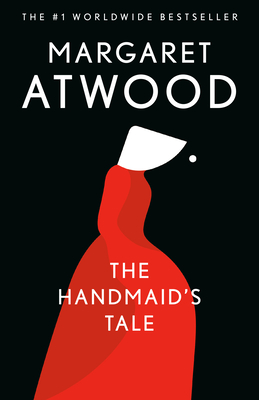
Thoughts: The Handmaid's Tale, by Margaret Atwood

Oh, The Handmaid's Tale. I first read this book in college, pulling it from the shelves when the kids I was babysitting had fallen asleep. When their mom came home and found me reading it, she graciously let me take it home rather than asking me to re-shelve it, for which I am eternally grateful. Because how could anyone put this down once they started? How could anyone begin reading Atwood and walk away from her?

For those who don't know, Atwood's tale takes place in a dystopian version of the United States, now known as the Republic of Gilead, in which big government has joined at the hip with big religion to subjugate women and create a kind of procreation caste system. The system "marries" one man and one woman, but gives important households a handmaid--essentially a concubine who has sex with the man of the marriage at pre-determined times to try to get pregnant. Sex is joyless, passionless, and government-mandated. Speech is limited, dissenters (including priests of certain unaccepted religions, scientists, gay people, loud people, and anyone who dares to be an individual) are hung, and handmaids are discarded if they do not get pregnant in a timely manner. It is a world based on terror, fear, and suppression, revealed to us in bits and pieces by Offred (literally "of Fred," handmaid to Fred). But when Fred shows that he himself doesn't always follow all the rules, Offred discovers a secret underworld that thrives beneath the polished veneer of government-approved activity.

While it seems far-fetched when summarized above, the beauty--and horror--of The Handmaid's Tale is in its roots in our reality. As Offred begins to reveal bits of her own past, we realize, slowly, how much her world used to look like ours--and how it was baby steps and small actions that led to the slow dissolution of society as we know it. First women lose access to their own money, then they are prohibited from working, and then, and then, and then. Until suddenly a world in which women are nothing more than child-bearing vessels is suddenly not so hard to imagine.

The Handmaid's Tale was my first exposure to Atwood (I fell in love), but it was also my first exposure to dystopian literature that was not the high-school assigned 1984. It was the first time I realized outside of a classroom how much fiction could teach me about the world. It was the first time I stepped outside my comfortable suburban bubble to think about the far-reaching implications of religion and political power. It was the first time I identified as a feminist, even if I was scared to use the word at the time.

Needless to say, re-reading it earlier this year was both thrilling and terrifying. What if it didn't live up to my exceedingly high expectations (which has happened to me before in re-reading my favorite books)? What if it didn't make my head spin the way it had the first time? What if Claire Danes' narration of the story was awful?

Luckily, none of these things came true. Claire Dane's narration of Offred was perfection; though I'm not always a fan of Danes' sometimes-simpering voice, it actually worked quite well for Offred's continuing uncertainty and confusion, for her bursts of rebellion and carelessness followed by bouts of anxiety and nervousness.

And The Handmaid's Tale proved just as haunting, just as important, and just as eye-opening the second time through as it did the first. With governments trying to define "proper" marriage on Tuesdays and states redefining abortion laws on Wednesdays and health departments making recommendations on the proper care and treatment of women's bodies for childbearing purposes on Thursdays, it is, sadly, just as relevant today as it was when it was first written--if not more so.

---

Of note: The Royal Winnipeg Ballet is doing a production of The Handmaid's Tale this October. If anyone is local enough to go see it, please let me know how it is!

Also of note: The Folio Society has an illustrated version of this book with some truly stunning art included. Worth checking out.

---

The Handmaid's Tale | Margaret Atwood, nar. Claire Danes | 11 hours | Available from Audible

Further Reading: Updated Masterpieces

This post originally ran in the Friday, March 1st issue of Shelf Awareness for Readers. 

Author Kevin Smokler claims that "time is good to good books" ("Inklings," Shelf Awareness for Readers, March 1)--a fitting sentiment for the classics. Most readers will readily name several books in their lives that have not only stood the test of time, but have gotten better. These authors would not disagree, though their revisiting of literary masterpieces takes a different form than simple re-readings:

     
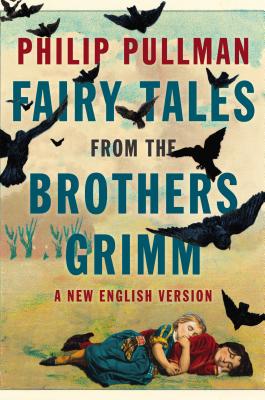
Philip Pullman, most cherished for the His Dark Materials trilogy, has revisited the classic fairy tales in Fairy Tales from the Brothers Grimm: A New English Version. His is not an attempt to modernize or change the original tales, but to present 50 of what he terms the "cream" of the crop in the clearest terms possible. The result is a collection of stories packed with crisp dialogue, witty commentary and an accurate sense of the other-ness of the original tales.

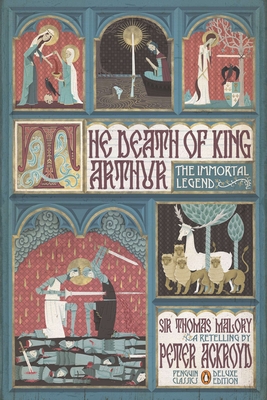
Peter Ackroyd has approached several classics with the intent of "re-telling" them. Though he might prefer the modern reader to learn enough Middle English to read The Canterbury Tales in the original, he acknowledges the improbability of such a trend--thus, his stunning translation of the tales into modern English. In his more recent retelling of The Death of King Arthur, Ackroyd offers a more contemporary idiom. Both retellings are proof of the author's dedication to the originals, preserving as much as possible while inviting modern readers into stories they may otherwise have missed.

      
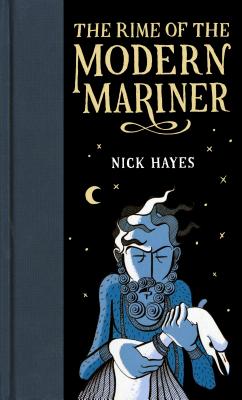
Where Pullman and Ackroyd have attempted to stay true to the originals, Nick Hayes has instead used a classic poem as inspiration for a more modern tale. The resulting The Rime of the Modern Mariner is a graphic novel based loosely on Coleridge's original Rime of the Ancient Mariner, but set now in a world of environmental disaster.

---

Fairy Tales from the Brothers Grimm | Phillip Pullman, The Brothers Grimm | Viking | Hardcover | 400 pages | November 2012 | Buy from an independent near you

The Canterbury Tales: A Retelling | Peter Ackroyd, Geoffrey Chaucer | Penguin Classics | Trade Paper | 464 pages | November 2010 | Buy from an independent near you

The Death of King Arthur | Peter Ackroyd, Thomas Malory | Penguin Classics | Trade Paper | 336 pages | October 2012 | Buy from an independent near you

The Rime of the Modern Mariner | Nick Hayes | Viking | Hardcover, Illustrated | 336 pages | October 2012 | Buy from an independent near you