Showing posts with label audiobooks. Show all posts

Week in Reading: May 30th

Holy cats, it's the end of May already. When did that happen? How did that happen?

My Memorial Day weekend wasn't quite as reading-and-relaxing focused as I'd have wanted it to be; my mom finished the last of her move on Friday, and I've spent the weekend playing catchup on things in my own house (hellooooo laundry); squeezing in some very hot and humid mileage (including an impromptu 5K this morning that resulted in a new PR!); and generally trying to regain my sense of sanity.


Some of that recovery did include books: I finished Mr. Splitfoot after sleeping in a bit on Saturday morning (what a strange, incredible book) and have had The Nest going on my headphones as I run errands and do chores around the house here (I'm really enjoying it so far--definitely worthy of its summer buzz).

I wrapped up the tail end of Just Mercy last week--just in time to pick up The Long Shadow of Small Ghosts this week for the June edition of the Social Justice Book Club (won't you join us!?). And for some diversity in my reading, I'm also picking away at The Raven Boys, by Maggie Stiefvater, because Shaina and Jenny and others told me to.

And then there are the many summer galleys staring at me, which I currently find too overwhelming to contemplate.

I've got ice in my coffee and sun on my balcony, so that will be all for now. Here's to a week of wonderful reading. And don't forget to sign up for this month's Social Justice Book Club!

---

What are you reading this week?


---


The Social Justice Book Club is an informal group read of a social-justice related book. For June, we're reading The Long Shadow of Small Ghosts, by Laura Tillman. Come join us!

Week in Reading: October 12

I'm back to my old shtick this week: talking about books, books and more books. Part of that is prep for this weekend's Readathon (are you signed up? Might you be interested in cheering on readers?) and part just the normal autumnal run of things in this bookworm's household. On deck this week:

Whodunit, Whydunit, Howdunit: Tana French's Dublin Murder Squad Series


I love a good mystery, but I can be picky in what I read within the genre. Tana French is one of the authors I will unfailingly pick up: I've fallen for her slow, deliberate pacing that startles you with its occasional abruptness; for the ways that her stories explore the very human--and therefore all the more shocking--sides of crime; for the distinctively Irish voice that each of her stories takes on and represents; for her skill in picking up a secondary or even tertiary character in one novel and making him or her the star of the next.

Watch and Read: The Princess Bride Edition

The Princess Bride is impossible to summarize or place in one genre: a farmboy is hopelessly in love with the most beautiful girl in the world, so goes off to seek his fortune; a princess is captured by a group of criminals-for-hire; a swordsman is sworn to revenge the death of his father by killing a six-fingered man; the Dread Pirate Roberts is terrorizing the seas and capturing ships; a prince wants to start a war with a neighboring nation; etc., etc., etc.


If you haven't read the novel, by William Goldman, that's a good place to start: though the beloved movie remains relatively close to the novel (as movie adaptations go, at any rate), there are some gems in the book that don't make it onto the big screen (Prince Humperdinck's Zoo, for one). Goldman structures the novel as an abridgement of an even older novel by S. Morgenstern, compiling only the good bits; this framing can sometimes be distracting (the "original" novel by S. Morgenstern is an invention of Goldman's imagination), but is mostly entertaining, as Goldman interjects with his own "author's commentary" throughout the story.


Post-novel: the movie. If you somehow have made it through the last 25 years without seeing The Princess Bride, I'm... not even sure where to begin. It's simply inconceivable. But whether you've seen it or not, it's worth watching the movie after reading the novel to see how Goldman adapted the story for the big screen (Goldman wrote the screenplay).


Post-movie viewing: Cary Elwes' memoir, As You Wish: Inconceivable Tales from the Making of The Princess Bride. If you're an audiobook fan, I recommend this one on audio (it's narrated by Elwes himself, with guest appearances from Robin Wright, Christopher Guest, Billy Crystal, and others from the cast of the movie). Elwes tells all about the making of the movie, and it's an absolute delight to be treated to "insider" stories of this beloved film.

Some fun facts: 
Cary Elwes and Mandy Patinkin trained for nearly 40 hours a week in swordplay so they could perform the big duel--noted in the novel to be the greatest swordfight in history--themselves (and, with the exception of a few large gymnastic-esque tricks, they did it, even though Cary had a broken toe at the time).  
Cary Elwes had to be replaced by a dummy of Cary Elwes in the Miracle Max scene (when he's mostly dead on the table), because he couldn't stop laughing during the cuts with Billy Crystal and Carol Kane (all of which were improvised, by the way). Mandy Patinkin had to be on the set for that scene--he has lines there, and isn't mostly dead, after all--and tried so hard to stop laughing on camera that he bruised a rib during the shooting. 
And one more, for good measure: The ROUSes were actually played by men in rat suits. Who knew?
Reading (or listening to) As You Wish is something like attending a cast party rolled into the kindest high-school reunion imaginable. Elwes has nothing but praise and compliments for the cast and crew of the film, and his insider stories are delightful, not scandalous. It's an absolute treat for anyone who's been interested in (or in love with, take your pick) the movie for any period of time.


For good measure, it's worth it to go back and watch the movie again after hearing Elwes' stories of the making of. There are things there you never would have noticed before, and things you'll appreciate more because of his account. Plus, it's the kind of movie made to be watched again and again... and again and again and again, as you wish.

---

The Princess Bride | William Goldman | Mariner Books | Mass Market Paperback | 511 pages | Buy from an independent bookstore near you

A copy of this title was provided by the publisher for review:
As You Wish | Cary Elwes, narrated by Cary Elwes (introduction written and read by Rob Reiner) | Simon & Schuster Audio | ~7 hours | Buy from an independent bookstore near you

Audiobook Review: The Paris Architect, by Charles Belfoure

This review originally ran in the Friday, November 22nd issue of Shelf Awareness for Readers. If you don't already subscribe, sign up here for a bi-weekly dose of bookish goodness in your inbox.

Like most Gentiles in the Nazi-occupied Paris of Charles Belfoure's debut novel, Lucien Barnard has no great love for Jews. Strapped for cash, however, the architect accepts commissions to design hiding places for Jews in exchange for considerable sums of money and the promise of lucrative building contracts. But when one of his hiding places fails, he is no longer able to keep his emotions separate from his work, and finds himself drawn into a dangerous game of two-timing the Germans: working for them by day, designing spaces against them at night.

Along with the architectural details that reveal Belfoure's own pre-literary architectural career, the historical details of The Paris Architect bring to life the terrible and terrifying atmosphere of the occupied city, from neighbors turning each other in to the Gestapo to the brutal public murders of Jews and their protectors.

The novel's supporting cast is vast and varied, but narrator Mark Bramhall gives each voice enough differentiation to make Lucien stand apart from the crowd of characters. His portrayal of Lucien's emotional experience transforms a despicable, unlikable character into the unlikely protagonist of an adult coming-of-age tale, staring down his own cowardice and greed in the face of human kindness.

---

The Paris Architect | Charles Belfoure, read by Mark Bramhall | Random House Audio | July 2013 | Unabridged, 11 hours


Audiobook Review: Joyland, by Stephen King


Until 11/22/63 came out, I'd never read a Stephen King novel. I know, I know: shame on me. But I'm easily terrified, so his canon of horror novels never truly appealed to me. 11/22/63 was non-horrorish enough for skittish little me to take to it, and it turned me on to the power of King's stories and characters--and the depth of his imagination--in a big way.

And so I was delighted to hear of Joyland, which promised to be the classic mystery-with-a-twist type of novel that I looked for in 11/22/63 and not the blood-pouring-on-teenage-heads type of novel that has me so scared to read Carrie.

Joyland, not surprisingly, did not disappoint. The novel centers on Devin Jones, a college kid from New England who lands a job at Joyland, a classic pre-Six Flags amusement park in North Carolina, in the summer of 1973. Having just suffered his first major break-up, Devin marches into the summer like any 21-year-old virgin suffering from a bad case of heartbreak: ready to make new friends, work hard, and try to forget the girl--no matter how futile that last may seem. Along the way, he finds himself mildly obsessed with the mystery of the haunted Horror House in the park, looking for the ghost of a murdered woman in the park's "only dark ride."

Told in the first person, narrator Michael Kelly perfectly captures the heartbreak, ennui, and general attitude of Devin, known to his friends as Dev and his colleagues at the park as "Jonesy." Unfortunately, while the style of narration is perfectly suited to Devin's character, it's not suitable to car-listening--Kelly's sentences sometimes fade to mumbiling, and on more than on occasion, I had to back up to re-listen to a section to tell what was going on.

But if you're willing to go into this with a little patience, the narration style pays off. Kelly's--and therefore Devin's--retelling of that summer of '73 builds slowly, almost like an afterthought, the words of an old man reflecting on a summer long-past. But as events unfold, Devin becomes more invested in his own story, recounting with an urgency that was lacking at the outset of the novel.

This urgency reflects Devin's own growth over the summer, as he moves from New England college kid to heartbroken virgin to stand-his-ground man. It's hard to say how that all happens without giving too much away, but suffice it to say King has managed to work a coming-of-age tale into a murder mystery into the story of a haunted amusement park. It's a tale of the everyday, a story of a turning-point summer that we can all probably point to in our own lives, but tinged with enough intrigue and fantasy that you just might find yourself looking over your shoulder the next time you visit an amusement park yourself--that is, if you can still find one of the good ol' parks.

---

My inquiring self wants to know: If King's horror novels are too scary for me, but I dig his writing style and stories, where should I go next?

---

Note: This title is only available in paperback (from Hard Case Crime) and on audio, and was not released as an e-book per Stephen King's wishes.
Joyland | Stephen King, nar. Michael Kelly | Simon & Schuster Audio | June 2013 | Audio CD | 7 1/2 hours

Audiobook Review: Fin & Lady, by Cathleen Schine

This review originally ran in the Tuesday, August 20th issue of Shelf Awareness for Readers. If you don't already subscribe, sign up here to receive a bi-weekly dose of readerly goodness in your inbox.


Fin first becomes aware of Lady, his half-sister, when he overhears his parents discussing her in hushed voices. Child that he is, he is convinced that she is literally one half of a sister (the bottom half) and is unreasonably surprised when he meets her and realizes she is, in fact, an entire person--a beautiful, interesting, fascinating person. Following his parents' death, Lady takes Fin from his family's quiet Connecticut farm to her house in Greenwich Village. Surrounded by Lady and her lovers and the culture of 1960s New York, Fin begins to grow up, but as he does so, he realizes Lady needs as much looking after as he does.

Fin & Lady, Cathleen Schine's ninth novel, is a perfect pick for audiophiles: though the narrator seems to be an uninvolved third party at first blush, subtle clues reveal that she is, in fact, a confidante of Fin's, relaying the story to listeners after hearing it from him directly. This person, brought to life by Anne Twomey's gentle voice, succeeds in capturing at once the innocence of Fin's youth, his loss of innocence as a teenager and his growth into adulthood--all while breathing life into a striking era of New York City history. Ultimately, both unnamed narrator and listener become invested in Fin and Lady and their growth--both as a family and as individuals--as they fight to be free and happy in their lives.

---

Fin & Lady | Cathleen Schine, nar. Anne Twomey | Macmillan Audio | July 2013 | 8 CDs, 9 hours

Audiobook Review: Red Moon, by Benjamin Percy

This review originally ran in the Tuesday, July 2nd issue of Shelf Awareness for Readers. If you don't already subscribe, sign up here to receive a bi-weekly dose of readerly goodness in your inbox.

The world of Benjamin Percy's Red Moon is eminently recognizable as our own and yet entirely another, resulting in a story that succeeds as a work of science fiction, a thriller and a political allegory all at once. Percy (Wilding) reimagines the world as steeped in werewolf, or "lycan," mythology. The United States is still conducting a war on terror--except it is a war on lycans, a population that has been colonized, subjected to mandatory medication that prevents their transformation and required to register with the government. While this may seem too much to pack into one novel, Percy pulls it off--and his own gravelly narration of the audiobook makes his story all the more chilling as it unfolds.

Red Moon weaves together the stories of Patrick, the only survivor of a lycan attack on a passenger jet, Claire, a lycan on the run after her parents are brutally murdered by government officials, and Chase, a politician who has sworn to defeat the lycan "threat," giving listeners a diverse set of perspectives from which to take in this complex alternate reality. Percy's narration is slow and steady, offsetting the fast-paced plotlines in such a way that listeners can practically feel the charge in the atmosphere Percy has created, bound to explode with the strike of a match. Explode it does, pulling these three key characters together before sending them out to fight in battles, aid in revolutions and change the world they know--for better or for worse.

---

Red Moon | Benjamin Percy, nar. Benjamin Percy | Grand Central | Unabridged Audio | 18 discs, 22 hours | Buy from an independent near you

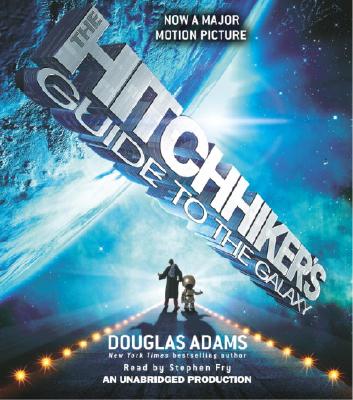
Audiobook Review: The Hitchhiker's Guide to the Galaxy, by Douglas Adams

I might, just possibly, be one of the last people on earth to read this book. And good thing I got around to it, too, because according to Douglas Adams, there is a very real chance that an alien race may just be planning to demolish Earth, simply because it is in the way of a proposed transportation route.

The premise of  The Hitchhiker's Guide to the Galaxy, the first of a "trilogy in five parts," is actually quite simple: Earth is destroyed, and Ford Prefect (an alien previously stuck on Earth for lack of a ride on which to hitch-hike) and Arthur Dent (a normal human, just like you and me) are the only two survivors. Eventually, they find their way to the lone, abandoned planet of Magrathea, previously known for its planet-building exploits--except that it is not so lonesome and abandoned after all. The resulting storyline is comical in its twists and turns and most unlikely of coincidences (conveniently explained away by the existence of a devise meant to make the most improbable solutions probable after all), as Ford Prefect, Arthur Dent, a depressed robot, the two-headed President of the Galaxy, and a bunch of mice try to figure out the meaning of life.

What is so strikingly glorious about The Hitchhiker's Guide to the Galaxy, besides the fact that the first book is narrated on audio by none other than Stephen Fry himself, is the humor and the wit and the philosophy contained in what is otherwise a series of bizarre coincidences and strange plot turns. Adams can make one laugh out loud and think for long periods of time, all with the same sentence, and I'd argue there's not many an author that can do that (just as there are not many narrators who could have so well highlighted this humor as Fry does).

I'll definitely be back in to pick up the rest of the trilogy/series/whatever it is best called, and will continue to scold myself for having waited so long to finally start. Also, 42.

---

The Hitchhiker's Guide to the Galaxy | Douglas Adams, nar. Stephen Fry | Random House Audio | 2005 (originally published 1979) | Audiobook | 5 hr 51 min | Buy from an independent near you


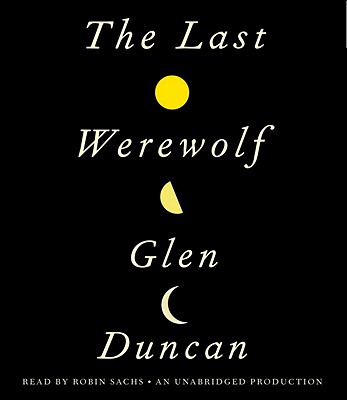
Audiobook Review: The Last Werewolf, by Glen Duncan

My, but Glen Duncan can write. The Last Werewolf is a testament to that skill, with sentences that dazzle and a storyline that captivates and just enough imagination to make us stop and reconsider if certain things--like werewolves--are really so impossible, after all.

The novel, narrated on audio by Robin Sachs, centers on Jacob Marlowe, who learns early in the book that after centuries of flight from those hunting him and his kind, he is, in fact, the last remaining werewolf. Unfortunately, his pursuers realize it as well--and also realize that they have worked themselves out of a job in the most fundamental way possible. Without werewolves, there can be no werewolf hunters.

From this foundation emerges a complex, gruesome tale of loneliness and death and killing and independence, as we dive into Jacob Marlowe's past and present and longed-for future. Marlowe is not exactly a sympathetic character, but Duncan's storytelling is so complete that the novel works even if we aren't exactly rooting for the protagonist. Or quite against him either.

All sounds good, right?

Wrong. Unfortunately, Duncan seems to know that he can write (see opening sentence), and as a result, often gets in the way of his own story. Constant contrasts between Marlowe's tale and what would happen in the Hollywood version are witty at first, but begin to dull after overuse. A few coincidences early on we can forgive, because, after all, this is a novel about werewolves walking around in modern-day London, but when the entire story seems to rest on unbelievable turns of events, we start to lose faith in the concept as well as the plot.

And the sex. Oh my. I don't mind a little hanky panky in my novels, no sir, but after a while the graphic and often violent sex scenes served little purpose other than to shock, and after that, just felt gratuitous.

And so, on a scale of one to five:

5 stars for imagination, wit, humor, and a well-conceived story idea.
3 stars for too many coincidences and unbelievable plot points.
1 star for the overuse of the word "anus".

Summation: I'm not good at math, but somewhere around 3 stars, I think. A good choice on audio, as Robin Sachs embodies Jacob Marlowe's first-person narration near perfectly; his crooning British accent doesn't hurt either (plus it's fun to hear him speak "American" for certain characters, when required).

---

The Last Werewolf | Glen Duncan, nar. Robin Sachs | Audio CD | July 2011 | Buy from an independent near you

Audiobook Review: Live by Night, by Dennis Lehane

I have long been a fan of Lehane and his ability to craft well-written, enticing mysteries that embody their settings and bring to life deep, seemingly real characters. It's an art form, and one under-appreciated in a world of thrillers and Patterson mysteries. Live by Night is no exception to the rule of great reading that Lehane has created with his work. Lehane introduces us to Joe Coughlin in 1926 Boston, and then follows this shady but not altogether evil character up nearly every rung of the ladder of organized crime, from lackey to jailbird to crime boss in Florida to fugitive in Cuba. The story is expansive, taking on a world of gangsters and prohibition, drugs and alcohol, sex and romance with a noir flair I've yet to encounter outside of Hollywood (I've also never read The Godfather, so bear with me).

Tight storytelling and well-crafted (if not always well-intentioned) characters make appearances at every stage of Coughlin's adventures, keeping this story moving along at a clipped, steady pace. Live by Night boasts impressive writing and an almost unbelievably simply transportback to a particular time and place, and a stellar narrator on the audio edition, but unfortunately is never quite as gripping as it feels it could have been. Coughlin is likeable but not entirely loveable; Coughlin's world is understandable but not entirely relatable; Coughlin's story is enjoyable but never truly engrossing. That said, however, a less-favorite Lehane novel is still a Lehane novel, and thereby excellent in its own right. I look forward to the next in Lehane's planned Coughlin family trilogy (of which The Given Day was, apparently, the first book).

Oh, and this may also hit the big screen with some Ben Affleck involvement. Get into it.

---

Thoughts from other bookworms:
Hey Lady! Whatcha Readin'?
Book Riot: Buy, Borrow, Bypass
Beth Fish Reads

---

You might also like:
The Given Day by Dennis Lehane
Phantom by Jo Nesbo
North River by Pete Hamill

---

Note: Thanks to the publisher for providing a digital audio copy of this title to review.
Live by Night | Dennis Lehane | HarperAudio | October 2012 | Buy from an independent near you


Audiobook Review: Shine, Shine, Shine by Lydia Netzer

Shine Shine Shine, a beautiful, sweeping debut from Lydia Netzer, is a powerful novel that centers on the question of normalcy (or is it normality? Thanks to President Harding, I'm never sure which is correct). When Maxon and Sunny first met as children, they were both different -- Maxon struggling to relate to the world with normal human emotions and reactions, and Sunny as a beautiful bald child with not a lick of hair on her head or body. Twenty years later, they are married and have a helmeted, autistic son named Bubber and Sunny has taken to wearing wigs to fit in and Maxon has gone to space to start a colony with robots.

Until an accident rips Sunny's wig from her head, and her whole perfect, stuffy neighborhood knows of her secret baldness, and Sunny's world begins to shift. Now she wants Maxon home, she wants to reconcile with her mother, she wants to take Bubber off his personality-stunting medications and let him be his own autistic self. She wants to wear her baldness proudly, but the "normal" life she has insisted on creating for the last decade is in the way.

Shine Shine Shine is charmingly odd from the start, with Sunny and Maxon and Bubber's quirks making them some of the most lovable dysfunctional characters I've ever encountered. Even the story's structure is odd, with flashbacks accounting for what feels like more than half of the narration, but never proving cumbersome or too bulky for the present-day storyline. Lots of things happen to Maxon and Sunny, things that affect them differently, things that do not fit into the equations of life that Maxon is keen on writing out for Sunny. As we learn about these things, we begin to understand both Maxon and Sunny in their own way, in their own fashion, and how perfectly quirkily they fit together, and how hard they have both worked, in their own way, to get where they want to be--or where they thought they wanted to be.

Netzer's imagination has run wild in her debut novel, carried through with strong writing skills that weave multiple stories and multiple time periods and multiple characters together into one seamless novel that will at once make you laugh, cry, and sigh with exasperation and understanding at once.

A note on the audio: Well produced, clearly narrated, with a narrator that sucks you into Sunny's world and keeps you there for days.

---

Thoughts from other bookworms:

The New Dork Review of Books
Lettore Bella
Book Riot Review GPA

---

Note: Thanks to the publisher for an e-audio copy of this title tor review, received from my Shelf Awareness editor.
Shine Shine Shine | Lydia Netzer, nar. Joshilyn Jackson | July 2012 | Macmillan Audio | Buy from an independent near you

Recommended Reading for Running?

Guys, I have started running. It's a weird phenomenon, really, because I've always hated running. Runners always say that there is a plateau, that after a mile or two you hit this awesome place where you feel like you can just keep running and running. Until yesterday I was convinced that this was just a thing that runners said to non-runners to make everyone experience the same hell of running that they did.

But now I know it is true, and I give all the credit for this experience to Justin Cronin and The Passage (because with The Passage to keep you occupied, how could you possibly even think about running?)

Obviously, this means I need to start preparing for what happens when I run through (I made a pun!) the next 26 hours of The Passage.

I "read" in the car all the time, so I'm accustomed to picking audiobooks, but I'm looking for really good, really solid, fast-paced, plot-driven, well-written stories like The Passage to accompany me while I go for more mileage. Any ideas?

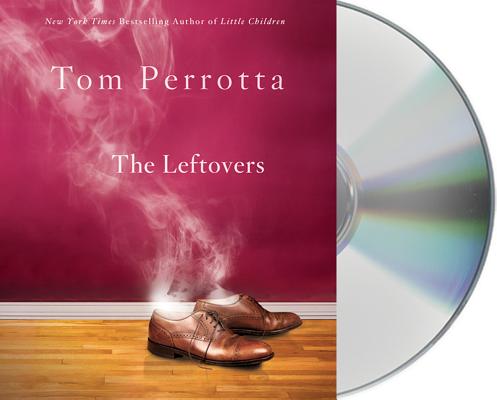
Audiobook Review: The Leftovers, by Tom Perrotta

When half of the world's population suddenly disappears, it is inevitable that those remaining -- the leftovers, if you will -- struggle to make sense of what has happened. Where has everyone gone?And what kind of life is left for those not taken?

Centering on the Garvey family, this is exactly the landscape Tom Perrotta sets out to explore in The Leftovers, a stunning (if not entirely successful) portrayal of how we cope with the inexplicable. Kevin Garvey, town mayor, wants to speed up the healing process for those who lost loved ones, while his wife turns to a newly grown cult and takes a vow of silence and cigarettes. His son has dropped out of college and fallen in with a tedious and somewhat shady "prophet" named Holy Wayne, while his daughter turns away from the straight-A student she used to be in favor of a rebellious, punkish teenager.

What is so striking about The Leftovers is the sheer normalcy of the Garveys' issues despite the extraordinary situation in which they find themselves: two married people growing in different directions, or coping with hardship in varied ways; the rebellious teenagers struggling to make names for themselves while trying to understand how to remain part of a family; the trials of teenage love and uncertainty.

Despite Perrotta's success in conveying the normalcy of the abnormal, however, and the myriad ways in which we deal with grief and loss, The Leftovers ultimately fell flat for me. Dennis Boutsikaris' narration on audio carries the plot forward with a steady, plodding momentum that makes it hard to stop listening, but the story itself proved unbelievable, at times forced, and finally disappointing. There is brilliance and insight in small parts here, but the sum of these parts didn't quite add up to anything. I kept waiting for it to happen, without ever knowing what "it" was; "it" never did.

I've read a lot of great reviews for this one, and I really wanted to love it. Maybe I'm not just a great audience for Perrotta, or maybe I read this one at a bad time.  Have you read it? What did you think? Am I just missing something - or was audio perhaps a bad choice of format?

---

Thoughts from other bookworms:
Fizzy Thoughts
Devourer of Books
Coffee and a Book Chick
The New Dork Review of Books

---

You might also like:
The Unnamed by Joshua Ferris
The Illumination by Kevin Brockmeier

---

The Leftovers | Tom Perrotta, nar. Dennis Boutsikaris | Macmillan Audio | Audio CD | August 2011 | Buy from an independent near you

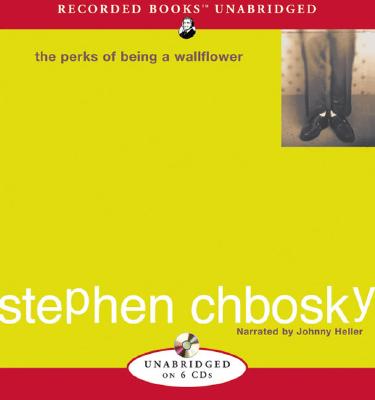
Book Review: The Perks of Being a Wallflower, by Stephen Chbosky

Dear Friend,

I just finished this incredible book - maybe you've heard of it? It's called The Perks of Being a Wallflower. In case you don't know it, it's a wonderful book about a high school kid named Charlie trying to figure out how to fit in and make friends and "participate." He's really always been more of a watcher -- a wallflower, if you will -- than a participant, but then he makes a few friends and his whole world opens up.

I really wish this was a book I'd read in high school, because as much as I loved it now (and that was a lot), I think it would be have been even more poignant when I was younger. Charlie learns all these great things about friends and relationships and sex and drinking and drugs and cigarettes and being true to himself that are important now, even with high school nearly a decade behind me, but would have been even more important then.

I don't know if you know about Charlie, but he's the kind of kid that sometimes makes you want to cry because he can be so naive, so pure, so simple, and so kind all at once. But this can also be his greatest downfall, because sometimes he gets lost in the process, and you just want to shout, "Charlie! Wake up! Don't you see what's happening here?"

Of course you can't, because it's just a book. But is anything really "just a book," after all? I don't think Charlie would think so, and I don't think so, either.

Love always,
Kerry

P.S. Incidentally, if you do decide to read this one, the audio is great. Charlie becomes very real when he reads his letters to you, in a way he might not if only written.

---

The Perks of Being a Wallflower | Stephen Chbosky, nar. Johnny Heller | Recorded Books | 6 hours, 22 min |  Buy from an independent near you

Audiobook Review: Unholy Night, by Seth Grahame-Smith

This review originally ran in the Tuesday, June 26 of Shelf Awareness for Readers. If you don't already subscribe, sign up here to receive a bi-weekly dose of readerly goodness in your inbox.

Seth Grahame-Smith has made a name for himself with delightful re-imaginings of well-known stories and histories, including Pride and Prejudice and Zombies and Abraham Lincoln: Vampire Hunter. Unholy Night continues this trend, tackling the story of Christmas and the three kings who journeyed to visit a small babe lying in a manger. Or, rather, of the three escaped criminals disguised as noblemen who try to hide out in a manger that also happens to house Mary, Joseph and the recently born baby Jesus.

Grahame-Smith approaches the story through the perspective of one of the three visiting kings, Balthazar--a professional thief famous across the Roman Empire for his masterful deceits. When Balthazar escapes execution, with two other criminals in tow, he finds himself on the journey of a lifetime, in the company of a carpenter, a woman and a babe--with the entire Roman army on his heels. His fight to protect his travelling band is complicated by his agnostic views, his lack of religion and his tortured past.

Peter Berkrot's (77 Shadow Street) narration brings Grahame-Smith's already rich characters to life, from the spunky, opinionated Mary to the spiteful, bitter Balthazar, and though the three "kings" do not, in fact, smoke a rubber cigar, they do have their fare share of humorous exchanges, adventures and full-out battles. Unholy Night is an entertaining retelling of one of the most familiar stories in Western civilization.

---

Thoughts from other bookworms:

---

Unholy Night | Seth Grahame-Smith, nar. Peter Berkrot | Hachette Audio | Unabridged Audio CD | April 2012 | Buy from an independent near you

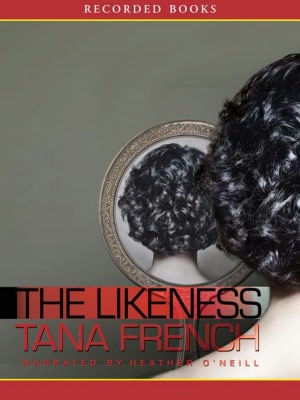
Audiobook Review: The Likeness, by Tana French

When Detective Cassie Maddox is called to a murder scene--six months after she left The Murder Squad--she is shocked to find that the victim is her. Not only does the girl look like her, and have the same build, but she is carrying the identification Lexie Madison--of one of Cassie's old undercover aliases. Despite the dangers, she finds herself going back undercover--this time as herself, or as someone who was impersonating herself, or as someone who was impersonating her past impersonations. The undercover assignment gets at the very core of Cassie's identity, and she quickly finds herself captivated by Lexie's life as a student, her seemingly perfect friends, and her idyllic, isolated living situation. But she is, at heart, still a detective, and must root out Lexie's murderer, whatever the cost.

The Likeness is Tana French's second Cassie Maddox mystery, the sequel to her debut novel, In the Woods. But it is also more than a mystery novel at heart, proving to be poetic, reflective, and thoughtful in its considerations of the Irish landscape, culture, social atmosphere; the world of student life; the simple pleasures of loyal friends and good company; the joys of turning a house into a home. French's writing is captivating in its own right, simple and elegant, poised and exact, only further enhanced by Heather O'Neill's crisp, clear narration (with an Irish accent, to boot).Which is not to say that the plot is not engaging as well--it is, in its slow and steady pace. The combination of the two results in a stunning novel of psychological suspense, and I look forward to reading more from French.

Side note: Apparently I have a knack for accidentally reading sequels first, as I didn't realize this carried forth the same characters from In the Woods. I'll still go back and read In the Woods at some point, but there were some spoilers in The Likeness. So if you've read neither and are considering either, start at the beginning.

---

Thoughts from other bookworms:
Bookworm Meets Bookworm 
Book Confessions
NYC Book Girl

---

You might also like:

In the Woods by Tana French
The Forgotten Waltz by Anne Enright
The Secret History by Donna Tartt

---

The Likeness | Tana French, nar. Heather O'Neill | Recorded Books | Audio CD | September 2008 | Buy from an independent near you

Audiobook Reviews: The Maltese Falcon and The Thin Man, by Dashiell Hammett

Dashiell Hammett, otherwise known as the most famous writer of the noir genre, I salute you. I admire your ability to create thoroughly believable, though utterly unlikeable characters, and make me care to my very core about their motives. I respect your convoluted storylines, the ones with plot twists that seem obvious to a modern reader (but of course there is a secret ancient statue worth thousands of dollars), but are actually quite groundbreaking when one considers that they were written before the scripts of all of the Indiana Jones movies. I even enjoy your twisted male characters and their completely period-appropriate, yet socially inappropriate, chauvinistic attitudes towards women of all stripes, whether they be secretaries or clients out to hire a PI or wives or criminals, even though I find them (and your overall depictions of women) generally offensive.

The Maltese Falcon is full of the kind of twisted, shady characters that I adore in a mystery novel--greedy businessmen Gutman; strange, snivelling gophers like Cairo; and staid, handsome detectives with dark pasts like Sam Spade (who will forever be played by Humphrey Bogart in my mind). This, perhaps the most famous of Hammett's novels, is a mystery packed with several layers, a pretty harsh romance (it's hard when the good guy falls for the bad girl, or vice versa, or both), and lines that read like cliches only because they have been imitated by so many writers in more recent years.

The Thin Man is, at first glance, nothing like The Maltese Falcon. Here, our protagonist is not a retired-cop-cum-PI (complete with shady background), but a pleasant, retired cop on holiday in New York with his snarky, adorably excitable wife. No one has hired either Nick or Nora (the retired cop and his playful wife) to investigate anything, and yet they find themselves investigating a murder, searching for a missing inventor (who may or may not be mad), and generally entangled in the dramatic lives of others.

Where Sam Spade is hard, unreachable, and distant, Nick is open, inviting, and head-over-heels in love with his wife. Where The Maltese Falcon is twisted and somewhat dark, The Thin Man is a jaunt through murder and madness. But the sparse, clippy narrative of both stories gives Hammett away, as does the darkly humorous undertones of the plots--no matter how different the stories may appear, they are clearly products of the same pen. Narrated by William Dufris in the perfect noir-like clip one would imagine for Hammett's writing, the audio versions of both novels (available as a combined set) prove an excellent way to re-experience noir, moving it from the realm of Hollywood adaptations and firmly back into the world of literature.

---

Thoughts from other bookworms:
Coffee and a Book Chick
The Novel Word

---

This satisfies the Classic Mystery requirement for the 2012 Back to the Classics Challenge.

---

The Thin Man and The Maltese Falcon | Dashiell Hammett, nar. William Dufris | AudioGO | Oct 2011 (originally published in 1934 and 1941, respectively) | Buy from an independent near you

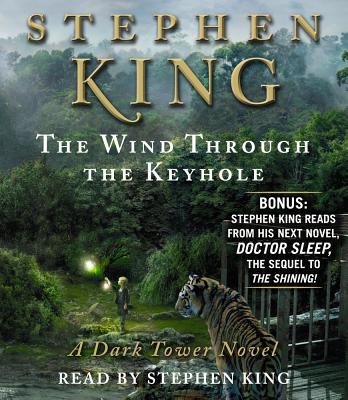
Audiobook Review: The Wind Through the Keyhole, by Stephen King

Confession: The first Stephen King book I ever read was 11/22/63.

Second confession: The second Stephen King book I ever read was The Wind Through the Keyhole.


I listened to both on audio. 11/22/63 was captivating, enthralling, long (but never tedious), detailed, powerful, and imaginative. It left me craving more King in my reading life. So of course, I promptly read 35 odd books not by Stephen King.

Imagine my delight, then, to have a change to listen to none other than Stephen King himself narrating the audio version of his latest book, The Wind Through the Keyhole. And imagine my giddy, school-girl giggle when I realized that The Wind Through the Keyhole, while technically book 4.5 of the Dark Tower series, is actually a stand-alone novel that can be appreciated even by readers new to the well-established series.

The Wind Through the Keyhole is the story of a band of travelers who must seek shelter from an oncoming storm. While waiting out the cold and wind, they light and fire and pass the time with a story. As the story unfolds, we hear of Roland's early days as a gunslinger, and his mission to find and kill a skin man -- terrifying, murderous creature that changes forms at the drop of a hat. Along the way, Rowan finds a young boy who is the only living person capable of identifying the skin man in his human form. And so they lock the boy away for his safekeeping, and to pass away the time while they wait to round up the usual suspects, as it were, Roland tells the boy a story...

And the second story unfolds, and proves to be the namesake of the novel King himself has narrated. The story-within-a-story is about a young boy seeking revenge for his father's death, which sends him on a quest to cure his mother of her blindness, a quest in which he stands down a tiger, seeks Merlin, stumbles across black magic, poses as a gunslinger... all at the age of 11.

Both stories are fantastical and whimsical, and fit perfectly inside one another. King's novel is an ode to the power of storytelling as a means of escape, as a means of entertainment, as a means of conveying messages about life, death, fear, bravery, and so much more. And though King's narration can feel flat at times, it is ultimately impossible to question his delivery--the stories contained herein came from him, after all. The Wind Through the Keyhole proves a fitting tribute to fiction from an author known for his skill with the pen; what's more, it is a welcome return to Mid-World for fans of the Dark Tower series, or a simple introduction to the world to those new to the novels.  Novels I'll be sure to add to my TBR list, of course.

---

Thoughts from other bookworms:

The Guilded Earlobe
5 Minutes for Books

---

Note: Thanks to Simon and Schuster Audio for a review copy of this title.
The Wind Through the Keyhole | Stephen King, nar. Stephen King | 9781442346963 | 12 discs | April 2012 | Buy from an independent bookstore near you

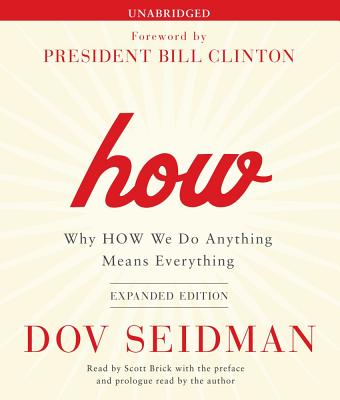
Audiobook Review: How: Why How We Do Anything Means Everything, by Dov Siedman

I've never been much of one for business-type books; I generally find that as much as I like an idea behind a book, I have the attention span for about 20 pages of it... and from there, it just gets repetitive, overly detailed, or dull. Or all of the above.

But when I was offered a review copy of the new audiobook version of How: Why How We Do Anything Means Everything, I was intrigued. And not just because President Bill Clinton wrote the introduction, though that certainly didn't hurt.

How turned out to be a little bit of what I expected from a business book (overly detailed and repetitive at times), but more interesting than your standard "this-is-how-to-do-it" kind of read. Because in fact, it is anything but a "this-is-how-to-do-it" read, and Dov Seidman is clear about that from the get-go. How is not a how-to, but a caution to think about how you act, how you behave, and how you make decisions--an invitation to understand the impact of how you do something, as much as what you do.

Though perhaps not the most groundbreaking book you'll listen to all year, the audio version of How is a worthwhile listen for those interested in taking a different stance on business reading. Don't expect a how-to manual on doing the right thing or being the right kind of leader or worker or decision maker; instead, expect to reconsider a few things you've always taken for granted, and get some interesting stories on human nature -- and varying business cultures -- along the way. It's the kind of business sociology book that can be applied in business as much as in everyday life, and I believe that's what makes it more compelling than a standard how-to (or how-not-to) read, as the case may be. And as an added plus, narration by Scott Brick is spot-on.

---

Note: Thanks to the publisher, Simon and Schuster Audio, for a review copy of this book.

---

How | Dov Seidman | Simon & Schuster Audio | 9781442352834 | February 2012