Showing posts with label book review. Show all posts

Here For It, or, How Not to Lose Your Soul in America, by R. Eric Thomas


R. Eric Thomas, the columnist behind the popular “Eric Reads the News” on ELLE.com, is smart. And charming. And funny. And in Here for It, his first collection of essays, he uses this smart charming humor to explore his life as a gay, black, Christian man and what it means to be different--and to be one’s truest self.

Thomas bounces between disparate topics across his essays: Michelle Obama and Mister Rogers; racial slurs and horror movies; scented candles and Pride; family and religion and first loves and true love. (There are also lots of mentions of Beyoncé throughout). Though seemingly unrelated, this wide spread is evidence of Thomas’ skill as a storyteller, a testament to his ability to use one small anecdote as an entry point into larger conversations about racism, pride, religion, and mental health--just to name a few.

“The comedic surprise I’m always trying to get to in [my] column is hope” (11), a concept that is borne out across every page in Here for It. It’s rare to laugh out loud in the midst of a story that ends in a suicide; it’s unusual to guffaw when reading about racism. Thomas’ sense of humor, though, invites readers to laugh while acknowledging the very real, very large problems facing our world today. And in between it all, that laughter succeeds in delivering just what Thomas aims to do in his columns: hope.

Elizabeth McCracken's Bowlaway: Love, Geneaology, and Candlepin Bowling

The following excerpts are taken from a long-form review of Bowlaway and interview with Elizabeth McCracken, both of which ran in the October 24th, 2018 issue of Shelf Awareness' Maximum Shelf. Bowlaway is on sale now wherever books are sold (and was one of the best books I had the pleasure of reading and reviewing in 2018). Excerpts reprinted here with permission.


It can be hard, in a world with so very many books, to find something truly unique to write about. But Elizabeth McCracken (Thunderstruck, An Exact Replica of a Figment of My Imagination) has done just that in Bowlaway, a sweeping family saga centered on a bowling alley. And not just any old bowling alley, but a candlepin bowling alley, and not just any old story, but a love story. "Our subject is love," writes McCracken early in the novel, "because our subject is bowling. Candlepin bowling. This is New England, and even the violence is cunning and subtle."

This sets the tone for the rest of the tale, which is itself cunning and subtle, a carefully woven and darkly humorous account of one woman, Bertha Truitt, and the strange and lasting legacy of her fascinating and too-short life.

Review: Let Me Be Like Water, by S.K. Perry

I've been remiss in writing here, or sharing reviews, or doing much of anything. I suspect I'll pick this little blog up again eventually--I always do--but in the meantime, I'm hoping to at least share reviews I've written for other sites for the books I'm really loving lately. Here's the first of what I hope will be many more. Reprinted from Shelf Awareness with permission.

book cover of Let Me Be Like Water by S.K. Perry with a blue ocean horizon and a kite in the air

Let Me Be Like Water is a beautiful and heartbreaking story of young love and young loss. A meditation on grief and what could have been, S.K. Perry's debut offers glimpses of the sometimes magical ways the world works when life is shattered and we're left with nothing but the pieces.

Book Review: Endure, by Alex Hutchinson

Ever wondered why you find yourself able to sprint the last hundred meters of a 5k race, when you spent most of the third mile feeling like you couldn’t possibly take one more step? Or why crowd support makes you run better? Or why people tend to collapse after they cross the finish line of a marathon, rather than before?

Alex Hutchinson, columnist for Outside and Runner’s World, tackles these questions and more in his new book, Endure: Mind, Body, and the Curiously Elastic Limits of Human Performance. Hutchinson organizes his research into the limits of human performance into three buckets: Mind & Muscle (with chapters on how the brain interacts with our muscle capacity), Limits (pain, muscles, oxygen, heat, thirst, and fuel), and Limit Breakers (the science of training the brain to go beyond what we think we can do).

Book Review: The Followers, by Rebecca Wait

This review originally ran in Shelf Awareness for Readers. Reprinted here with permission.


The Followers starts in the "after": Judith is entering a prison to visit her mother, Stephanie, imprisoned for as-yet unknown reasons. Rebecca Wait (The View on the Way Down) then moves skillfully through time to reveal their life "before." The mother works as a waitress to support herself and her young daughter; Stephanie meets Nathaniel, a charming man who takes an interest in her difficulties. Mother and daughter move in with Nathaniel and his "followers" in order to pursue a new life with a new sense of purpose.

Book Review: The Distraction Addiction, by Alex Soojung-Kim Pang


Every once and a while, a book comes along at exactly the right moment in time. The Distraction Addiction: Getting the Information You Need and the Communication You Want, Without Enraging Your Family, Annoying Your Colleagues, and Destroying Your Soul, was just such a book. This one first crossed my radar when Kim posted about it as part of her 100 Days of Books project, and her description immediately leapt out to me:

The Distraction Addiction starts with a good question: “Can we stay connected without diminishing our intelligence, attention spans, and ability to really live?” I like this approach because it addresses both the positive (more connections) and the negative (more distractions) ways that technology impacts our lives. Unlike many books about technology and the mind, Alex Soojung-Kim Pang doesn’t suggest we should get rid of our phones or go off the grid. Instead, he advocates for a more mindful approach where we make deliberate choices about how to engage with our devices and the world. This is one of my favorite books on the subject that I’m due to re-read soon.

Recently: Essays on Feminism, Gender, Race, and Identity

Without realizing it at the time, I've been on a bit of a kick with essay collections lately--especially those related to feminism, gender identity, and race--and particularly the intersection of the three.

Book Review: The Long Run, by Catriona Menzies-Pike


Every once and a while, a book comes along that rings all my bells--and then some. The Long Run is one of those books. Running. Distance running. Trail running, even. Grief. Loss. Meditation. Feminism. History. Feminist history. Memory. Writing. Literature. Books. Here's a book that manages, in the span of a few hundred pages, to talk about dactyls and iambs, trans rights, art history, the Ancients, and distance running without any piece of it feeling out of place. Yes, please, sign me up.

Book Review: Careers for Women, by Joanna Scott

This review modified from a review written for Shelf Awareness for Readers.


Careers for Women is a novel ambitious in scope: Spanning the late 1950s to the present day, Joanna Scott (De Potter's Grand Tour) uses the building of the World Trade Center as a lens through which to examine power, feminism, modernity, progress and the power of dreams to shape a life--or many.

Exploring Poetry: Milk and Honey; Love Her Wild; Delights and Shadows; Mary Oliver

I've long said that I struggle with reading poetry; it's like my brain can't figure out how to look at the words on the page and make them make sense in my head. I've found recently, however, that this is less of an inherent inability than it has been a refusal to slow. down. and read more meaningfully, purposefully. And so I've made a more conscious effort to explore poetry of late. A few stand-outs, in no particular order:


Review: A Line Made by Walking, by Sara Baume

This review originally ran in Shelf Awareness for Readers. Reprinted here with permission.


A Line Made by Walking, Sara Baume's second novel, takes its title from a 1967 artwork by Richard Long. He walked back and forth in a straight line across a field and photographed the resulting flattened path of grass--a testament to Long's existence. In Baume's novel, Frankie, a young woman struggling with mental illness and an unsettling shift toward adulthood, attempts to find her place in the world--and prove that place and her existence in it have meaning. Even the mud on the stoop left by her boots is comforting in its own way: "so I know I must exist after all--that I must still be here." 

Lyndsay Faye, Sherlock Holmes and The Whole Art of Detection


I'm a long-time fan of Lyndsay Faye's work: her Timothy Wilde trilogy rang all my historical fiction bells, and I loved the cleverness of Jane Steele. And so it was an honor to be able to interview her about her newest book, The Whole Art of Detection, a collection of Sherlockian stories that perfectly capture the essence of Doyle's original tales:

---

Interview with Lyndsay Faye


Lyndsay Faye has been reading Sherlock stories since she was 10. "I loved them," she says, "and then I never actually stopped reading them. Lacking the Internet, it wasn't until I was a teenager that I discovered there was such a thing as pastiches and fan fiction out there. Then I read as much of the non-canonical material as I could find--probably thousands of stories at this point, no joke." 


---

Review of The Whole Art of Detection


The 15 stories in Lyndsay Faye's The Whole Art of Detection will prove purely delightful for fans of the original adventures of Sherlock Holmes and Dr. Watson. With two entirely new stories, and 13 others culled from previous anthologies and magazine contributions, the collection stands as a tribute to Faye's way with words and witticisms, both of which combine to reinvigorate Holmes and Watson (as well as their surrounding casts of miscreants, assistants and unassuming bystanders).

The Stranger in the Woods: Giving Context and Meaning to the Life of a Modern Hermit


Michael Finkel has an interesting past as a journalist. Once a reporter for the New York Times (he was fired after it was revealed that he created a composite subject out of many sources), his first book, True Story: Murder, Memoir, Mea Culpa, told the story of a fugitive who used the name "Michael Finkel" as an alias while on the run from police--a true (if stranger than fiction) story. His newest book, The Stranger in the Woods: The Extraordinary Story of the Last True Hermit, is once again a true tale that feels stranger than fiction, detailing the solitary life of Christopher Knight, who lived (voluntarily) as a hermit in the Maine woods for 27 years.

Jami Attenberg, Old and New

side by side image of the covers of two Jami Attenberg novels (The Middlesteins and All Grown Up) with "Jami Attenberg: Old and New" overlaid

I recently, entirely accidentally, read two Jami Attenberg books simultaneously: The Middlesteins and All Grown Up. Both were impressive examples of Attenberg's powers of observation and her ability to write about the mundane, the everyday, the ordinary in ways that feel unique, universal, and extraordinary. Both are packed with an emotional depth and honesty that resonated with me in ways I'm still working out.

But at the end of the day, I loved the former and struggled through the latter. I've spent the last week muddling over why, and I still have no clear answer. So I want to know: have you read these both? Did you love them? Hate them? Want to fall into them or throw them against a wall?

Social Justice Book Club: Men We Reaped Wrap-up Post

Oh my goodness, you guys, this book. I'm not sure I can actually come up with words to express how I feel about Men We Reaped. I'm tempted to say that I loved it, but that feels inaccurate, because I hate that it needs to exist. I'm tempted to say that Ward's writing is beautiful, but that does the horror of her stories an injustice. I'm tempted to say that I found this story unexpectedly readable, but that belies the difficulty of the subject at hand. And so I'll settle on recommending it, and praising the power and honesty in Ward's memoir, and doing my best to explain why it resonated with me, a middle-class white woman who's never lived in the South.


Men We Reaped weaves together two main stories: that of Ward's childhood (her earliest memories as a child, the growth of her family, her parents' difficult marriage, her struggles as an outsider in a mostly-white school) and the story of the men in her life who died too young (a friend, her sister's boyfriend, a cousin, her brother). Ward's memories of her own life move forward through time, while her recounting the lives and deaths of the men she's lost moves backwards through time. These opposing chronologies jarred me a bit at first. Ultimately, however, I think the two timelines made the moment of her brother's death--the point at which the chronologies merge--all the more powerful, which proved fitting for the loss that most shook her world, most challenged her understanding of grief and sadness and loss and oppression, most changed her perspective on injustice.

It is tempting to view the deaths in Ward's life as disconnected from one another, but Ward's story proves otherwise. By embedding the lives and deaths of these young men in the context of her own lived experience, and that of her friends and family in Mississippi, Ward pushes Men We Reaped into an analysis of the poverty, racism, and systemic oppression that drove these men to die--and left a group of women to stand strong and mourn their passing. Men We Reaped is, as Ward wanted it to be, a testament to the lives of those who died to young, a reminder that they lived, they existed, and this happened. And it is also, importantly, a testament to the fact that the lives and deaths of the black men in her life were not mere accidents of chance, but inevitable outcomes in a world fixated on pushing people down instead of holding them up.

---

Some discussion questions for Men We Reaped*:


1) Men We Reaped is described as a memoir. While it draws on Ward's personal experiences, it also explores themes much larger than one woman's life. Do you agree with this genre classification?

2) In what ways do you think Ward's personal approach to this subject makes Men We Reaped stand out from other books that address similar issues? Did this make the book appeal to you more or less, or were you indifferent?

3) In more than one instance throughout the text, Ward writes about feeling silenced and voiceless in the face of overwhelming systems of inequality. Do you think Men We Reaped changes that position by giving her a voice?

4) Though Men We Reaped is about the loss of young black male life, it is also, in many ways, about the black women left to stand witness to the lives and deaths of those in their community. How does this gendered perspective change the story of the high mortality rate among young men of color?

5) If you could ask Jesmyn Ward any one question about this book and/or the experiences she recounts within it, what would it be?

*With sincerest apologies for sharing this post and these discussion questions so late in the game; last week got away from me!

---

Feel free to link to your own thoughts below, or leave a comment on this post!

---

For those interested in continuing along with the Social Justice Book Club, a few quick announcements:


  • The club will skip December (because let's face it, we all have enough going on around the end of the year...) and restart again in January 2017. We'll continue with the every other month format.

  • I'll announce the list of the six books for the 2017 club in early December. If there's something you'd like the club to consider, please submit to this form

  • If you'd like to receive emails about the club's plans for 2017, shoot me a note at ofabookworm AT gmail DOT com and I'll add you to the list.

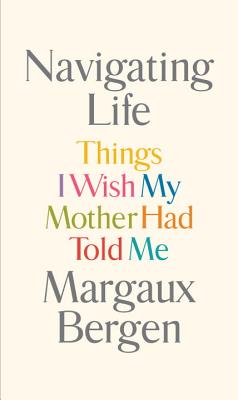
An Invitation to Learn How to Live: Margaux Bergen's Navigating Life

This review originally ran in Shelf Awareness for Readers. Reprinted here with permission.


Margaux Bergen offers her daughter--and her readers--a collection of heartfelt life advice based on her own experiences.


Mansion and Mystery in Scotland's Outer Hebrides: Sarah Maine's Debut, The House Between Tides

This review originally ran in Shelf Awareness for Readers. Reprinted here with permission.


Debut novelist Sarah Maine delivers a well-plotted mystery that blends the past with the present of an old mansion in Scotland's Outer Hebrides.

The Joy of Leaving Your Sh*t All Over the Place

Review originally published in Shelf Awareness for Readers. Reprinted here with permission.

joy of leaving your shit all over the place jennifer mccartney parody comedy book

In response to the anti-clutter movement, Jennifer McCartney encourages us all to embrace our messy lives and make peace with our stuff.


Jennifer McCartney's The Joy of Leaving Your Sh*t All Over the Place is a satirical response to the minimalist movement--most notably, the "KonMari" method touted in 2014's bestselling The Life-Changing Magic of Tidying Up. "Break free from the bonds of tidiness," writes McCartney (Cocktails for Drinkers), "and triumph over the boring faces of uniformity and predictability. Every tidy home looks the same... but a messy home, now that's a better way to live." 

Marrow Island: On the Power of the Environment to Shape Our Lives

Review originally published in Shelf Awareness for Readers. Reprinted here with permission.


marrow island alexis smith novel

In Marrow Island, Smith offers a complex story of one woman's life while quietly reflecting on the power of the environment to shape our lives.

Marrow Island begins at the end: the opening pages introduce Lucie as she is being rescued from Marrow Island by a park ranger and her best friend--who may have tried to kill her. Reflecting on the story she later tells FBI agents, state police, the park ranger and her family, Lucie considers Marrow Island and the small eco-colony she encountered there: "Marrow Colony as cult. Marrow Colony as failed utopia. Build, destroy, repeat."

Under the Harrow: Flynn Berry's Debut Offers Psychological Suspense

Originally published in Shelf Awareness for Readers. Reprinted here with permission.

under the harrow flynn berry debut novel

Debut novelist Flynn Berry delivers a tightly paced and impressive story of psychological suspense.


Under the Harrow begins as a straightforward murder mystery: in the English countryside, Nora enters her sister Rachel's house for a Friday night dinner and finds both Rachel and her dog brutally murdered. But as the search for the killer unfolds, Under the Harrow becomes spectacularly complex. Flynn Berry carefully builds the story around Rachel's and Nora's lives with intricate details that connect perfectly, and often in surprising ways. Nora and Rachel are puzzle pieces that don't fit together: Rachel was brutally assaulted as a teenager and has been obsessed with finding her as-yet unidentified attacker; Nora leads a purposeless, meandering life tainted by guilt over her role in her sister's attack all those years ago.