#Hamalong: Chapters 10-13
[Technically this week's reading was Chapters 10-14, but I misread, so I'm a chapter behind the rest. Oops.]
We are moving right ALONG in this ol' Hamilton's life, friends. In this week's chapters (10-13), Chernow goes over Hamilton's time building up a successful law firm (albeit one with an awful lot of Tory traffic for the patriots' tastes); reflects a bit on Hamilton's past and how it might impact his future; dives into the Constitutional Convention and all its drama llamas; and gives us a full-on rundown of the Federalist Papers that puts Clifs Notes to shame. That last was about as interesting as reading Clifs Notes, to boot, which is not at all interesting.
Week in Reading: January 11
January here has been weird: it swung from 55 degrees to 18 degrees back to 55 degrees in about a week, and it's taking a toll on these ol' sinuses. As such, I haven't gotten quite as much reading in as I'd have liked (sinus headaches are the worrrst), but it was still a pretty great reading week. I'm loving The Blind Assassin, which I'm reading for a Mini Long-Distance Book Club discussion with a friend, and Hamilton is off to an absolute baller of a start. I'm also still puttering through my re-read of Rules of Civility on audio.
#HamAlong: Chapters 1-5
| Me, looking at the length of this book and the size of its tiny, tiny print. |
So: I'm already behind and we've only just started. But dayum, this book is good. I'll fully admit to being put off by its GIANT size and TEENY TINY print, but the first 100 pages flew by far more quickly than I'd anticipated for two reasons:
- Alexander Hamilton apparently lived the kind of life that one couldn't even dream up for a fiction book. Seriously, some of this is downright unbelievable: he of dubious fatherhood was abandoned by his presumed father (the one who gave him the name Hamilton), left orphaned by his mother, left destitute all over again when his cousin-turned-guardian either shot himself or stabbed himself in the head (how exactly can the two be confused??), left destitute all over again when his uncle-turned-guardian up and died on him (people did that a lot) and then somehow managed to become George Washington's right-hand man like... 5 years later.
- Ron Chernow is sly and unpredictably funny. Case in point:
In this ghastly place [Fort Christiansvaern], unspeakable punishments were meted out to rebellious blacks who had committed heinous crimes: striking whites, torching cane fields, or dashing off to freedom.
and, after Hamilton's mother, Rachel, was thrown in jail by her then-husband, Lavien, for perceived infidelity:
As an amateur psychologist, Lavien left something to be desired, for he imagined that when Rachel was released after three to five months this broken woman would now tamely submit to his autocratic rule...
Chernow's clearly gone to great lengths to not only read everything Hamilton ever wrote (or possibly wrote; as there are some writings in the world that may be attributed to him but are uncertain), but everything ever written about Hamilton, in Hamilton's time (ok, maybe not, but it certainly feels like it), or by those Hamilton knew. Though some details (like the minor one of the year of Hamilton's birth) have been lost to history, Hamilton overall reads like something written about a contemporary or even currently living character, so in-depth are the source materials.
By the end of Chapter 5, we have a strong-willed, brilliant young boy who has been exposed to the horrors of slavery; witnessed first-hand the problems of rigid class structures; left his homeland behind to seek an education; been granted the war he wished for to give him upward class (and income) mobility; made a few enemies; impressed a number of notable politicians and military leaders; possibly had gay relationships with maybe one or maybe two other notable figures in the American Revolution (pure speculation, that), but at least forged lifelong friendships; become a significant figure not only in the American Revolution but in the political landscape of the American colonies... and what else am I missing?
Oh yeah, and we have seven hundred more pages to go. No wonder Miranda found this to be excellent fodder for what is surely one of the best musicals of our time.
So bring it on, Chernow. I'm ready for the rest of it.
Book Review: Hotel on the Place Vendome, by Kerry McHugh
If the walls of the Hôtel Ritz could talk, The Hotel on the Place Vendome would be their memoirs. Tilar Mazzeo presents a history of this glitzy Parisian hotel, cataloguing the lives and actions of its rich and famous occupants--from Marcel Proust to Coco Chanel, Hemingway and Fitzgerald to Hermann Göring.
Mazzeo (The Secret of Chanel No. 5) starts with the hotel's opening in 1898, then moves chronologically through the building's history. The bulk of her account, though, is spent on the years during World War II and the activities leading up to the Nazi occupation of Paris, then to the city's liberation in 1944. Mazzeo leaves no stone unturned, giving as much attention to the members of the French Resistance--several of whom worked in the Ritz--as to "horizontal collaborators," French women known to sleep with Nazi soldiers during the Occupation.
This is a history many French citizens, even now, would prefer to leave untold; Mazzeo recalls how one interview subject whose husband fought in the Resistance warned her not to write the book. But write it she did, and readers should be grateful, for the lens of the Hôtel Ritz provides not only a fascinating history of a building that has captured our imaginations for over a century, but a broader history of the building's many occupants.
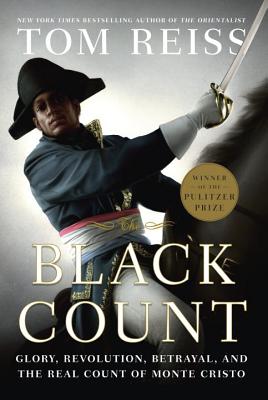
Book Review: The Black Count, by Tom Reiss
The Black Count recounts the life--and legacy--of this great man in extensive detail. Tom Reiss (The Orientalist) draws on over six years of primary research to tell Dumas's story. But the book is much more than a biography of a great French general. It's also a history of civil rights in France, an account of the French Revolution and a tale of Napoleon's rise to power. Woven throughout all of this historical detail is an ongoing analysis of Dumas's influence on his son's famous novels, particularly The Three Musketeers and The Count of Monte Cristo. Though General Dumas is not commemorated with any statue in France today, he remains an important figure in French history and in literature; The Black Count merges the myth of the man contained in his son's novels with the facts of his life, resulting in an impeccable history that reads like a novel but packs the facts of a textbook.
---
Thoughts from other bookworms:
Devourer of Books
NPR Books
We Love This Book
---
You might also like:
The Count of Monte Cristo by Alexandre Dumas
The Three Musketeers by Alexandre Dumas
The Orientalist by Tom Reiss
---
The Black Count | Tom Reiss | Crown | Hardcover | 432 pages | Buy from an independent near you
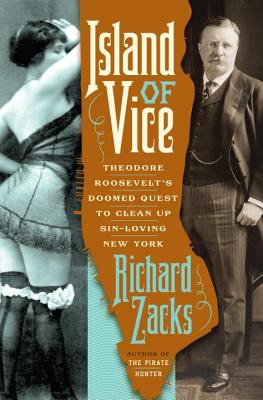
Book Review: Island of Vice, by Richard Zacks
There is no shortage of reading material on Theodore Roosevelt, but the majority of it glosses over his short but trying time as Police Commissioner in New York City. Historians who do address this difficult time tend to draw primarily on Roosevelt's own memoirs of the period, in which he portrays himself successfully cleaning up the city. In fact, as Richard Zacks (The Pirate Hunter) reveals in Island of Vice, Roosevelt's two-year term as police commissioner was a failure.
Zacks's coverage of this little-studied period of Roosevelt's career is lengthy but captivating, revealing the underbelly of 1890s Manhattan--the alcohol, the prostitution and the gambling--along with the systemic police corruption that allowed it all to flourish. Roosevelt's prudish, almost Puritanical efforts created an atmosphere that Zacks depicts as a vicious game of whack-a-mole; for every instance of vice suppressed, three new ones seem to have appeared.
The end result of Roosevelt's "doomed quest" was a Manhattan as steeped in sin as it was before his time there, and a deep rift between him and Republican leadership. In a bizarre twist of events, it was this intolerance that pushed Roosevelt into the vice presidency, a position Zacks notes was meant to keep him out of trouble more than give him power. And the rest, as they say, is history.
---
Thoughts from other bookworms:
Washington Post
Booklust
---
You might also like:
The Alienist by Caleb Carr
Devil in the White City by Erik Larson
---
Island of Vice | Richard Zacks | Doubleday | $27.95 hardcover | 448 pgs | March 2012 | 9780385519724 | Buy from an independent near you
Making Connections: 1890s New York
One of my greatest pleasures, as a reader and as an ex-Manhattanite, is diving back into the city I think I know so well only to find a previously undiscovered layer. That is precisely what Island of Vice does: peels back what we think we know about 1890s Manhattan, and Theodore Roosevelt's time there, and instead presents what we should have known.
Throughout it, I could not help but draw parallels to that well-loved thriller, The Alienist, which I read early last year and absolutely adored. The two feature many of the same characters (Jacob Riis, Theodore Roosevelt, Big Bill Devery, etc.), but approach the subjects of vice, police corruption, and TR's time as Police Commissioner from very, very different angles. And yet it is impossible not to see the connections. If you haven't read The Alienist, I strongly recommend it (read my full review here); once you're done, dip into Island of Vice (on sale March 13) for a non-fiction approach.
Does anyone else do this as they read? Find connections between stories, histories, whatever the case may be? Any other books on 1890s New York that I should be eyeing for a next read?
Audiobook Review: The Wordy Shipmates, by Sarah Vowell
I went back recently and picked up The Wordy Shipmates on audio at my local library (though I also own the book in hardcover) in an effort to continue to get to know this author that I've always loved.* Her subject of choice this time around? None other than the Puritans, that miserly, no-fun lot that first settled our precious American shores. Well, except for the Native Americans, of course. And they weren't always no-fun, actually. And they didn't all wear black with silly white hats, either.
These are the myths that Vowell sets out to de-bunk, and she does so successfully. Puritan writing can be dry as all get-out (have you ever actually read Winthrop's extensive sermons?), but Vowell, in her usual style, treats this material with an irreverent attitude that makes it all seem... approachable, somehow. Add in the fact that she reads her own audiobooks, and Vowell's story, as well as her humor and dry, sarcastic wit, come to life in every sense of the word. Then consider a delightful cast of additional readers, including (but certainly not limited to) Peter Dinklage as the voice of Roger Williams, that outcast who ultimately founded that bizarre little state, Rhode Island.
Though this was not my favorite of Vowell's works (I find her style to be more impactful in essays than in full-length histories), I can honestly say that any writer capable of teaching us about the Puritans through a careful examination of The Brady Bunch pilgrim episode is clearly a writer worth reading. Especially when said writer manages to pull it off successfully -- which Vowell does here. The Wordy Shipmates is a delightful, if sometimes overly detailed read, and the audio version is even better. After all, who doesn't want to hear Sarah Vowell and Peter Dinklage tell us about Puritan politics? Amiright?
*The Wordy Shipmates actually came out before Unfamiliar Fishes, but I didn't read them in order.
---
Watch Sarah Vowell on Jon Stewart's The Daily Show, which is probably one of the best things ever:
| The Daily Show With Jon Stewart | Mon - Thurs 11p / 10c | |||
| Sarah Vowell | ||||
| www.thedailyshow.com | ||||
| ||||
Thoughts from other bookworms:
Bookrageous Podcast
S. Krishna's Books
Jenny's Books
Unputdownables
---
You might also like:
Unfamiliar Fishes
Assassination Vacation
The Partly Cloudy Patriot
---
The Wordy Shipmates | Sarah Vowell, nar. Sarah Vowell & Cast | Simon & Schuster Audio | 9781590514634 | $29.99 Audio CD | 6 CDs, 7 hrs | October 2008 | Buy from an independent bookstore near you
Book Review: The Man Who Invented Christmas, by Les Standiford
Given my long-lasting and yet new love for Dickens' text, it seemed only natural that this December, I would turn my attention to the story behind the story, found in Les Standiford's slim history, The Man Who Invented Christmas, aptly subtitled How Charles Dickens's A Christmas Carol Rescued His Career and Revived Our Holiday Spirits.
What Standiford has done--and done quite well, I might add--is provide a history of Dickens' most beloved work within the context of his life as an author. Starting with Dickens' troubled childhood, and moving into his struggling career as an author, Standiford leaves no stone unturned in seeking motivations for Dickens' writing of A Christmas Carol. And once we've learned of its publishing, fans of the Victorian novelist are treated to insight into Dickens' pride over his work, his struggles to maintain its copyright, and its long-lasting impact on the Western world and our holiday traditions.
All of Dickens' feelings about iniquity, injustice, poverty, charity and a need for a shared sense of responsibility for those less fortunate than ourselves have flooded into A Christmas Carol, a book that Standiford maintains transformed a little-celebrated Christmas holiday into the full-fledged giving-fest that it is today. And as times today get tougher and tougher, and streets of occupiers cry for change, Dickens' messages of charity and goodwill become even more meaningful and important.
The Man Who Invented Christmas is one of the more successful literary histories I've read, though I cannot claim to have read many. The work is eminently readable and likeable, fact-filled but never dry; Standiford has a knack for color that many historians and biographers seem to lack, perfectly placing his quotes, trivia facts, and anecdotes in a way that keeps the story engaging. And its short length--just 220 or so pages--make it easy to fit in during the holiday season, even coupled with a re-read (or first read, as the case may be) of A Christmas Carol. Plus, now that I've re-read Dickens' original work and read The Man Who Invented Christmas, I figure I'm a pro at Dickens' Christmas writings,** and can flounce off to any literary party and show off with my new-found literary trivia tidbits.***
---
* I said it last year, and I'll say it again: the George C. Scott version of the movie is hands-down the best version ever made. Although lately The Muppet Christmas Carol has started making an appearance in this house as well.
**Not true, actually. Included in my lovely, out-of-print, gushworthy edition of A Christmas Carol are Dickens' two subsequent Christmas novels (he originally aimed to publish one each year): The Chimes and The Cricket on the Hearth. While I've read these two, I have yet to read The Battle of Life or The Haunted Man.
*** Did you know, for example, that Dickens essentially self-published A Christmas Carol? Or that one of Mark Twain's first dates with his eventual wife was to a Dickens reading in the United States? See? Literary trivia tidbits abound.
---
Thoughts from other bookworms:
Season's Readings
Books on the Nightstand
The LA Times Book Review
---
The Man Who Invented Christmas | Les Standiford | Crown Publishers | 9780307405784 | $19.95 Hardcover | 241 pages | November 2008 | Buy from an independent bookstore near you
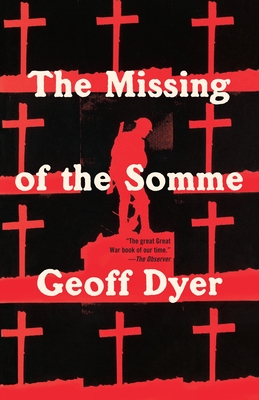
Book Review: The Missing of the Somme, by Geoff Dyer
There are countless books on World War I, and countless more on the wars following it, but The Missing of the Somme stands out among the crowd because instead of discussing strategy, timelines and numbers of the war, author Geoff Dyer (But Beautiful; Out of Sheer Rage) focuses on the remembrance of World War I.
Though short, Dyer's treatise is incredibly thorough--he draws on his experience traveling to the cemeteries and monuments across Europe; surviving photographs, films, letters and journals; and his own family history to craft a story about the impact of war on the generations that followed it. In doing so, he covers most, if not all, of the many ways we use both to remember and memorialize the war and the losses in which it resulted. Ultimately, The Missing of the Somme shows us how much our need to commemorate an event is capable of shaping our memories of it, even as the event is still in progress.
Originally published in the U.K. in 1994, this new edition is the first time The Missing of the Somme is being published in the U.S. As we approach the 100th anniversary of the beginning of World War I, and lose the last remaining veterans of the war itself, it proves a timely and important look at both the memory and memorial of the war so terrible as to be named The Great War.---
Note: Thanks to the publisher for providing a copy of this book to Shelf Awareness, and to Shelf Awareness for providing a copy of the book to me for review.
Book Review: Unfamiliar Fishes, by Sarah Vowell
I write this with the news blasting updates on Operation Odyssey Dawn in the background. Despite the fact that the operation name sounds like a parody, this is no joke. And with newscasters repeating time and time again phrases on the importance of spreading democracy, and the inherent desire of all people to be free, and blah, blah, blah... well, let's just say that Vowell's seemingly obscure history of Hawaii suddenly snaps into quick focus. There are recurring themes, here. The infamous "they" were right again when they stated that history is doomed to repeat itself.
But I couldn't have known this before diving in, of course. I picked this book up solely because Sarah Vowell wrote it. I've already written about my near-fanatacism for Sarah Vowell. Why else, really, would I have read a book about Hawaii's history? I'm an East Coast girl, born and bred. My interest in history is limited to early America, the Civil War, the Industrial Revolution, World War II, Ireland, Ancient Rome, Ancient Greece, and English monarchies. Fine. Maybe it's not so limited. But note that Hawaii does not make an appearance in this list.
Nevertheless, Unfamiliar Fishes was right up my alley. Vowell's writing, as usual, is factual, detailed, and often laugh-out-loud hilarious. Her research is (to these uneducated eyes) near impeccable, and ridiculously thorough. As with her other subjects (patriotism, presidential assassinations, and Puritans), she meanders through history, at times wandering far from the subject at hand, but always managing to keep these diversions to task and shockingly relevant.
Perhaps because of the very serious situation into which she is writing, I found this particular Vowell volume to be slightly less laugh-out-loud hysterical than her previous writings, though it is certainly peppered with a fair amount of Vowellensian humor. I particular liked the sentence that started, "Dewey decimated..." Touché, Sarah. I tip my hat to you on that one.
If you've ever read Vowell, you already know what I'm talking about. And if you haven't, you're missing out. Big time. Feel free to start anywhere you like, but be sure your reading of her includes Unfamiliar Fishes, or you'll be missing out on an excellent dose of history, wit, and a host of information you never knew you didn't know.
---
Thoughts from other bookworms:
Sarah Vowell, UNFAMILIAR FISHES and an "Orgy of Imperialism" at The Book Lady's Blog
---
This bookworm also recommends:
Follow Sarah Vowell on Facebook
The Partly Cloudy Patriot by Sarah Vowell
The Wordy Shipmates by Sarah Vowell
Assassination Vacation by Sarah Vowell
Take the Cannoli by Sarah Vowell
---
Note: Many thanks to Lydia Hirt of Riverhead Books for sending me a copy of this title for review.
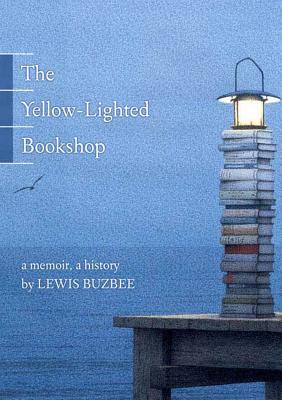
Book Review: The Yellow-Lighted Bookshop by Lewis Buzbee
The Yellow-Lighted Bookshop is, as the subtitle suggests, part memoir, part history. Author Lewis Buzbee has spent his entire career in various corners of the bookselling industry: store clerk, publisher's rep, author. He draws just as heavily on anecdotal evidence as historic fact in his presentation of the course of the bookshop throughout our history.
Beyond memoir and history, though, Buzbee's book is a collection of trivia about the bookshop. Did you know, for example, that before the printing press, it is estimated that there were only 50,000 books in all of Europe? That's books, not titles. 50,000 in comparison to the 20 million estimated a mere 50 years after the first Gutenberg Bible was produced. Or how about the names of various pieces of those precious books that line your shelves? The right page is the verso, the left the recto. The groups of pages found in a hardcover are called signatures; when paperback pages are cut flush and glued to the spine, this is called perfect-binding.
Gives you a new appreciation for all that publishing lingo, don't it?
It seems to me that that is part of Buzbee's plan, here. He notes that the novel has died, books have died, and now, at the dawn of the e-reading era, there are those that make the case that reading itself is dying. Bookselling is certainly on the decline; one indie is closing down after the next. But amidst all the bad news, Buzbee finds the silver lining: there are new bookshops opening. There are avid readers who will never give up the paper pages they hold in their hands. There are people like you and me that get absolutely giddy at the prospect of a book about books; we keep authors like him and publishers like his going.
In the face of over 150,000 new titles published per year (that's 411 per day, for those not willing to do the math), we sift through our options to find something that will engage us. For the record, Buzbee points out that that is 50,000 more titles per year than the entire collection held at the library at Alexandria. Per year, readers. But do not despair, for that is why we have our trusty booksellers to guide us, selecting titles for feature tables, face-outs, hand-selling.
And on the question of the internet and its threat to these very booksellers?
"Amazon.com and other sits like it are not without benefit. If only because the growth of e-commerce hurt so many independent bookstores, the fate of the independent became newsworthy, and as a culture we began to value what we had taken for granted for so long." (p. 206)Ha! I knew I wasn't alone in my love of the smell of books. Now I have proof in the comments of others on my blog AND in Lewis Buzbee's commitment of this sentiment to paper.
"The Internet bookstore is here to stay, no doubt... But the Internet bookstore places barriers between the reader and the book that leach much of the pleasure the brick-and-mortar store has always offered. Until the odor-replicator program is invented, how will we know if a book smells right?" (p. 207)
Bottom line: While certainly not destined to become a classic, The Yellow-Lighted Bookshop is, if nothing else, a reminder that we are not alone in our love of books; there are others like us. That is what makes the bookstore so important, just as we are what keeps the bookstore alive. Expect this one to be a book that will persist in appearing in our bookloving lives. From ancient Rome and China to the publication of Shakespeare to the dawn of corporate chains and internet discount stores, this is a complete, engaging look at the history of bookselling. Count on it to be the perfect gift for your book-loving friends; a balanced education about an influential institution; and full of quotable extracts for yourself:
"Books connect us with others, but that connection is created in solitude, one reader in one chair hearing one writer, what John Irving refers to as one genius speaking to another." (p. 6)---
Note: All page counts refer to the paperback edition.