Showing posts with label Irish literature. Show all posts
Whodunit, Whydunit, Howdunit: Tana French's Dublin Murder Squad Series
08 April 2015
I love a good mystery, but I can be picky in what I read within the genre. Tana French is one of the authors I will unfailingly pick up: I've fallen for her slow, deliberate pacing that startles you with its occasional abruptness; for the ways that her stories explore the very human--and therefore all the more shocking--sides of crime; for the distinctively Irish voice that each of her stories takes on and represents; for her skill in picking up a secondary or even tertiary character in one novel and making him or her the star of the next.
Beannachtaí na Féile Pádraig oraibh!* (Or, Happy St. Patrick's Day)
17 March 2015
I've got an Irish name and a stack of Irish books, and I studied Irish (history, literature and language) in college, so let me tell you: this is my holiday. Not in the green beer, car bomb (please think about car bombs in the context of Irish history and then think about not calling them that anymore), get-wasted kind of way, but in the celebrate Irish heritage and Irish literature and Irish food kind of way. I'm planning a lunch with Dubliner cheese (it's a thing, it's at Costco, and it's divinely zingy cheddar), dinner with potatoes (and yes, let's be honest, probably Jameson) and you know I'll be stocking up on super-sale corned beef and cabbage tomorrow. One for the slow cooker, one (maybe two) for the freezer.
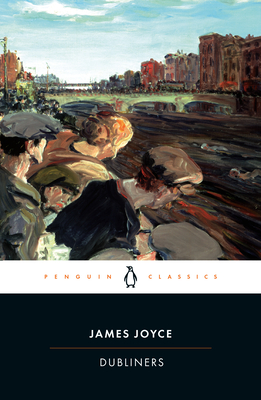
I've written before about some timely Irish-themed reading in honor of the holiday. It's impossible to consider Irish lit without considering Joyce, of course; though I haven't read (and am not sure I will read) Ulysses, Dubliners remains one of my favorite short story collections. I first read it in college and have a slim, lime green copy I may revisit this week.
Audiobook Review: The Likeness, by Tana French
22 June 2012
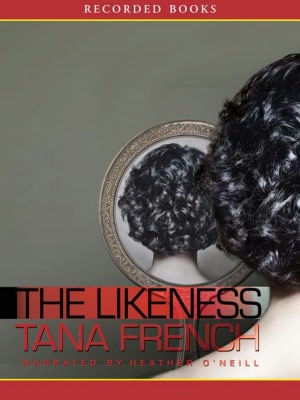
When Detective Cassie Maddox is called to a murder scene--six months after she left The Murder Squad--she is shocked to find that the victim is her. Not only does the girl look like her, and have the same build, but she is carrying the identification Lexie Madison--of one of Cassie's old undercover aliases. Despite the dangers, she finds herself going back undercover--this time as herself, or as someone who was impersonating herself, or as someone who was impersonating her past impersonations. The undercover assignment gets at the very core of Cassie's identity, and she quickly finds herself captivated by Lexie's life as a student, her seemingly perfect friends, and her idyllic, isolated living situation. But she is, at heart, still a detective, and must root out Lexie's murderer, whatever the cost.
The Likeness is Tana French's second Cassie Maddox mystery, the sequel to her debut novel, In the Woods. But it is also more than a mystery novel at heart, proving to be poetic, reflective, and thoughtful in its considerations of the Irish landscape, culture, social atmosphere; the world of student life; the simple pleasures of loyal friends and good company; the joys of turning a house into a home. French's writing is captivating in its own right, simple and elegant, poised and exact, only further enhanced by Heather O'Neill's crisp, clear narration (with an Irish accent, to boot).Which is not to say that the plot is not engaging as well--it is, in its slow and steady pace. The combination of the two results in a stunning novel of psychological suspense, and I look forward to reading more from French.
Side note: Apparently I have a knack for accidentally reading sequels first, as I didn't realize this carried forth the same characters from In the Woods. I'll still go back and read In the Woods at some point, but there were some spoilers in The Likeness. So if you've read neither and are considering either, start at the beginning.
---
Thoughts from other bookworms:
Bookworm Meets Bookworm
Book Confessions
NYC Book Girl
---
You might also like:
In the Woods by Tana French
The Forgotten Waltz by Anne Enright
The Secret History by Donna Tartt
---
The Likeness | Tana French, nar. Heather O'Neill | Recorded Books | Audio CD | September 2008 | Buy from an independent near you
The Likeness is Tana French's second Cassie Maddox mystery, the sequel to her debut novel, In the Woods. But it is also more than a mystery novel at heart, proving to be poetic, reflective, and thoughtful in its considerations of the Irish landscape, culture, social atmosphere; the world of student life; the simple pleasures of loyal friends and good company; the joys of turning a house into a home. French's writing is captivating in its own right, simple and elegant, poised and exact, only further enhanced by Heather O'Neill's crisp, clear narration (with an Irish accent, to boot).Which is not to say that the plot is not engaging as well--it is, in its slow and steady pace. The combination of the two results in a stunning novel of psychological suspense, and I look forward to reading more from French.
Side note: Apparently I have a knack for accidentally reading sequels first, as I didn't realize this carried forth the same characters from In the Woods. I'll still go back and read In the Woods at some point, but there were some spoilers in The Likeness. So if you've read neither and are considering either, start at the beginning.
---
Thoughts from other bookworms:
Bookworm Meets Bookworm
Book Confessions
NYC Book Girl
---
You might also like:
In the Woods by Tana French
The Forgotten Waltz by Anne Enright
The Secret History by Donna Tartt
---
The Likeness | Tana French, nar. Heather O'Neill | Recorded Books | Audio CD | September 2008 | Buy from an independent near you
St. Patrick's Day Reading List
17 March 2012
This post is based on a column originally published in the March 16th issue of Shelf Awareness for Readers. If you don't already get this bi-weekly dose of bookish goodness in your inbox, sign up here to fix that.
It's St. Patrick's Day! I know that means you're all readying yourselves for the inevitable onslaught of green beer, soda bread and corned beef. There's more to this holiday than food coloring, however; why not celebrate by taking a deeper dive into Irish literature?

One of the most well-known works of Irish literature, of course, is Joyce's daunting Ulysses. While those who have read this in its entirety should surely be commended, those looking for a more approachable way to encounter Joyce might consider Dubliners, a collection of Joyce's short stories originally published in 1914. Each of the 15 stories gives readers a glimpse into Dublin as both a city and as a collection of people, ranging from a simple tale of two young boys playing hooky from school to a more complex story about the nature of life and death.
Frank Delaney's Ireland is a rich novel of storytelling and narration, in which Ronan, a nine-year-old boy, is captivated by the stories told by a traveling storyteller. After the storyteller leaves, Ronan vows to find him once again, traveling Ireland by foot on search of his mentor, becoming entranced by Irish myth and culture along the way. Delaney's novel is complex and inviting, weaving together well-known stories of Irish folklore with the story of Ronan and his family; the result is as much a celebration of Ireland as it is of storytelling itself.
On an Irish Island by Robert Kanigel, takes a close look at the history of the Blasket Islands, known in theearly 20th century for its community and for the unadulterated Irish language still spoken there. But as more and more visitors came to experience this linguistic rarity themselves (the Irish language was in steep decline throughout most of the 20th century), the self-contained community of the Blasket Islands began to erode, culminating in a government-ordered evacuation of the islands in 1953. Kanigel's work is well-researched and thoughtful, asking critical questions on the nature of linguistics, cause and effect, and the preservation of culture.
Beannachtaí na Féile Pádraig oraibh! (rough pronunciation: bahn-ach-tee na faw-leh paw-dreg oh-riv) Happy St. Patrick's Day!
It's St. Patrick's Day! I know that means you're all readying yourselves for the inevitable onslaught of green beer, soda bread and corned beef. There's more to this holiday than food coloring, however; why not celebrate by taking a deeper dive into Irish literature?
One of the most well-known works of Irish literature, of course, is Joyce's daunting Ulysses. While those who have read this in its entirety should surely be commended, those looking for a more approachable way to encounter Joyce might consider Dubliners, a collection of Joyce's short stories originally published in 1914. Each of the 15 stories gives readers a glimpse into Dublin as both a city and as a collection of people, ranging from a simple tale of two young boys playing hooky from school to a more complex story about the nature of life and death.
Frank Delaney's Ireland is a rich novel of storytelling and narration, in which Ronan, a nine-year-old boy, is captivated by the stories told by a traveling storyteller. After the storyteller leaves, Ronan vows to find him once again, traveling Ireland by foot on search of his mentor, becoming entranced by Irish myth and culture along the way. Delaney's novel is complex and inviting, weaving together well-known stories of Irish folklore with the story of Ronan and his family; the result is as much a celebration of Ireland as it is of storytelling itself.
On an Irish Island by Robert Kanigel, takes a close look at the history of the Blasket Islands, known in theearly 20th century for its community and for the unadulterated Irish language still spoken there. But as more and more visitors came to experience this linguistic rarity themselves (the Irish language was in steep decline throughout most of the 20th century), the self-contained community of the Blasket Islands began to erode, culminating in a government-ordered evacuation of the islands in 1953. Kanigel's work is well-researched and thoughtful, asking critical questions on the nature of linguistics, cause and effect, and the preservation of culture.
Beannachtaí na Féile Pádraig oraibh! (rough pronunciation: bahn-ach-tee na faw-leh paw-dreg oh-riv) Happy St. Patrick's Day!
---
While you're here, enter to win a copy of Frank Delaney's Ireland. Simply leave a comment here to enter.
Irish Language, Irish Studies, Irish Books, and a Giveaway
16 March 2012
Despite my incredibly Irish-sounding name, I am not, in fact, Irish. Except by marriage. That hasn't stopped me from falling in love with Irish everything, of course; I even took Gaelic as my language requirement in college, and sang in the Irish Folk Group. (NYU, by the way, has an amazeballs Irish Studies program, in which you get to go to class in this gorgeous building, which is on this gorgeous street, and in between classes, you can sip this kick-your-ass Irish tea and sing some pretty baller Irish tunes.)
Sadly, I've forgotten much of my Irish, but I know enough to wish you all a Happy St. Patrick's Day:
Beannachtai na Feile Padraig Oraibh!
(Rough pronunciation: bahn-ach-tee nah feh-leh paw-drigg oh-riv)
To celebrate my love of my adopted country, I'm giving away a copy of Frank Delaney's Ireland. Simply leave a comment to enter. Extra entries for following, and for tweeting, Facebooking, or otherwise telling everyone you know about it. You know, the usual. US & Canada only -- sorry, international folks. I'll pick a winner on Tuesday, 3/18.
And if you're looking for a new Irish saying for your celebrations tomorrow evening, try this:
Ta me are meisce!
(Rough pronunciation: tah may are mesh-keh!)
Translation: I am very drunk!
Beannachtai na Feile Padraig Oraibh!
(Rough pronunciation: bahn-ach-tee nah feh-leh paw-drigg oh-riv)
To celebrate my love of my adopted country, I'm giving away a copy of Frank Delaney's Ireland. Simply leave a comment to enter. Extra entries for following, and for tweeting, Facebooking, or otherwise telling everyone you know about it. You know, the usual. US & Canada only -- sorry, international folks. I'll pick a winner on Tuesday, 3/18.
And if you're looking for a new Irish saying for your celebrations tomorrow evening, try this:
Ta me are meisce!
(Rough pronunciation: tah may are mesh-keh!)
Translation: I am very drunk!
A Bit O' Irish For You
17 March 2011
Beannachtaí na Féile Pádraig oraibh!
(A Happy St. Patrick's Day to you!)
rough pronunciation: bahn-ach-tee nah fay-leh paw-drig uh-riv
I'm home nursing a cold and preparing for a business trip tonight instead of out drinking green beer and Jameson, but I can't help but sport a little Irish pride. I did marry a McHugh, after all.
I have a host of Irish-themed books I'd been aiming to read by now, so I could be a proper blogger and feature timely, seasonal reviews on this blog. Alas, real life got in the way (surprise), and those Irish-themed books are still sitting on the Irish-themed bookcase (yep, a whole bookcase of them) waiting to be read. Included on the list:
What am I missing (besides Ulysses, of course)? What are your favorite Irish books, be it history, fiction, poetry, or some combination of them all?
I have a host of Irish-themed books I'd been aiming to read by now, so I could be a proper blogger and feature timely, seasonal reviews on this blog. Alas, real life got in the way (surprise), and those Irish-themed books are still sitting on the Irish-themed bookcase (yep, a whole bookcase of them) waiting to be read. Included on the list:
What am I missing (besides Ulysses, of course)? What are your favorite Irish books, be it history, fiction, poetry, or some combination of them all?
James Joyce's First Work
14 August 2009
Yesterday marked the anniversary of the first publishing of Joyce's now well-known short story, "The Sisters." It was proposed by the editor of The Irish Homestead that he write something pastoral that would
appeal to the general reader. Joyce was paid a commission of 1 lb (I have no idea how to make the British pound sign in html, sorry guys) and was set up to write six more stories in the Homestead; unfortunately, the paper rescinded this commission after too many readers wrote in complaining of Joyce's writing and subject matter.
Luckily for students of British literature and Irish history, this did not deter Joyce from writing his short stories; he wrote no less than 15 shorts from 1904 to 1907, and after much deliberation, these were published as Dubliners, now a Joyce classic.
Perhaps this helps to explain why the stories in Dubliners get progressively harder to read (and that is in no way a criticism). The early stories were written for a wider audience, but by the time Joyce was writing the later stories, he had already admitted to his publisher "I cannot write without offending people."
Original story from Writer's Almanac, August 13, 2009
Luckily for students of British literature and Irish history, this did not deter Joyce from writing his short stories; he wrote no less than 15 shorts from 1904 to 1907, and after much deliberation, these were published as Dubliners, now a Joyce classic.
Perhaps this helps to explain why the stories in Dubliners get progressively harder to read (and that is in no way a criticism). The early stories were written for a wider audience, but by the time Joyce was writing the later stories, he had already admitted to his publisher "I cannot write without offending people."
Original story from Writer's Almanac, August 13, 2009
Subscribe to:
Posts (Atom)