Book Review: How Star Wars Conquered the Universe, by Chris Taylor

This review originally ran in Shelf Awareness for Readers. Reprinted here with permission.


The Star Wars franchise is no small thing, with an estimated 1.3 billion tickets sold to the six theatrically released movies worldwide, $6 billion in VHS/DVD sales and $20 billion in merchandise sales. But how did it grow from the impossible dream of a young filmmaker to a multibillion-dollar franchise? Journalist Chris Taylor answers that question in How Star Wars Conquered the Universe, which covers not only the "past, present and future" of what might be the world's most ubiquitous franchise, but also how it has made an impact on--and been influenced by--its ever-growing fan base.

Taylor weaves George Lucas's biography with a history of science fiction and space fantasy in print and on screen, which he then fits into an exploration of Lucas's creative approach to each of the six films and the timely political undertones in each story. He then turns to the Expanded Universe (the body of Star Wars books, games, TV shows and other sanctioned stories) and how it interacts with Lucas's big-screen creations.

Taylor doesn's shy away from criticisms of Lucasfilm or the movies themselves, such as flaws in the plotlines or tensions on the film sets. But at its heart, How Star Wars Conquered the Universe is a love letter to a franchise that has become entrenched in contemporary culture in more ways than we could possibly count (just think how difficult it would be to find someone, anyone, who does not know the identity of Luke's father), and a testament to the power of space fantasy to capture our imaginations.

---


A copy of this title was provided by the publisher for review.
How Star Wars Conquered the Universe | Chris Taylor | Basic Books | Hardcover | October 2014


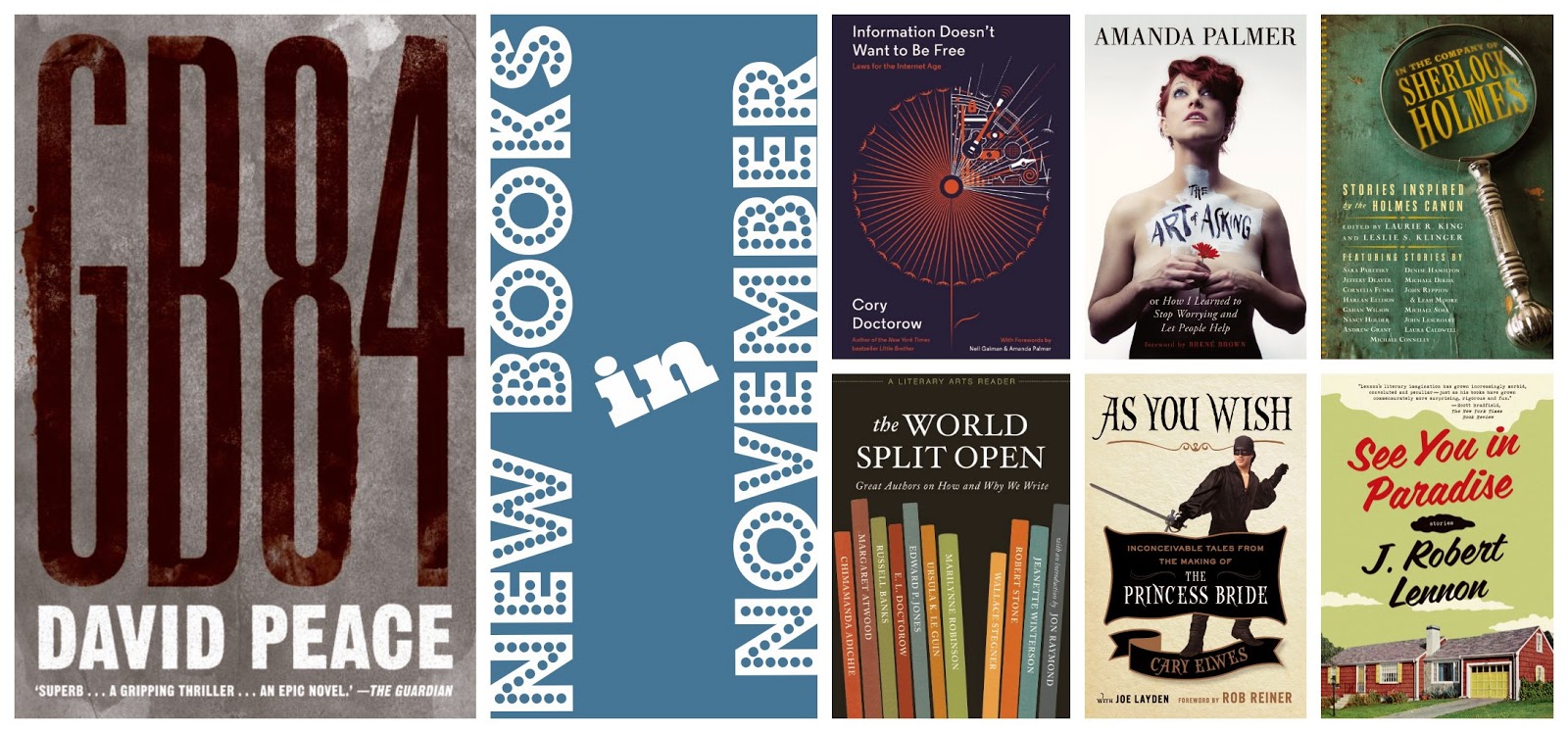
Looking Ahead: November Books

October set the bar pretty damn high for November reads, but I have confidence that this list contains some (ok, I've read a lot of them already, so I can safely say many) gems. These books will make perfect companions for longer nights and the chillier weather that is settling in on the mid-Atlantic.*


As You Wish, by Cary Elwes: Ok, I cheated here, because this is an October book, but as I'm halfway through the audio version (read by Cary Elwes, with appearances from Robin Wright, Christopher Guest, and other cast members), I'm sneaking it in anyway. Because HOW COULD YOU NOT LOVE A BOOK ABOUT THE MAKING OF THE PRINCESS BRIDE?

GB84, by David Peace (Melville House, November 4): I had never heard of Peace before BEA this year, when I heard him read from Red or Dead. And though I still haven't started that (or The Damned UTD, which I own), I'm already jonesing to dive into GB84, historical fiction that the blurb promises "depicts a real-life 1984 more violently dystopian than even Orwell imagined." Um, yes.

In the Company of Sherlock Holmes, edited by Leslie Klinger and Laurie King (Pegasus, November 28): I read (and adored) Klinger and King's first Sherlock-inspired collection, A Study in Sherlock, so you can bet I was jumping up and down all over the place when I saw there was a second volume in the works. I've already read it, and I can tell you it's just as delightful as the first collection, so gear up for some wildly inventive Holmes-inspired fiction, friends.

Information Doesn't Want to Be Free, by Cory Doctorow (McSweeney's, November 18): Who here thought it was impossible to make copyright interesting? Right. All of you raising your hands have just been proven wrong by the inimitable Cory Doctorow, whose exploration of copyright law and how it affects art and artists and the market and our everyday lives is just downright fascinating.

The Art of Asking, by Amanda Palmer (Grand Central, November 11): Palmer is a fascinating artist to watch, and actually appears on this list of books twice, in her way (she wrote one of two introductions to Doctorow's book, above). I don't know much about this book yet, but coming from her, I know it will be interesting.

See You In Paradise, by J. Robert Lennon (Graywolf, November 3): I nabbed a copy of See You in Paradise, a collection of short stories by an author Ann Patchett calls "a writer with enough electricity to light up the country," the same way I found The Wilds: at Book Expo, by asking the staff at the Graywolf booth what one book I should walk away with given my limited suitcase space. This was that book, and the stories are weird and strange and delicious and memorable, and, just as Patchett said they would be, electric. Read this if you love short stories, or if you think you'll never love short stories.

The World Split Open, an anthology (Tin House, November 11): I said in my wrap-up of October books that I would read anything with Margaret Atwood's name on it, even an IKEA catalog, and that's what brought me to this title. But Atwood's not alone in this collection, subtitled "Great Writers on How and Why We Write." Other authors include: E. L. Doctorow (author of Ragtime, among others); Marilynne Robinson (Gilead ranks among my favorite books of all times); Ursula K. Le Guin (a fantasy author I've always meant to read but never quite got around to); and many others.

---

What books are you most excited about this month?


---

*Though remember, nothing lasts forever in a cold November rain.

Nonfiction November: A Reading List

November is truly and fully upon us on the East Coast (translation: we've reset our clocks and it is chilly out there), and with it comes Nonfiction November. I've never gotten my act together to participate in this event before, but I'm looking forward to it this year--especially because November tends to be a slower month for me in terms of review obligations (there aren't many books with December pub dates).

So, though I'm sure I'll deviate from this list, some books I'm considering for Nonfiction November. With kudos to Shannon for providing a) an amazing list of non-fiction by women, which plumped up my TBR list considerably, and b) a guide to scanning Edelweiss for non-fiction titles, which helped me discover new titles without getting bogged down in academia.


The Working Poor, by David Shipler: I changed careers this summer, leaving the world of ad men behind in favor of a position with a small charitable foundation, where I oversee our grants process. It's the first time I've ever been able to say, hands down, "I love my job," and this book is evidence of that: it's technically work research, but I'm actually enjoying it.

Daring Greatly, by Brene Brown: This is another that technically falls in the category of could-be-for-work, but after hearing so many other bloggers loving on it, I figured I should see for myself how great it is.

Liar, Temptress, Soldier, Spy, by Karen Abbot: This book (which sounds fascinating in its own right, especially for those history lovers among us) sparked an interesting discussion about women writing non-fiction. It was on my list to read before that, and now it's even higher up. Plus, girl power + Civil War history + spies = probably awesome, right?

Wild, by Cheryl Strayed: I will just keep putting this on every reading challenge list it possibly fits on and eventually I'll pick it up... my only hesitation has been fear of disappointment, because I have so much love for Tiny Beautiful Things that I don't want to accidentally knock Strayed off of the pedestal on which I've placed her.

The Restless Sleep, by Stacy Horn: One I'd never even heard of until I saw that Kim at Sophisticated Dorkiness (one of the hosts of Nonfiction November) is hosting a readalong of this one in honor of th month-long challenge. A deep dive into the cold-case squad in New York City.

What We See When We Read, by Peter Mendelsund: With promises to explore how our minds process what we read, how could I not fall in book love?

We Should All be Feminists, by Chimamanda Ngoza Adichie: One of the books in the new Vintage Shorts series, this is a sleight book but one that's been chilling on my e-reader since its publication this summer. I think the title just about says it all, right?

Against Football, by Stephen Almond: In years past, I've gotten more and more into football as I learned to understand the rules and the calls and the art of the gameplay. But recently, I've become totally disillusioned with the sport, between the possibilities of long-term brain injury players face every day, the horrors of abuse seen in the NFL, and the way the "machine" around the sport handles every controversy that arises. So Stephen Almond's book against that very sport, subtitled "A Reluctant Manifesto," seems liked timely reading for one fan on the fence.

---

What nonfiction are you excited for?


Looking Back: October Reads

October was a month of some seriously amazing reads for me, in part because I spent August getting so far ahead on review copies (what with that month-long trip I took in September) that I had more time to read at my leisure in October and spent less time worrying about upcoming deadlines. Readathon helped move the TBR list along, as well, even though I didn't get as many hours in as I had originally intended.


Stone Mattress, by Margaret Atwood: I would read IKEA assembly instructions if Margaret Atwood wrote them, so perhaps I'm not the most unbiased of judges on her newest collection of short stories. But I found Stone Mattress compelling and heartfelt and wonderful, exploring the trials and pains and delights of aging, all with a touch of the stark and a touch of the strange that we have come to expect from Atwood's ever-sharpening pen. More, please.

A Rogue by Any Other Name, by Sarah Maclean: My first foray into romance, and I don't necessarily think it will be my last (though it definitely falls outside my normal purview of selected reading). Maclean's story of a fallen aristocrat now running a gambling hall and his unlikely wife is enticing and juicy and contains just enough drama to be interesting without bordering on soap-opera-esque. Having nothing to compare it to, I can't rightly review it, but I can say it was an incredibly fun readathon read (I finished it in a day).

Horrorstor, by Grady Hendrix: Perfect readathon choice, and perfect pre-Halloween reading. How could one not love the clever set-up of a somewhat haunted IKEA-like store? The hook works, and though the story is somewhat hokey, it has a staying power I didn't expect. (P.S. I never thought I'd reference IKEA not once but twice in a review round-up, but I suppose there's a first for everything.) Longer review of Horrorstor in my Halloween mini-reviews.

All the Light We Cannot See, by Anthony Doerr: It's hard not to say anything about this NBA-nominated novel that hasn't already been said, besides, perhaps, "Why did I put this off for so long?" If you haven't read this already, go do it. Now. No, really. The story of a blind girl in occupied France and a young German soldier with a knack for radios comes together in the most unexpected of ways, and every word Doerr writes is a delight for all five senses.

Florence Gordon, by Brian Morton: I picked this up after Shannon at River City Reading recommended it... and she could not have been more spot-on. The story of an aging feminist writing her memoir is so much more than that, and I plan to press it into the hands of EVERYONE I KNOW.

The Ocean at the End of the Lane, by Neil Gaiman: I'm still putting all my thoughts into semi-coherent words for this one, but suffice it to say: I loved it. Full of the whimsy and wit I love in Gaiman's writing, fully reminiscent of some of my favorite Who episodes, and an audiobook read in Gaiman's own crooning voice = all around win.

And then this list gets really long, because some of those books I read in August are finally published, so I can talk them up:

Alphabet, by Kathy Page: Perfect reading for anyone who read and enjoyed Rene Denfeld's The Enchanted earlier this year. The story of a man in prison for killing his girlfriend, Alphabet manages to touch on the (many, many) flaws of the British prison system, the psychology of a killer, our human insecurities, and the complications of sexuality (including a trans character). It's a lot to pack into a relatively short novel, but it works, and is oddly, unexpectedly compelling along the way. Full review to come.

If I Knew You Were Going to Be This Beautiful, I Never Would Have Let You Go, by Judy Chichurel: This short story collection has the longest title ever, but the stories within it are crisp and concise and perfectly capture a small working-class town on Long Island in the 1960s. Viewed as a novel, the narrative arc here is so spotty as to be non-existent; viewed as a collection of linked stories, the chapters are perfect in their insights.

The Short & Tragic Life of Robert Peace, by Jeffrey Hobbs: This actually published in September (and my full review from Shelf Awareness for Readers is here), but since I was galavanting around Europe on pub date, I didn't give it the attention I think it deserves. This is a smart, insightful biography of a young man whose life was cut tragically short. Its brevity does not prevent his life from carrying so many lessons about poverty, education, and acceptance in our country. Seriously: Read this.

The Wilds: Stories, by Julia Elliott: At BEA this year, I asked the ever-amazing staff at the Tin House booth which one book in their booth they would recommend to someone with limited suitcase space. This was the collection pressed into my hands, and it is just as strange and wild and wonderful as I'd hoped it would be. Full review to come.

---

After that rather lengthy list, I want to know:

What were the best books you read in October?


Halloween Mini-Reviews: Horrorstor and The Phantom Coach

It's Halloween! And while I don't much go in for horror (I'm a weeny when it comes to being scared), even I can't pass up the month of October without a few spooky reads.


The Phantom Coach, edited by Michael Sims: I've made a point to try to read more classics recently (with limited success), so I was delighted when I saw Sims' new anthology: a collection of Victorian ghost stories boasting authors such as Charles Dickens, Arthur Conan Doyle, Amelia Edwards, Elizabeth Gaskell and Henry James. The stories range in subject, from truly creepy to mere frights, but make for perfect jumping-off point for anyone wanting to explore the Victorian era's fascination with death and dying.

Horrorstor, by Grady Hendrix: I was hooked from the moment I saw the galley for this book, which (like the finished edition) is perfectly sized to mimic an IKEA catalog's dimensions. The dimensions and feel of the book are perfect for the somewhat-gimmicky hook for the story (note that "gimmicky" is in no way a bad thing in the context of this review): The hook here is gimmicky (in the best way imaginable): Orsk, a faux-IKEA furniture depot meant to compete with the real IKEAs of the world, has been riddled with strange break-ins and damaged products, so a zealous manager recruits a team of employees to spend the night in the store to "catch the bad guys," as it were. But the bad guys turn out to be more than just bad guys--they're ghosts. Or something else that is like a ghost but isn't a ghost, but is just as dead and vicious as a ghost.

Horrorstor will reel readers in with the haunted-IKEA hook, but will keep them reading by delivering what turns out to be a very scary, surprisingly layered story. And Hendrix delivers even more than that, managing to cram not only a thoroughly creepy ghost story between the pages of IKEA-like furniture, but a story of a young woman trying to find her place in a grown-up world.

What are your favorite Halloween reads this year?

---

Copies of both titles were provided by the publishers for review.

An Anniversary

Four years ago, I stood up in front of my friends and family and promised to love this man for the rest of my life. Four years in, I still promise the same.

Happy Anniversary, darling.


European Adventures: Dublin, Ireland | Dublin Castle, St. Stephen's Green, a Literary Pub Tour

Another day in Dublin, another day of siteseeing: Dublin Castle, which is a surprisingly mismatched collection of old medieval walls, an early 19th-century church, medieval foundations, and staterooms that have hosted everything from Taioseach speeches to JFK visits. And then, in case that didn't hold enough Dublin history in one place, we ventured over to St. Stephen's Green, where I promptly started reading Joyce's Dubliners, because how could I not?

Oh, yeah, and we went on a literary pub tour. Because beer + books = best.

Dublin Castle

The only remaining tower from Dublin's original medieval city walls. It's now a police museum.

Old medieval walls pressed up again modern buildings... a thing about Europe that will never cease to surprise me.

This carriage wall was actually built in the mid-19th century, but designed to look like part of the medieval castle.
Note: That green is not retouched. It's really that shade of green.

The Chester Beatty Library, because: free library with exhibits on the history of books. Duh.

One of the "new" wings of Dublin Castle, from the courtyard.

My uniform for all of our stay in Ireland: hiking/walking shoes, raincoat, jeans, sweater, bun on top of my head (none of our apartment rentals had a hair dryer...), Strand tote bag.

The kinds of photos one finds on one's camera when one lets one's husband use the camera.

Underneath the modern Dublin Castle, medieval foundations from the original city walls.
Interesting side story: There is a river that flows underneath of Dublin city, and pools of water can be seen from that river here under the castle. The river's name? Dubh Linn (pronounced "dove linn", which means "black water" in Irish Gaelic); the now-buried river is what gives the city its name.

For contrast: one of the staterooms in the castle above (this is where JFK was hosted when he visited Dublin). This is a mere three stories above those medieval walls, but centuries away.
All of the rooms are about this decadent, though we realized after a few photos that we weren't supposed to be taking photos in there. 

St. Stephen's Green

You know how you hear about how green Ireland is? Well, yeah. Those rumors are true. (Even more true in the countryside, but even Dublin is remarkably green.)


The husband and his authorly idol.
Quite possibly the best sandwich I have ever, ever eaten. That bread is called a blaa (not a typo), and I am making it my life mission to learn how to make it. 
Because it's not self-explanatory: The Famine Memorial. 

Seriously, those colors though.

No really. That ivy.
Believe you me this is what had me breaking out Dubliners as soon as we got back to our apartment.

Literary Pub Tour

I'll admit I didn't take many pictures on this tour (too busy drinking beers and soaking in the literary trivia), but if you ever find yourself in Dublin, I can't recommend this pair enough. 


Trinity College at dusk.