Thoughts: The Fault in Our Stars, by John Green

“Sometimes, you read a book and it fills you with this weird evangelical zeal, and you become convinced that the shattered world will never be put back together unless and until all living humans read the book.”
I'm not going to go so far as to say that The Fault in Our Stars is the kind of book that all living humans need to read, nor will I argue that it is perfect. But I will say it is the kind of book that shatters the world in a way that makes it feel like all of the pieces might not ever go back together perfectly, like everything is slightly askew after you rebuild it.
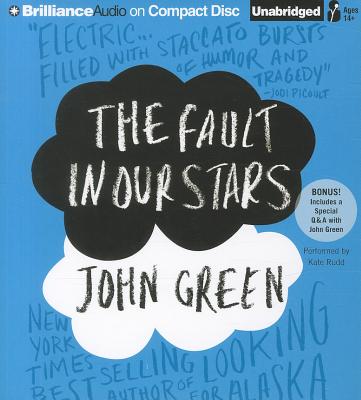
The Fault in Our Stars is, at its heart, a love story. A girl named Hazel Grace meets a boy named Augustus at a teenage cancer support group. He likes her because she looks like his dead ex-girlfriend, but then because she is kind and smart and funny. She likes him because he is witty* and cute and makes her laugh. They fall in love. They go on adventures. They suffer through the pains of cancer together, her lugging an oxygen tank behind her wherever she goes, he limping around on a prosthetic after losing a leg to cancer. They ruminate on the meaning of life and death and experience. They help their friend Isaac get through the loss of an eye, his adjustment to life without sight, and his devastating break-up with his girlfriend.

In short, except for the cancer, they are just two pretentious teenagers in love. But in their lives, there is no "except for the cancer." It is everything, it shapes everything, it controls everything. And so The Fault in Our Stars quickly becomes more than a teenage love story, morphing into a story of two people trying desperately to hold on to the world and to each other, to control their own destinies, to hold up in the face of pain, and trial, and loss.

On audio, Kate Rudd's narration brings Hazel Grace's character to life more than I think might have happened in print, which makes her hardships only the more difficult to bear. But the narration (both Kate Rudd's voice and Hazel Grace's telling of her story) is not without a touch of hope, for where there is love, there is also happiness. Or something like that. Honestly, I was crying too much at the end to have many deep thoughts beyond how much heartbreak I could stand in one read. And I am not a big book-crier.

The Fault in Our Stars has fallen victim to the hype machine, torn apart by those disappointed in it, elevated beyond reason by those who adore it. But if taken for what it is--a love story between two very sick teenagers--it defies expectations, proving to be bigger than any one descriptor. It will make you re-think what it is to be loved, to love, to be needed, to need, to be in pain, to be dying, to be lost, and to consider that life is just a sum of all the small moments we are given.

---

*My biggest beef with this book was Augustus, because while I know he is meant to be a pretentious teenager, I just cannot believe there are teenagers who talk like that. At all. In fact, I don't even think there are adults who talk like Augustus. He's too smart, too philosophical, too perfectly quippy to be seventeen. But when I was able to gloss over this annoyance, I did sort of love Augustus, after all.
Readathon: The End

I made it! I finished my first Dewey Readathon with just under 1,000 pages read (plus an hour of audiobook). I didn't keep exact track of time spent reading vs. poking around other posts vs. eating/napping/running/walking the dog/etc, but I'd say I probably got a good 12 hours of reading in. 

I'm donating $0.05 per page read/minute of audiobook listened to, which brings me up to a $52.45 donation to the Anne Arundel Literacy Council.

1) Which hour was most daunting for you? 
Probably hour 18 or 19 -- I went to bed sometime in there and managed  mere 17 pages of Tiny Beautiful Things before I gave in to sleep.

2) Could you list a few high-interest books that you think could keep a Reader engaged for next year?
I really enjoyed Gulp by Mary Roach as a bit of humor and education in the middle of day, but my re-read of the sixth Harry Potter book is really what kept me going until the wee hours of the morning.

3) Do you have any suggestions for how to improve the Read-a-thon next year? 
No, it was great!

4) What do you think worked really well in this year’s Read-a-thon?
Loved the cheerleaders and constant mini-challenges -- enough to take breaks now and then but not enough to distract completely from the reading in front of me.

5) How many books did you read?
In total - 1
Finished books I'd already begun earlier in the week - 2
Read a bit and then put it down - 2

6) What were the names of the books you read?
War and Peace
Harry Potter & the Half-Blood Prince
How to Change the World
Gulp
Tiny Beautiful Things

7)Which book did you enjoy most? 
Hard to say, but probably Harry Potter, Gulp, or the 17 pages of Tiny Beautiful Things.

8) Which did you enjoy least?
War and Peace, but not because I actually didn't like it, just because it wasn't the greatest choice for readathon material. Too brainy, if you will.

9) If you were a Cheerleader, do you have any advice for next year’s Cheerleaders?
N/A

10) How likely are you to participate in the Read-a-thon again? What role would you be likely to take next time?
If scheduling permits, I'll definitely do it again!

Readathon-ing!

It's officially here -- my first ever Dewey 24-hour-readathon! Sadly, I'm starting the day with an 11-mile training run instead of curled on the couch with a book, but I have WWZ on audio to keep me coming through the miles and am SO looking forward to settling in with a book when I get home and showered.

I'm going to follow Jenn's (from Jenn's Bookshelves) example and update on Tumblr and post links to my Tumblr here as I go - stay tuned for updates!

My First Dewey Readathon

Guys, it's happening. I've signed up for my first Dewey readathon, and I am stoked. I have no idea what exactly I'm supposed to do all day except read a lot, but I don't really see too much of a problem with that (I'll be running in the morning, but I have an audiobook for that).

Here's what's on my list for the day:


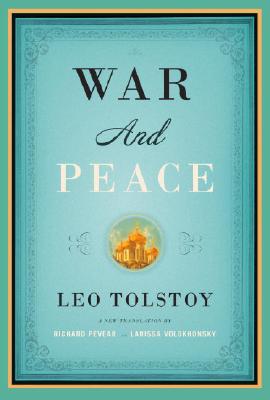
War & Peace: I've fallen two books behind in the War & Peace Readalong, and I am determined to start catching up. I'm not sure Tolstoy is the best readathon book of all time, but I figure I can alternate between this and something lighter (see: Harry Potter) to keep my eyes from crossing.

Harry Potter and the Half-Blood Prince: Another readalong I'm trying to keep up with. I read the fifth book (even though I never managed to post about it) and am only half a book behind on the sixth, so I figure I can play catch-up on Saturday.

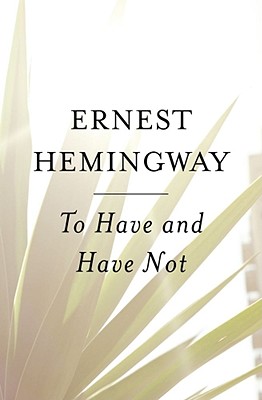
To Have and Have Not: Hemingway's on my 26-by-26 list as well as War and Peace, and while I've mostly resigned myself to not actually reading everything the man has written before my birthday in November, I'd like to get to at least more than the four books I've currently read.


Gulp: I'm sort of in love with Mary Roach, and mad that I didn't think of writing a song about her first. I'm halfway through this and hoping to finish it this weekend.

We Live in Water: I finished Jess Walter's Beautiful Ruins last week, and we're picking up We Live in Water for our next Mini Long-Distance Book Club readalong. I'm hoping short stories will make for good readathon fodder.

Tiny Beautiful Things: Another one I picked up recently, and another short-form piece I'm hoping makes good readathon material.

And last, but certainly not least, some books to get me through my last 23-day stretch before my next half marathon:

World War Z (audio): I've got the new recording of the audiobook on my phone, ready to keep me company for my 11-mile training run Saturday morning. I figure after that, I'll be exhausted enough that all I'll want to do all day is read. And possibly nap. And also read.

Born to Run: I've heard this is the kind of book that makes you just want to keep running. The last few weeks before a race, I need all the motivation I can get, because the last thing I want to do when I get home from work every day is lace up my sneakers. #icandothis

---

Obviously I don't plan on reading all of this, and I will allow my eyes to wander over the shelves as the day progresses, but I wanted to start out with some kind of a plan. What do more experienced readathoners recommend?

Book Review: How to Find Fulfilling Work, by Roman Krznaric

There have been many, many posts of late about the so-called "quarter-life crisis," from an entire HuffPo page collecting articles on the topic to this Book Riot post on what to read through a quarter-life crisis. As a 25-year-old who has recently realized I have absolutely zero idea what I want to do with the rest of my life, I'd say I'm smack dab in the middle of this particularly trendy issue.

And Roman Krznaric's How to Find Fulfilling Work could not have landed in my mailbox at a better time. The book, part of Alain de Botton's School of Life series, offers up history, wisdom and guidance for finding the fulfilling work. Not the perfect career. Not the most high-paying job out there. Not the most world-changing work available. But fulfilling work, which means it is important to you, the worker, the person who will do this for the rest of your life.

Or maybe not. Maybe you'll be one of the multi-career individuals Krznaric points out, focusing on multiple jobs at once or perhaps several careers over a lifetime. The biggest overall takeaway from Krznaric's short but impactful book, after all, is that there is no one path for everyone, and there are no right answers. Finding fulfilling work is about taking chances, asking questions, and learning who we are as an individual, and Krznaric's book aims to help us do just that. He offers examples of individuals who have found--or not found, as the case may be--fulfilling work, homework assignments intended to get one really thinking about what it is we want to be doing all day, and probing questions about our priorities, our goals, and our intentions. 

Though How to Find Fulfilling Work doesn't have all the answers, it does ask questions that force us to start writing our own answers. It's a short book, but an important one, whether you be in a quarter-life crisis yourself, or just somewhere along a not-so-fulfilling career path. And hell, I'd bet it could be thought-provoking even if you consider yourself happy and fulfilled at work. At just over 200 pages, it's well worth the read.

---

Review of How to Change the World coming soon.

---

How to Find Fulfilling Work | Roman Krznaric | April 2013 | Picador | 224 pages | Buy from an independent near you

Entomology of a Bookworm Got Tumbl'ed

I'm just diving into the great, wide world of Tumblr, and looking for blogs to follow. Who of you are there? Who's got recommendations? Books? Reading? Feminism? Dr. Who? Harry Potter? Inspirational images? Quotes? What are your favorites? Who should I be following?

Come follow me on Tumblr for more books, reading life, Dr. Who/David Tennant, Sherlock Holmes, and other beautiful things. I'll be migrating short-form content over there (photos, quotes, the like), but will continue long-form reviews and commentary on the reading life here. At least that's my working plan, which of course will continue to morph as I continue to write. (Note to self: Must work on that "continuing to write" thing.)


Book Review: Life After Life, by Kate Atkinson

This review originally ran in the Friday, April 12th issue of Shelf Awareness for Readers. If you don't already subscribe, sign up here to receive a bi-weekly dose of readerly goodness in your inbox.

On a snowy night in 1910, Ursula Todd is born blue in the face, strangled by her own umbilical cord, never taking her first breath; on a snowy night in 1910, the local doctor arrives at Mrs. Todd's bedside just in time to save Ursula's life.

In 1930, Ursula Todd walks into a restaurant and shoots Hitler at point-blank range; in 1930, she is wed to an abusive husband in England.

In 1933, Ursula Todd weds a German man and settles in Germany, unable to leave the country after war begins in 1939; in 1940, she is having an affair with a British government official in London.

Kate Atkinson's Life After Life is the story of Ursula Todd's many, many lives, all starting in the same place, at the same time, but varying by degrees. She lives through the Second World War again and again: as a friend of Hitler's mistress, as a member of London's air raid patrol, as a government worker. She loses siblings, parents, friends, lovers. She sees families torn apart, city blocks destroyed, "the crushed fragments of lives, never to be whole again."

It is only natural, then, that Ursula begins to question her ability to change the past--and therefore the future. Atkinson details the implications of a life lived over and over again: Are our fates locked in, or do we have the power to change them?

The success of Life After Life lies in Atkinson's ability to parse these cerebral questions of life and philosophy without ever losing sight of Ursula's story--or stories. The result is stunning, emotional, at times funny--and always downright unforgettable. One of my favorites of 2013 so far.

---

Life After Life | Kate Atkinson | Reagan Arthur | Hardcover | 544 pages | April 2013 | Buy from an independent near you