Showing posts with label politics. Show all posts

Here For It, or, How Not to Lose Your Soul in America, by R. Eric Thomas


R. Eric Thomas, the columnist behind the popular “Eric Reads the News” on ELLE.com, is smart. And charming. And funny. And in Here for It, his first collection of essays, he uses this smart charming humor to explore his life as a gay, black, Christian man and what it means to be different--and to be one’s truest self.

Thomas bounces between disparate topics across his essays: Michelle Obama and Mister Rogers; racial slurs and horror movies; scented candles and Pride; family and religion and first loves and true love. (There are also lots of mentions of Beyoncé throughout). Though seemingly unrelated, this wide spread is evidence of Thomas’ skill as a storyteller, a testament to his ability to use one small anecdote as an entry point into larger conversations about racism, pride, religion, and mental health--just to name a few.

“The comedic surprise I’m always trying to get to in [my] column is hope” (11), a concept that is borne out across every page in Here for It. It’s rare to laugh out loud in the midst of a story that ends in a suicide; it’s unusual to guffaw when reading about racism. Thomas’ sense of humor, though, invites readers to laugh while acknowledging the very real, very large problems facing our world today. And in between it all, that laughter succeeds in delivering just what Thomas aims to do in his columns: hope.

Social Justice Book Club: Hope in the Dark Wrap Up & Announcements


I'm going to start by seconding what Janani said in her wrap-up post for this month's reading... thank you. I am amazed at the growth this club has seen in just one month, and so, so excited to see the energy and enthusiasm around reading important books on important topics. It truly makes my heart break a little less every time I read the news, knowing there are so many people interested in digging in on tough conversations each and every day.


So, that said, on to Hope in the Dark. We chose this book for January because it felt timely following the results of the 2016 election... and truly, I couldn't have predicted how timely it would become in the weeks following the 2017 inauguration. With no apologies for block quoting:

Book Review: The Black Presidency, by Michael Eric Dyson

This review originally ran in Shelf Awareness for Readers.


The Black Presidency offers a nuanced analysis of the politics of race in the U.S. in the context of Barack Obama's presidency.

Book Review: Bad Feminist, by Roxane Gay

It took me a few weeks to finish Bad Feminist, a new collection of essays from author Roxane Gay (An Untamed State). Not because it was difficult reading, but because the essays in Bad Feminist proved so thought-provoking as to require time between sections for reflection and thought.

Bad Feminist spans a surprising range of subjects for a book of its title; topics include everything from fat camp to why The Help (book and
movie) was awful, competitive Scrabble to loving the color pink, rape to reproductive rights. But regardless of subject, Gay brings a solid mix of sociology, political commentary, and self-reflection to her essays, making each topic shine in a way that may not have happened had the essays been limited to either sociology, political commentary, or memoir.

Gay does not hesitate to put herself on the pages of Bad Feminist. She recounts her experiences at fat camp as a child and her struggles with weight; the horrible rape she suffered in high school; her experiences participating in competitive Scrabble; her search for love and romance; her continued search to find people like her on television and in movies with little success. This sense of self is ultimately what made Gay's collection so powerful to me--in her writing, she manages to tell a story and ask big questions, but by putting herself in the context of her opinions, she forced me--and hopefully will force others--to think differently about how we all fit together in this crazy, mixed-up world.

As a white woman of relative means, I have never wondered where my next meal will come from or wished that I could see more characters similar to myself on television. If I hadn't married young, I'd probably be just like the girls in Girls (though, having never actually seen the television show, I guess I'm not entirely sure I can or should claim that). I have not suffered sexual assault, nor have I struggled with my weight or my race. And for all of that, I am eternally, unspeakably, grateful.

Bad Feminist, though, is a reminder that who I am is not as standard or as normal as I would like to believe. It is a reminder to step back and try to see the world through different eyes. It is a collection that will long live on my shelves, and to which I will return, time and time again, to remember to think about my place in the world, and others' places, how they intersect, and how they don't.

---

Note: Thanks to the publisher for providing a digital copy of this title to review.
Bad Feminist | Roxane Gay | Harper Perennial | August 2014 | 336 pages

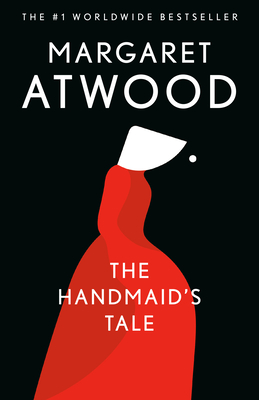
Thoughts: The Handmaid's Tale, by Margaret Atwood

Oh, The Handmaid's Tale. I first read this book in college, pulling it from the shelves when the kids I was babysitting had fallen asleep. When their mom came home and found me reading it, she graciously let me take it home rather than asking me to re-shelve it, for which I am eternally grateful. Because how could anyone put this down once they started? How could anyone begin reading Atwood and walk away from her?

For those who don't know, Atwood's tale takes place in a dystopian version of the United States, now known as the Republic of Gilead, in which big government has joined at the hip with big religion to subjugate women and create a kind of procreation caste system. The system "marries" one man and one woman, but gives important households a handmaid--essentially a concubine who has sex with the man of the marriage at pre-determined times to try to get pregnant. Sex is joyless, passionless, and government-mandated. Speech is limited, dissenters (including priests of certain unaccepted religions, scientists, gay people, loud people, and anyone who dares to be an individual) are hung, and handmaids are discarded if they do not get pregnant in a timely manner. It is a world based on terror, fear, and suppression, revealed to us in bits and pieces by Offred (literally "of Fred," handmaid to Fred). But when Fred shows that he himself doesn't always follow all the rules, Offred discovers a secret underworld that thrives beneath the polished veneer of government-approved activity.

While it seems far-fetched when summarized above, the beauty--and horror--of The Handmaid's Tale is in its roots in our reality. As Offred begins to reveal bits of her own past, we realize, slowly, how much her world used to look like ours--and how it was baby steps and small actions that led to the slow dissolution of society as we know it. First women lose access to their own money, then they are prohibited from working, and then, and then, and then. Until suddenly a world in which women are nothing more than child-bearing vessels is suddenly not so hard to imagine.

The Handmaid's Tale was my first exposure to Atwood (I fell in love), but it was also my first exposure to dystopian literature that was not the high-school assigned 1984. It was the first time I realized outside of a classroom how much fiction could teach me about the world. It was the first time I stepped outside my comfortable suburban bubble to think about the far-reaching implications of religion and political power. It was the first time I identified as a feminist, even if I was scared to use the word at the time.

Needless to say, re-reading it earlier this year was both thrilling and terrifying. What if it didn't live up to my exceedingly high expectations (which has happened to me before in re-reading my favorite books)? What if it didn't make my head spin the way it had the first time? What if Claire Danes' narration of the story was awful?

Luckily, none of these things came true. Claire Dane's narration of Offred was perfection; though I'm not always a fan of Danes' sometimes-simpering voice, it actually worked quite well for Offred's continuing uncertainty and confusion, for her bursts of rebellion and carelessness followed by bouts of anxiety and nervousness.

And The Handmaid's Tale proved just as haunting, just as important, and just as eye-opening the second time through as it did the first. With governments trying to define "proper" marriage on Tuesdays and states redefining abortion laws on Wednesdays and health departments making recommendations on the proper care and treatment of women's bodies for childbearing purposes on Thursdays, it is, sadly, just as relevant today as it was when it was first written--if not more so.

---

Of note: The Royal Winnipeg Ballet is doing a production of The Handmaid's Tale this October. If anyone is local enough to go see it, please let me know how it is!

Also of note: The Folio Society has an illustrated version of this book with some truly stunning art included. Worth checking out.

---

The Handmaid's Tale | Margaret Atwood, nar. Claire Danes | 11 hours | Available from Audible

President Obama Is a Book Nerd...

... and it's kind of the greatest thing ever. Check out Buzzfeed's images of Mr. President getting really, really into his reading of Where the Wild Things Are.

Sorry I've been scarce lately, but I'm still here, and I have a stockpile of reviews to catch up on... stay tuned.

Sarah Palin... again.

Palin seems to crop up all over the place on here, doesn't she? But then, she seems to pop up all over the place period, so maybe it's not so surprising. Today it's back to Palin's book, but not as you might expect (although yes, the pre-orders for her book are still on the bestsellers list(s), and yes, she is once again currently out-selling The Lost Symbol). No, this one is from today's Medio Bistro blog, GalleyCat, focusing on the cover image and a tie-in publication.

What it all boils down to is that Palin's book has such a cookie-cutter political figure book cover, it is just asking for parodies. And a parody is exactly what is coming. After all, why should Palin be the only one to reap in the cash? No, that would hardly be fair. Stay tuned for Going Rouge: Sarah Palin: An American Nightmare, coming from OR Books this fall.

To see the covers, check out the original GalleyCat post.

As a side note to Palin's autobiography: her book shares a subtitle with at least 20 other biographies and memoirs, including those of Benjamin Franklin, Ronald Reagan, Martha Washington, Condoleeza Rice and my personal favorite, guitars. How rogue can it be if it's already been done?

Banned Books Week

Today marks the start of Banned Books Week 2009, an event created to celebrate the importance of the First Amendment. The American Library Association (ALA) offers some good insight into historical banned books on their website, and it's worth poking around if you are interested in the subject.

A quick glance over the top ten banned books lists from 2001-2008 reveals some interesting and unexpected finds. Julie of the Wolves, a childhood favorite of mine, and the His Dark Materials Trilogy. The usual titles pop up: The Adventures of Huck Finn (for racism and language) and Roll of Thunder, Hear My Cry (for much the same reasons).

In honor of the week, I will be breaking my personal book-buying-ban to read And Tango Makes Three, which was the most challenged book for 2006, 2007 and 2008. I'd never even heard of this one until I started looking into banned book lists; I wonder what this says about the efficacy of book-banning efforts. Rather than banning the title, the book-banners have served only to bring it more and more into the public eye.

This seems to be somewhat of a continuous occurence. Recall last fall when there where vicious and unsubstantiated rumors floating around about Sarah Palin's book-banning efforts, if you will. While the rumors turned out to be false, they brought the issue of banned books back into the spotlight. People once again realized that book banning has not disappeared - rather, it is rampant across the United States (see a map of banning efforts).

In the end, maybe we should let the crazy people try to ban books. More often than not, they will fail; the First Amendment may be complicated for some issues, but the matter of censoring reading materials seems pretty black-and-white in regards to the law. In the process, though, banned books will be remembered, old favorites picked up and seen in a new light, and, hopefully, we can remember that we are almost all, on some level, passionate about books and reading. If it takes a controversy to remind us of that, I'll take it. And I'll take those banned books, too. Off to the Strand...

Inauguration Day

It's been quite a while, to say the least. What can I say? School, life, the holidays, it all happened. I've now started working full-time, and in the interest of the new year and a new leaf, I decided that there was no better day to re-up my blog than inauguration day...

There has been no shortage of articles dedicated to Obama's reading lists and his control of the written and spoken language. Particular attention has been paid to Team of Rivals written by Doris Kearn Goodwin, which explains Lincoln's decision to include former opponents in his cabinet -- something closely mirrored in Obama's own cabinet decisions.

Today, however, there was a particular New York Times article that caught my attention: From Books, New President Found His Voice. . Essentially, this article is a discourse on the formative power of reading, whether it be poetry, fiction, or non-fiction.

Whether or not books are formative in their own right will have to be left to the subject of another post. But the fact that this NY Times writer lumps together fiction and non-fiction, poetry and literature, is substantial in and of itself. I cannot even begin to tell you the number of times I have argued with someone over the importance of fiction over non-fiction. Or the beauty of prose over poetry. Or vice versa.

What am I saying here? Just this: non-fiction tells us fact. Fiction tells us truth. Prose gives us stories. Poetry gives us precision. Non-fiction tells us the truth. Fiction tells us untruths. Prose is wordy. Poetry is beautiful. An essay is real, a short-story made-up*. What this writer is claiming, and what I am inclined to agree with, is that the presentation does not matter. The form does not matter. What matters is the impact that a book, or essay, or poem, or whatever it may be, has on the individual reading it.

Even the lack of an impact is important in such a context. I, for example, am not likely to be moved by the history of The Bounty. A fictional tale of two comic-book writers in New York, however? You got me. I'm hooked. I will forget every detail in a science book, no matter how true, while remembering the names of the three dragons in George R. R. Martin's Fire and Ice series. I will pay no heed to the serial fiction in the New York Times magazine to learn more about Israel and Gaza and what the hell is going on in this world.

Ultimately, what I am arguing is that it makes no difference what we read, so long as we continue to read. With that in mind, I'm off to finish Dewey, the Small Town Library Cat Who Touched the World . Because I know I will be influenced by the story of a library, a librarian, and the cat who loved them both.

*For an interesting discourse on "made-up" stories, see A Storytelling of Ravens .

The One Good Thing That's Come From Palin

Ok, the title clearly states my bias. I hate this woman. Everything about her. She is absolutely one of the most terrifying things that has ever happened in my political life (which, it should be noted, is all of 2 years long. Longer, I suppose, that I have been aware of politics, but I've only been a legal participant in the government for 2 years.).

Just today, I came across this blog posting from Sara Nelson, editor-in-chief of Publisher's Weekly (which ties with TONY for the be-all end-all of my weekly reading). The post is a week old now, but unlike most news stories rotating around this election, it still holds a valid point.

The list of books that Palin supposedly banned (which, as Dad pointed out, turned out to be a fake) wasn't only interesting because it pointed out (yet another) fault in this unlikely VP-candidate. Instead, it was the persistence with which the list was circulated that is truly fascinating. Why latch onto books? Why not the issues of abortions, birth control, etc? Sure, books are a safer argument. As Nelson points out, no one on either side of the party line likes the idea of censorship (at least not openly, anyhow). But I have to agree with Nelson that the one little gem of hope that we can derive from this fabricated list is the implied importance of books, and their availability, that was forwarded around with it.