Showing posts with label memoir. Show all posts

Here For It, or, How Not to Lose Your Soul in America, by R. Eric Thomas


R. Eric Thomas, the columnist behind the popular “Eric Reads the News” on ELLE.com, is smart. And charming. And funny. And in Here for It, his first collection of essays, he uses this smart charming humor to explore his life as a gay, black, Christian man and what it means to be different--and to be one’s truest self.

Thomas bounces between disparate topics across his essays: Michelle Obama and Mister Rogers; racial slurs and horror movies; scented candles and Pride; family and religion and first loves and true love. (There are also lots of mentions of Beyoncé throughout). Though seemingly unrelated, this wide spread is evidence of Thomas’ skill as a storyteller, a testament to his ability to use one small anecdote as an entry point into larger conversations about racism, pride, religion, and mental health--just to name a few.

“The comedic surprise I’m always trying to get to in [my] column is hope” (11), a concept that is borne out across every page in Here for It. It’s rare to laugh out loud in the midst of a story that ends in a suicide; it’s unusual to guffaw when reading about racism. Thomas’ sense of humor, though, invites readers to laugh while acknowledging the very real, very large problems facing our world today. And in between it all, that laughter succeeds in delivering just what Thomas aims to do in his columns: hope.

Social Justice Book Club: Men We Reaped Wrap-up Post

Oh my goodness, you guys, this book. I'm not sure I can actually come up with words to express how I feel about Men We Reaped. I'm tempted to say that I loved it, but that feels inaccurate, because I hate that it needs to exist. I'm tempted to say that Ward's writing is beautiful, but that does the horror of her stories an injustice. I'm tempted to say that I found this story unexpectedly readable, but that belies the difficulty of the subject at hand. And so I'll settle on recommending it, and praising the power and honesty in Ward's memoir, and doing my best to explain why it resonated with me, a middle-class white woman who's never lived in the South.


Men We Reaped weaves together two main stories: that of Ward's childhood (her earliest memories as a child, the growth of her family, her parents' difficult marriage, her struggles as an outsider in a mostly-white school) and the story of the men in her life who died too young (a friend, her sister's boyfriend, a cousin, her brother). Ward's memories of her own life move forward through time, while her recounting the lives and deaths of the men she's lost moves backwards through time. These opposing chronologies jarred me a bit at first. Ultimately, however, I think the two timelines made the moment of her brother's death--the point at which the chronologies merge--all the more powerful, which proved fitting for the loss that most shook her world, most challenged her understanding of grief and sadness and loss and oppression, most changed her perspective on injustice.

It is tempting to view the deaths in Ward's life as disconnected from one another, but Ward's story proves otherwise. By embedding the lives and deaths of these young men in the context of her own lived experience, and that of her friends and family in Mississippi, Ward pushes Men We Reaped into an analysis of the poverty, racism, and systemic oppression that drove these men to die--and left a group of women to stand strong and mourn their passing. Men We Reaped is, as Ward wanted it to be, a testament to the lives of those who died to young, a reminder that they lived, they existed, and this happened. And it is also, importantly, a testament to the fact that the lives and deaths of the black men in her life were not mere accidents of chance, but inevitable outcomes in a world fixated on pushing people down instead of holding them up.

---

Some discussion questions for Men We Reaped*:


1) Men We Reaped is described as a memoir. While it draws on Ward's personal experiences, it also explores themes much larger than one woman's life. Do you agree with this genre classification?

2) In what ways do you think Ward's personal approach to this subject makes Men We Reaped stand out from other books that address similar issues? Did this make the book appeal to you more or less, or were you indifferent?

3) In more than one instance throughout the text, Ward writes about feeling silenced and voiceless in the face of overwhelming systems of inequality. Do you think Men We Reaped changes that position by giving her a voice?

4) Though Men We Reaped is about the loss of young black male life, it is also, in many ways, about the black women left to stand witness to the lives and deaths of those in their community. How does this gendered perspective change the story of the high mortality rate among young men of color?

5) If you could ask Jesmyn Ward any one question about this book and/or the experiences she recounts within it, what would it be?

*With sincerest apologies for sharing this post and these discussion questions so late in the game; last week got away from me!

---

Feel free to link to your own thoughts below, or leave a comment on this post!

---

For those interested in continuing along with the Social Justice Book Club, a few quick announcements:


  • The club will skip December (because let's face it, we all have enough going on around the end of the year...) and restart again in January 2017. We'll continue with the every other month format.

  • I'll announce the list of the six books for the 2017 club in early December. If there's something you'd like the club to consider, please submit to this form

  • If you'd like to receive emails about the club's plans for 2017, shoot me a note at ofabookworm AT gmail DOT com and I'll add you to the list.

Social Justice Book Club: The Men We Reaped Sign-up & Schedule


We're gearing up for the October edition of the Social Justice Book Club. Based on participant input, we'll be reading Men We Reaped: A Memoir by Jesmyn Ward this month. In order to help keep us all on the same page (somewhat literally), I've outlined an (entirely optional) schedule for the month's reading below. I bumped start/end dates to Mondays instead of Saturdays, as I for one try to spend less time at my computer on the weekends than I do during weekdays. But feel free to post whenever works for you!


An Invitation to Learn How to Live: Margaux Bergen's Navigating Life

This review originally ran in Shelf Awareness for Readers. Reprinted here with permission.


Margaux Bergen offers her daughter--and her readers--a collection of heartfelt life advice based on her own experiences.


Run the World: Becky Wade's 3500-Mile Journey through Running Cultures

Review originally ran in Shelf Awareness for Readers. Reprinted here with permission.


Champion marathoner Becky Wade travels to nine countries to explore running cultures.


In 2012, NCAA All-American star and Olympic hopeful Becky Wade received a Watson Fellowship to travel around the world to explore her passion: running. "Seventy-two beds, eleven pairs of running shoes, and 3,504 training miles later," Wade has since become an elite marathoner, drawing on her experience of cultures in nine countries to perfect her sport. In Run the World, she tells about her travels--and the lessons she learned along the way--in precise detail. 

Review: My Year of Running Dangerously, by Tom Foreman

This review originally ran in Shelf Awareness for Readers. Naturally, after my year of rediscovering running (not dangerously), I leapt at the opportunity to pick it up.


CNN correspondent Tom Foreman used to run marathons--in his 20s. One day, as Foreman was contemplating blowing out 51 candles on his next birthday cake, his eldest daughter (then 18) asked him to run a marathon with her. Little did he know that simple request would rekindle a long-lost love of running, leading him to run not only that one marathon with his daughter but also five half marathons, two additional full marathons and a 55-mile ultra-marathon, all over the course of a year.

Review: The Dead Ladies Project, by Jessa Crispin

This review originally ran in Shelf Awareness for Readers. Reprinted here with permission.


Discover: This collection of personal essays follows one writer as she studies the lives of artists and writers who built new lives for themselves.

Thoughts: Hammer Head, by Nina MacLaughlin


I'm not a big memoir reader, but I'm glad I made an exception for Hammer Head: The Making of a Carpenter. Nina MacLaughlin's reflections on quitting her job in journalism and becoming a carpenter's apprentice are captivating and interesting, peppered with anecdote and job details and the history of obscure tools and etymologies. And as if that's not enough, she also manages to include references to literary works young and old: Ovid and Joan Didion and Greek myths live side by side with stories of built-in bookshelves and learning to cut tile and laying flooring. The range of topics MacLaughlin has packed into a relatively slim volume is impressive.

Book Review: God'll Cut You Down, by John Safran

This review originally ran in Shelf Awareness for Readers. Reprinted here with permission.

John Safran--a young, white, Jewish Australian who makes comedy films--seems an unlikely candidate to write a true-crime book, but that's what he's done with God'll Cut You Down: The Tangled Tale of a White Supremacist, a Black Hustler, a Murder, and How I Lost a Year in Mississippi. It explores the murder of Richard Barrett, a white supremacist, by Vince McGee, his black neighbor. Safran heads to Mississippi expecting a case tinged with the embedded racism of the South. What he finds instead is a complicated crime with no clear motive--race or otherwise.

The account of the author's yearlong investigation can be hard to follow: short sections with strange titles track Safran's moves through time, from one interview to the next, which presents the story in the order Safran uncovered it rather than the order in which the events happened. His journalistic approach can be brusque and perhaps misguided at times, as when he can't pay the convicted murderer for an interview outright, but gets around that law by giving McGee prepaid charge cards from Walmart. But his candid, informal style is endearing, revealing that God'll Cut You Down is as much the story of how Safran learned to write about crime as it is the story of why Barrett was murdered. Despite Safran's best noodling and puzzling and nagging of the police, lawyers, witnesses, family and friends of both the convicted murderer and the victim, the story of that murder is never made entirely clear; the entertainment comes from reading about Safran's experiences as an outsider snooping around an insular community.

---


A copy of this title was provided by the publisher for review.
God'll Cut You Down | John Safran | Riverhead | Hardcover | 368 pages | Buy from an independent bookstore near you

Watch and Read: The Princess Bride Edition

The Princess Bride is impossible to summarize or place in one genre: a farmboy is hopelessly in love with the most beautiful girl in the world, so goes off to seek his fortune; a princess is captured by a group of criminals-for-hire; a swordsman is sworn to revenge the death of his father by killing a six-fingered man; the Dread Pirate Roberts is terrorizing the seas and capturing ships; a prince wants to start a war with a neighboring nation; etc., etc., etc.


If you haven't read the novel, by William Goldman, that's a good place to start: though the beloved movie remains relatively close to the novel (as movie adaptations go, at any rate), there are some gems in the book that don't make it onto the big screen (Prince Humperdinck's Zoo, for one). Goldman structures the novel as an abridgement of an even older novel by S. Morgenstern, compiling only the good bits; this framing can sometimes be distracting (the "original" novel by S. Morgenstern is an invention of Goldman's imagination), but is mostly entertaining, as Goldman interjects with his own "author's commentary" throughout the story.


Post-novel: the movie. If you somehow have made it through the last 25 years without seeing The Princess Bride, I'm... not even sure where to begin. It's simply inconceivable. But whether you've seen it or not, it's worth watching the movie after reading the novel to see how Goldman adapted the story for the big screen (Goldman wrote the screenplay).


Post-movie viewing: Cary Elwes' memoir, As You Wish: Inconceivable Tales from the Making of The Princess Bride. If you're an audiobook fan, I recommend this one on audio (it's narrated by Elwes himself, with guest appearances from Robin Wright, Christopher Guest, Billy Crystal, and others from the cast of the movie). Elwes tells all about the making of the movie, and it's an absolute delight to be treated to "insider" stories of this beloved film.

Some fun facts: 
Cary Elwes and Mandy Patinkin trained for nearly 40 hours a week in swordplay so they could perform the big duel--noted in the novel to be the greatest swordfight in history--themselves (and, with the exception of a few large gymnastic-esque tricks, they did it, even though Cary had a broken toe at the time).  
Cary Elwes had to be replaced by a dummy of Cary Elwes in the Miracle Max scene (when he's mostly dead on the table), because he couldn't stop laughing during the cuts with Billy Crystal and Carol Kane (all of which were improvised, by the way). Mandy Patinkin had to be on the set for that scene--he has lines there, and isn't mostly dead, after all--and tried so hard to stop laughing on camera that he bruised a rib during the shooting. 
And one more, for good measure: The ROUSes were actually played by men in rat suits. Who knew?
Reading (or listening to) As You Wish is something like attending a cast party rolled into the kindest high-school reunion imaginable. Elwes has nothing but praise and compliments for the cast and crew of the film, and his insider stories are delightful, not scandalous. It's an absolute treat for anyone who's been interested in (or in love with, take your pick) the movie for any period of time.


For good measure, it's worth it to go back and watch the movie again after hearing Elwes' stories of the making of. There are things there you never would have noticed before, and things you'll appreciate more because of his account. Plus, it's the kind of movie made to be watched again and again... and again and again and again, as you wish.

---

The Princess Bride | William Goldman | Mariner Books | Mass Market Paperback | 511 pages | Buy from an independent bookstore near you

A copy of this title was provided by the publisher for review:
As You Wish | Cary Elwes, narrated by Cary Elwes (introduction written and read by Rob Reiner) | Simon & Schuster Audio | ~7 hours | Buy from an independent bookstore near you

Book Review: Working Stiff, by Judy Melinek and T.J. Mitchell

Originally published in Shelf Awareness for Readers. Reprinted here with permission. If you don't already receive it, sign up here to receive a bi-weekly dose of readerly goodness in your inbox.


Judy Melinek set out to be a surgeon, completing medical school and starting her residency before realizing it was not the career for her. In the summer of 2001, she changed tack and opted for a career in forensic pathology--what many might recognize from television crime series as a medical examiner. Working Stiff is an account of Melinek's years in training, complete with gory details, heartfelt emotions and plenty of ripped-from-the-headlines case studies.

Melinek, writing with T.J. Mitchell, packs every chapter with a careful balance of scientific fact and personal anecdote, covering topics such as what happens to a body's internal organs in a high-speed car crash with a static object (it's not pretty) and the difficulties of losing a loved one to suicide (Melinek's father killed himself). This mixture of nonfiction and narrative makes for compelling, informative reading as Melinek works through cases of homicide, accidental death, medical error and suicide--and becomes even more powerful as the authors recount the harrowing weeks and months following the 9/11 World Trade Center attacks, which brought more bodies and death to Melinek's door than ever before.

Though the subject of Working Stiff can be overwhelming and gory, Melinek and Mitchell carefully avoid reveling in the horrors of a medical examiner's work. Instead, they highlight individual case studies as a way to illustrate nuances of the job that might not come through on Law & Order: the humanity of the subjects, the inconclusive results of an autopsy, the lasting impact that working with death can have on an individual's life.

---


A copy of this title was provided by the publisher for review.
Working Stiff | Judy Melinek and T.J. Mitchell | Scribner | Hardcover | August 2014

Book Review: Bad Feminist, by Roxane Gay

It took me a few weeks to finish Bad Feminist, a new collection of essays from author Roxane Gay (An Untamed State). Not because it was difficult reading, but because the essays in Bad Feminist proved so thought-provoking as to require time between sections for reflection and thought.

Bad Feminist spans a surprising range of subjects for a book of its title; topics include everything from fat camp to why The Help (book and
movie) was awful, competitive Scrabble to loving the color pink, rape to reproductive rights. But regardless of subject, Gay brings a solid mix of sociology, political commentary, and self-reflection to her essays, making each topic shine in a way that may not have happened had the essays been limited to either sociology, political commentary, or memoir.

Gay does not hesitate to put herself on the pages of Bad Feminist. She recounts her experiences at fat camp as a child and her struggles with weight; the horrible rape she suffered in high school; her experiences participating in competitive Scrabble; her search for love and romance; her continued search to find people like her on television and in movies with little success. This sense of self is ultimately what made Gay's collection so powerful to me--in her writing, she manages to tell a story and ask big questions, but by putting herself in the context of her opinions, she forced me--and hopefully will force others--to think differently about how we all fit together in this crazy, mixed-up world.

As a white woman of relative means, I have never wondered where my next meal will come from or wished that I could see more characters similar to myself on television. If I hadn't married young, I'd probably be just like the girls in Girls (though, having never actually seen the television show, I guess I'm not entirely sure I can or should claim that). I have not suffered sexual assault, nor have I struggled with my weight or my race. And for all of that, I am eternally, unspeakably, grateful.

Bad Feminist, though, is a reminder that who I am is not as standard or as normal as I would like to believe. It is a reminder to step back and try to see the world through different eyes. It is a collection that will long live on my shelves, and to which I will return, time and time again, to remember to think about my place in the world, and others' places, how they intersect, and how they don't.

---

Note: Thanks to the publisher for providing a digital copy of this title to review.
Bad Feminist | Roxane Gay | Harper Perennial | August 2014 | 336 pages

Interview with Kevin Brockmeier: A Difficult Year

Originally published in the April 11, 2014 issue of Shelf Awareness for Readers. Reprinted here with permission. If you don't already receive it, sign up here to receive a bi-weekly dose of readerly goodness in your inbox.

---

Kevin Brockmeier is the author of many works of adult and children's fiction, including The Illumination, and several short story collections. His stories have been published in the New Yorker, McSweeney's and Tin House, and he has received the Borders Original Voices Award, three O. Henry Awards and the PEN USA Award. In 2007, he was named one of Granta magazine's Best Young American Novelists. He teaches at the Iowa Writers' Workshop, and lives in Little Rock, Ark., where he was raised. His first memoir, A Few Seconds of Radiant Filmstrip (see my review below), focuses on a particular period of his life--the seventh grade.

Because so many people cannot recall the seventh grade with any kind of fondness, I have to ask: What made you want to go back to revisit it?

First, that it was a difficult year. For that reason alone, I thought it might make a good story. I also realized I had a lot of stories that I had been telling people since I was 13 years old, and I could pinpoint them all to that time in my life.

I had also never written book of this sort, and wanted to see if I could do it.

This is one of the only memoirs I can recall reading that is written in the third person. Why did you ultimate decide on this approach, when first person seems the more obvious choice?

I attempted the very first paragraph of the book in any number of ways. I ultimately found a voice that allowed me access to that period of my life with specificity. In the third person, the voice of Kevin felt natural. I felt the consciousness that I used to possess at that time blossoming to life, and I wanted to explore that.

At the time, were you aware of any split within yourself, being so observant of other people but struggling to see how you fit into that changing landscape?

I probably was. What surprised and distressed me at the time was the way in which my friendships shifted off in new directions that didn't include me. I was aware of the nuances of those relationships day by day. I just didn't see where it was all going.

A lot of this book is about friendship, and how yours changed over the course of the seventh grade.

Most of those friendships faded over the course of the year. I had a little trio of friends: Thad and Kenneth and Bateman. Bateman remains a friend of mine. I was closest with Thad and Kenneth, but they were no longer a presence in my life by the time the year was over.

That was a difficult year for me, but there were a few people in my life then who were kind and generous and made the year much easier than it otherwise could have been. One of them was Ethan Carpenter, who slowly becomes my best friend over the course of the book. And the other one was my English teacher, Miss Vincent.

You thank every member of your seventh-grade class in your dedication, but Miss Vincent is the only teacher you've included.

Miss Vincent was only at CAC that one year. Every so often I would think about her, where she was, what she had become. But she was a grown-up and I was a kid; there was really no way of staying in touch back then. And I don't even know that I was sure at the time how important she was to me. It was only when I was writing the book that I realized how fundamental of a presence she had been that year, and how intimately involved she was in what happened to me.

Did you ever speak to her again?

I had tried in the past with no luck. But after I finished writing this book, I tried again. I ultimately found someone teaching English in Washington State. She had a different name, hyphenated, but it seemed worth a shot. I sent her a letter, and included a copy ofThe Illumination. I just said who I was, where my life had taken me, and that seventh grade was an extraordinarily difficult year for me. I told her she was kind, and made it easier than it might have been, which was something I hadn't been able to express at the time, but wanted to express now.

I heard back from her a few weeks later. I had found the right person, and she remembered me--a bit surprising giving the years and number of students she had taught, but then, I had written a play about her. We ended up getting coffee when she was in Arkansas visiting family.

There's a section in the middle of the book that feels more fantastical than one might expect in a memoir. Can you talk about that?

I thought of that chapter as a moment of science fiction in the middle of what is otherwise a wholly autobiographical endeavor. Within the world of the narrative, I wanted it to be understood as something that this character is undergoing. But as readers, we understand that this is a device employed as a writer, rather than an actual memorable feature of my experience. It was an opportunity to divorce Kevin Brockmeier from the events he was undergoing, talk about what would happen to him, and give him an opportunity to accept his life, with all of its difficulties.

It's definitely unusual, but intentional. And because that element is in the memoir, it is more in keeping with my novels and short stories.

In an age when bullying is a hot topic, what advice would you have for kids in a difficult spot--or for their parents?

The closest I could come to advice would be acknowledging you aren't the only person who has gone through these experiences. I underwent them, too, I understand what it's like. I'm hesitant to say that things will get better, because who knows? But I can say unequivocally that things will change. It won't always be like this. It's so hard to imagine who you will become. 


Book Review: A Few Seconds of Radiant Filmstrip, by Kevin Brockmeier

Originally published in the April 11, 2014 issue of Shelf Awareness for Readers. Reprinted here with permission. If you don't already receive it, sign up here to receive a bi-weekly dose of readerly goodness in your inbox.

A Few Seconds of Radiant Filmstrip focuses on one year of Kevin Brockmeier's life: the seventh grade. This period was short but defining, a difficult year marked by rapidly changing relationships with friends, teachers and the greater world. The young Kevin Brockmeier was bullied as much by those he once called his friends as by those in higher grades; the grown author Kevin Brockmeier (The Illumination; A Brief History of the Dead) reflects on those bullies, and on the islands of kindness he found between them, as well as on the lock-ins, outings to the movie theater, trips to the comic book store and nights watching television that generally made up his life as a seventh-grader.

Brockmeier's first work of nonfiction is told in the third person--an unusual choice given the subject matter, but one that ultimately gives Brockmeier the ability to act as the observer of himself in his own past, much as he once acted as an observer of his classmates and teachers. The voice makes it easy to forget that the stories in A Few Seconds of Radiant Filmstrip are real, not imagined--young Kevin really did pee on his sandwich to stop the mystery lunch thief from stealing his meal each day; he really did write a play about the teacher-napping of his English teacher; young Kevin's first kiss really was at a youth group meeting. And despite the tough times that Brockmeier faced as a boy, any reader can find comfort in the humor in these stories--and the knowledge that the struggling 13-year-old did, eventually, find his place in the world.

---

A Few Seconds of Radiant Filmstrip | Kevin Brockmeier | Pantheon | Hardcover | April 2014

Thoughts: Wave, by Sonali Derinayagala

Calling this a book review feels wrong somehow, for how can one presume to "review" a book of someone else's grief? I could point out that Derinayagala favors commas where I feel that periods and sentence breaks would have improved the flow, or I could discuss how I expected Wave to be a story about a tsunami, not a personal story of loss. But none of those things really matter in the face of the raw emotion that Derinayagala pours out on every page of this short but impactful memoir.

Wave opens before the wave (the 2004 tsunami that struck Sri Lanka) had hit; Sonali Derinayagala, her parents, her husband, and her two young sons were vacationing from London over the holiday season. This brief, happy time stands in stark contrast to what follows: a few short, staccato chapters on Derinayagala's experience during the wave--leaping into a fleeing Jeep, losing track of her family members, latching onto a tree to avoid being swept out to sea--and the long, drawn-out accounts of what followed: looking for her family, only to eventually accept their deaths as inevitable; returning to her London home, where unused theater tickets awaited the family's return and sports equipment still carried the dirt of previous matches; visiting her childhood home, now cleared of her parents' belongings and rented to strangers.

Derinayagala thanks her therapist in her acknowledgements, along with so many others, for pushing her to recall her grief and therefore face it. The raw emotion of her memories cannot be overstated; Derinayagala does not shy away from any of her past actions, no matter how shameful they may seem in the light of day. Merely writing this all down may have functioned in the same therapeutic capacity; by publishing, and sharing, her story, Derinayagala has given us all the opportunity to face the fear of this grief--of losing our families, our loved ones, our sense of security in the world--through her experiences. Facing this dark side of our human nature and our capacity for grieving is not easy, but it brings to light the very human side of natural disasters in a way that no reader is likely to forget.

---

Wave | Sonali Derinayagala | Thorndike Press | August 2013 | Hardcover | 251 pages

World's Strongest Librarian Giveaway Winner


Congratulations to Amy of Sunlit Pages, who won last week's giveaway of The World's Strongest Librarian. Many thanks to Gotham Books for providing the giveaway copy.

If you haven't already, read my review of this fabulous memoir and get yourself a copy soon!

Book Review (& Giveaway!): World's Strongest Librarian, by Josh Hanagarne

There are two kinds of memoirs in the world: Those that should not be written, and all the other ones. Those that should not be written include all of the memoirs written by people who think their life experiences are somehow unique or important or different when they really aren't, or those who do, in fact, have unique and important and different life experiences but have no idea how to tell people about them in a way that is itself unique, important and different.

Josh Hanagarne's memoir, The World's Strongest Librarian, is neither of these things. It is one of the other ones. It is the kind of memoir that should be written, the kind that needed to be written, and now, the kind that needs to be read. After all, how many books out there are about a 6'7" weight-lifting librarian with Tourette Syndrome struggling with his faith after being brought up in the Mormon church? And how many of those (of which I'd argue there are none, but to be honest, I haven't actually looked) are actually well-written and entertaining and emotional and heartwrenching and otherwise wonderful?

Yeah, that's what I thought.

Which is all a long-winded way of saying READ THIS BOOK. If you love books and their power to shape lives, read this book. If you love libraries and believe in their continued importance in this world (that means not you, Mr. Rosenblum), read this book. If you like interesting people with incredible stories to tell, read this book. If you like memoirs that deal with all of the good bits of love and family and faith and passion and wellness without glossing over the sometimes-heartbreakingly-bad bits, read this book.

"The public library contains multitudes," Hanagarne writes, "And each person contains multitudes as well. Each of us is a library of thoughts, memories, experiences, and odors."

Suffice it to say that Hanagarne's particular library of thoughts, memories, experiences and odors is a fascinating one. Read this book.

If you'd like a chance to read this book sooner than later, today's your lucky day! I'm hosting a giveaway of one copy of The World's Strongest Librarian (Sorry, US and Canadian readers only). Enter by leaving a comment, with additional entries for following. Contest runs through Friday, and I will pick and announce a winner on Saturday after I run 13.1 miles at 7AM in the morning oh god why am I doing this to myself again.

(This is my first time using Rafflecopter, so please bear with me!)

a Rafflecopter giveaway

---

Also follow Josh on Twitter (@joshhanagarne) and/or on his blog, The World's Strongest Librarian.

---

Note: I received an e-galley of this title via NetGalley for review, and the publisher, Gotham Books, will be providing the copy to the winner of the giveaway.

The World's Strongest Librarian | Josh Hanagarne | Gotham | Hardcover | 288 pages | May 2013 | Buy from an independent near you

Book Review: How to Be a Woman, by Caitlin Moran

Caitlin Moran is not shy about being a woman--and a feminist one at that--though, as she recounts in How to Be a Woman, it has taken her some years to get to that point. Because, she argues, we live in a society of uncomfortable underwear and skinny models and people unwilling to talk about abortions; a world in which men have done everything important for 100,000 years of human history and women are still figuring out how to break into that world; a culture, at least in most of the Western world, in which women are encouraged to participate and contribute, but not without giving up their roles as mothers, housekeepers, wives, and support staff. And really, who has time to be well-dressed and career-minded while still changing diapers and wiping dried food off the counters?

Moran gets at all of this through the lens of her own life as a woman (or as someone trying to figure out how to be one). She does not shy away from any subject: growing up in a poor family; her insecurity in her own body and her struggles to lose weight; her experience in an emotionally abusive relationship with a wanna-be rock star. She even recounts the emotional--and physical--trials of childbearing, from from her first pregnancy and the seeming impossibility of actually birthing a human, to the smooth-sailing birth of her second child, to her decision to abort her third child early in pregnancy. She is candid, honest, and raw--and she is funny. Her stories are humorous, and awesome, and slightly reminiscent of Tina Fey's Bossypants. 

But what really won me over here was the feminist argument--not the menses-eating, bra-burning*, man-hating kind of feminist, but the kind of feminist comfortable speaking out for herself--and her fellow women.
"What I am going to urge to do...is say 'I am a feminist.' For preference, I would like you to stand on a chair and shout, 'I am a feminist!'--but this is simply because I believe everything is more exciting if you stand on a chair to do it.
It really is important that you say these words out loud...Say it. SAY IT! SAY IT NOW! Because if you can't, you're basically bending over, saying, 'Kick my arse and take my vote, please, patriarchy.' 
And do not think you shouldn't be standing on that chair, shouting...if you are a boy. A male feminist is one of the most glorious end-products of evolution."
Feminism is not evil. It is not deadly. And it is not optional:
"When statistics come in saying that only 29 percent of American women would describe themselves as feminist--and only 42 percent of British women--I used to think, What do you think feminism IS, ladis? What part of "liberation for women" is not for you? 
...These days, however, I am much calmer--since I realized that it's technically impossible for a woman to argue against feminism. Without feminism, you wouldn't be allowed to have a debate on a woman's place in society."
The woman of the 21st century, rising up after the second or third or twentieth wave of Feminism-with-a-capital-F has passed, is capable of far more than her historical counterparts; quite frankly, if women in 1912 were to see what life was like in 2012, they'd likely pee themselves (and then they'd have to do more laundry). Lucky for us, as Moran points out, "Whatever we want the future to be like, no one's going to have to die for it."


So what do we want the future to be like? Well, that's up to us, isn't it? How to Be a Woman doesn't have the answer to that question, but it asks the questions we need to start asking to get thinking--and to start doing. It's not a how-to guide, really, but a clever, witty look at what it is to be a woman today--and whether or not that's really what we want it to be. And in a summer full of rape joke discussions, films about abortions, and celebrities encouraging young girls to be comfortable as themselves, it's an incredibly relevant, important thing to start considering. 


How to Be a Woman goes on sale tomorrow -- look for it!


*While not defining strident feminism as the burning of bras, Moran does admit that sometimes, after 18+ hours of wearing a particularly uncomfortable chest-lifting device, burning starts to sound pretty damn enticing. She's not wrong.

---

Thoughts from other bookworms:
The New York Times
Charlotte Higgins with The Guardian

---

You might also like:
Bossypants by Tina Fey
Let's Pretend this Never Happened by Jenny Lawson

---

Note: I received a copy of this title for review from the publisher.
How to Be a Woman | Caitlin Moran | Harper Perennial | Paperback | 320 pages | July 2012 | Buy from an independent near you

Audiobook Review: Bossypants, by Tina Fey

Oh, Tina Fey, how I love you and your hairy arms and your ability to write -- and talk -- about anything and everything and nothing all at once, and to make it meaningful and witty and also hilarious. Your takes on honeymooning, gay boyfriends, breastfeeding, and making your way as a woman in a male-dominated industry are ah-freaking-mazing, and I am ashamed that it has taken me so long to finally pick up and read (ahem, listen to you read to me) Bossypants.

I was sad to see this one end. Really, I was. I devoured the six-or-so hour audiobook, narrated by Tina Fey herself, in a matter of days, popping discs into my Walkman (yeah, I went out and bought one of those for precisely this purpose) while walking the dog, doing the dishes, you name it. Bossypants is a laugh-out-loud, tear-inducing, witty look at the things that matter to a lot of women, but that a lot of women are too chicken to talk about: getting your period (note: it doesn't actually look like the blue laundry detergent that they use to demonstrate in TV commercials, much to Fey's confusion), breastfeeding (and how some moms are those crazy ladies who do nothing but insist to everyone and anyone that breast milk is better than formula), what it is to be a working mother, to be a woman in a male-dominated industry, to stake your claim on the world, on your world, on your workplace, whatever.

Bossypants taught me that it is ok to do whatever I want, and I don't have to care if you fucking like it (with props to Amy Poehler on that one), that it is ok to laugh at things that make me uncomfortable, like unibrows and questions about my reproduction plans (which are none of your goddamn business, thank you very much), and that sometimes, even Tina Fey and Oprah over-extend themselves, just like the rest of us.

Seriously, I can't say enough good things about this book. It's not going to go down in the history books as the greatest memoir of all time, but it will go down in the annals of this year as one of the funniest six hours I've had to date.

“You can’t be that kid standing at the top of the waterslide, overthinking it. You have to go down the chute.”

P.S. Every single review out there says to go to the audiobook for this one. Let me just add to the din and clamor voices: Check out the audio for this one. Tina Fey rocks it.

---

Thoughts from other bookworms:

Desktop Retreat
The Boston Bibliophile
books i done read

---

You might also like:
Is Everyone Hanging Out Without Me? And Other Concerns, by Mindy Kaling
If You Ask Me (And Of Course You Won't), by Betty White
Dress Your Family in Corduroy and Denim, by David Sedaris

---
Bossypants | Tina Fey, nar. Tina Fey | Hachette Audio | 9781609419691 | $29.98 Audio CD | 5 hr, 35 min | April 2011 | Buy from an independent bookstore near you

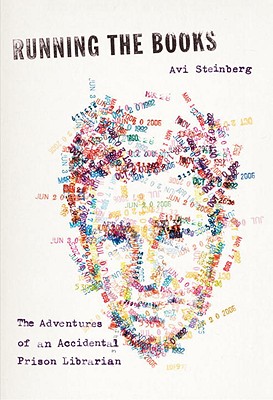
Pseudo-Review: Running the Books, by Avi Steinberg

I wanted to love Running the Books. Maybe this wasn't a good time for me, or maybe I tackled too much non-fiction in a row, but after working my way through only 266 pages of this 399-page memoir in a little over two months, I decided to call it quits. That, and I was out of renewals on it at the library.

Here's the thing, though: Avi Steinberg's accounts of his experience as a prison librarian (he dubs himself an "accidental" prison librarian) are really very captivating. And I really liked them. I just didn't really want to read 400 pages of them. I like long books, really, I do, but this one just didn't work out for me.

Despite my luke-warm feelings for the book as a whole, there were a few key lines I thought worth sharing. This is, after all, a book about the power of books (or at least the power of a collection of books), and the bookworm in me absolutely loved that:

On a pimp's encounter with the prison library: "When you do, you'll find the sweetness and the light. You'll find books you've always needed, but never knew existed. Books like that indispensable hustler's tool, the rhyming dictionary. You'll discover and embrace, like long-lost relatives, entire new vocabularies." (4)

On the definition of "correction" in "correctional facility: "On the back on one of his legal briefs, he scribbled: I like to right. Then he crossed it out, and rewrote it: I like to write. 'That's a correction,' he said, 'This here is a damn prison.'" (98)

On trying to find the perfect book for a prisoner: "Some books were close calls, but the one she sought remained elusive. Sometimes I wondered if maybe this book hadn't been written. I suggested to her that she write it--some people wrote, I said, because the book they'd most love to read, that they need to read, simply hadn't yet been written." (182)

On the temptations of censorship, and not so much: "Perhaps as a prison librarian, who served a vulnerable population, I had a responsibility not only to connect people to books but also to protect them from some as well. The idea bothered me: Who was I to decided what books another person should read? Censorship was not my job...I had women in my library who were borderline cases, cutters, suicide junkies, who might turn to Plath as an oracle of self-annihilation. Maybe I had a responsibility to shield them from [Ariel]. Or perhaps reading the poem could help in some way. Maybe I should teach the poem. Or maybe it wasn't my business, either way. None of this was obvious to me."

Steinberg's account of the inefficiencies of the prison system, the hierarchies and politics and bullying nature of it all, is at times engrossing. And his passion for what he does is enticing. If only the book could have been shorter. Or faster-paced. Or perhaps both. Or maybe it's just me. The stories I did read will certainly linger with me for some time--they're already doing that--I just wasn't compelled to actually read any further.

---

Thoughts from other readers:

What Red Read
Bibliophiliac
Boston Bibliophile

---

Running the Books | Avi Steinberg | Nan A. Talese | 9780385529099 | $26.00 Hardcover | 416 pages | October 2010 | Buy from an independent bookstore near you