

Showing posts with label biography. Show all posts
The Stranger in the Woods: Giving Context and Meaning to the Life of a Modern Hermit
13 April 2017
#Hamalong: Chapters 10-13
21 January 2016

[Technically this week's reading was Chapters 10-14, but I misread, so I'm a chapter behind the rest. Oops.]
We are moving right ALONG in this ol' Hamilton's life, friends. In this week's chapters (10-13), Chernow goes over Hamilton's time building up a successful law firm (albeit one with an awful lot of Tory traffic for the patriots' tastes); reflects a bit on Hamilton's past and how it might impact his future; dives into the Constitutional Convention and all its drama llamas; and gives us a full-on rundown of the Federalist Papers that puts Clifs Notes to shame. That last was about as interesting as reading Clifs Notes, to boot, which is not at all interesting.

#HamAlong: Chapters 6-9
14 January 2016
I'll be participating in Reading Rambo's Hamilton Readalong for the next two months, so expect weekly (if I can keep up) posts on the book from now through the end of February. Because the story of Hamilton's life is generally known from history books and the musical, I will not be avoiding spoilers in these posts (in other words: if you're planning to read Hamilton and want it to be a surprise, skip along).
YOU GUYS THIS BOOK IS SO GOOD. Seriously, if you like well-written, interesting, engaging, incredibly thoroughly researched books that unexpectedly spawned viral musical hits... why are you not reading Hamilton right this very instant?

After the action-packed, insane adventures of the first few chapters, I expect every moment of Hamilton's life to be absolutely jam-packed with unimaginable, unbelievable, entirely real events--and Chapters 6-9 didn't disappoint. Though this span of nearly 100 pages doesn't yet move the United States fully out of the Revolutionary War, Hamilton as an individual matures beyond the upstart young soldier/aide-de-camp we came to know in Chapters 1-5. Chernow alludes to the changes we can expect in reviewing Hamilton's pay book early in Chapter 6:
Hot damn, is that a lot to pack into a pay book (also, excellent use of the Oxford comma there, Mr. Chernow). But in just these few chapters, we're seeing the beginnings of all of this: Hamilton becomes a practicing (much respected) lawyer; writes a bunch of political whatsits and whosits (that's the technical term for those, right?) that Chernow posits are the precursors to The Federalist Papers; studies (and writes about) the economy; and, oh yeah, falls in love with (and gets married to) the daughter of a wealthy New Yorker.
All of that is fascinating, but what I found most interesting in this section was watching Hamilton the boy grow into the post-war man history remembers most keenly: a brilliant, outspoken, well-written economist-philosopher-leader-voice whose opinions were never in question (as Miranda writes, "I will not equivocate on my opinion / I have always worn it on my sleeve").


YOU GUYS THIS BOOK IS SO GOOD. Seriously, if you like well-written, interesting, engaging, incredibly thoroughly researched books that unexpectedly spawned viral musical hits... why are you not reading Hamilton right this very instant?

After the action-packed, insane adventures of the first few chapters, I expect every moment of Hamilton's life to be absolutely jam-packed with unimaginable, unbelievable, entirely real events--and Chapters 6-9 didn't disappoint. Though this span of nearly 100 pages doesn't yet move the United States fully out of the Revolutionary War, Hamilton as an individual matures beyond the upstart young soldier/aide-de-camp we came to know in Chapters 1-5. Chernow alludes to the changes we can expect in reviewing Hamilton's pay book early in Chapter 6:
For anyone studying Hamilton's pay book, it would come as no surprise that he would someday emerge as a first-rate constitutional scholar, an unsurpassed treasury secretary, and the protagonist of the first great sex scandal in American political history. (112)
Hot damn, is that a lot to pack into a pay book (also, excellent use of the Oxford comma there, Mr. Chernow). But in just these few chapters, we're seeing the beginnings of all of this: Hamilton becomes a practicing (much respected) lawyer; writes a bunch of political whatsits and whosits (that's the technical term for those, right?) that Chernow posits are the precursors to The Federalist Papers; studies (and writes about) the economy; and, oh yeah, falls in love with (and gets married to) the daughter of a wealthy New Yorker.
 |
| via Emily Wright on Pinterest |
All of that is fascinating, but what I found most interesting in this section was watching Hamilton the boy grow into the post-war man history remembers most keenly: a brilliant, outspoken, well-written economist-philosopher-leader-voice whose opinions were never in question (as Miranda writes, "I will not equivocate on my opinion / I have always worn it on my sleeve").
By dint of his youth, foreign birth, and cosmpolitan outlook, he was spared prewar entanglements in provincial state politics, making him a natural spokesman for a new American nationalism. (157)
To a peculiar extent, his mind was already [by twenty-five] focused on the problems that were to dominate the post-war period. (158)Some other scattered thoughts:
- I absolutely loved Hamilton's moment of "completely unnecessary bravado," doing parade-ground drills in the midst of besieging the British Army.
- Major props to Chernow for using "poppycock" in a sentence completely unironically.
- Maybe it's just because I'm listening to the end of the Hamilton soundtrack as I write this, but can we talk about sad some of this is getting? I was disproportionately upset by the growing rift between Washington and Hamilton over the course of the War. And Laurens' death was fairly soul-crushing. And the increasingly persistent references to duels and dueling! Just, stay away from dueling, Hamilton. I'd like to reach back into history and shake you.
- Hamilton's views are almost terrifyingly applicable to the political landscape of the United States today:
- "The inquiry constantly is what will please, not what will benefit the people. In such a government there can be nothing but temporary expedient, fickleness and folly."
- I think Hamilton's a pretty cool dude, but was fairly annoyed by his insistence that Eliza bear him a son. Like there's something wrong with (eldest) daughters. Pssh.
So, yeah, that's a lot. And we still have 600 pages to go.

#HamAlong: Chapters 1-5
10 January 2016
I'll be participating in Reading Rambo's Hamilton Readalong for the next two months, so expect weekly (if I can keep up) posts on the book from now through the end of February. Because the story of Hamilton's life is generally known from history books and the musical, I will not be avoiding spoilers in these posts (in other words: if you're planning to read Hamilton and want it to be a surprise, skip along).
So: I'm already behind and we've only just started. But dayum, this book is good. I'll fully admit to being put off by its GIANT size and TEENY TINY print, but the first 100 pages flew by far more quickly than I'd anticipated for two reasons:
and, after Hamilton's mother, Rachel, was thrown in jail by her then-husband, Lavien, for perceived infidelity:
Chernow's clearly gone to great lengths to not only read everything Hamilton ever wrote (or possibly wrote; as there are some writings in the world that may be attributed to him but are uncertain), but everything ever written about Hamilton, in Hamilton's time (ok, maybe not, but it certainly feels like it), or by those Hamilton knew. Though some details (like the minor one of the year of Hamilton's birth) have been lost to history, Hamilton overall reads like something written about a contemporary or even currently living character, so in-depth are the source materials.
By the end of Chapter 5, we have a strong-willed, brilliant young boy who has been exposed to the horrors of slavery; witnessed first-hand the problems of rigid class structures; left his homeland behind to seek an education; been granted the war he wished for to give him upward class (and income) mobility; made a few enemies; impressed a number of notable politicians and military leaders; possibly had gay relationships with maybe one or maybe two other notable figures in the American Revolution (pure speculation, that), but at least forged lifelong friendships; become a significant figure not only in the American Revolution but in the political landscape of the American colonies... and what else am I missing?
Oh yeah, and we have seven hundred more pages to go. No wonder Miranda found this to be excellent fodder for what is surely one of the best musicals of our time.

So bring it on, Chernow. I'm ready for the rest of it.
 |
| Me, looking at the length of this book and the size of its tiny, tiny print. |
So: I'm already behind and we've only just started. But dayum, this book is good. I'll fully admit to being put off by its GIANT size and TEENY TINY print, but the first 100 pages flew by far more quickly than I'd anticipated for two reasons:
- Alexander Hamilton apparently lived the kind of life that one couldn't even dream up for a fiction book. Seriously, some of this is downright unbelievable: he of dubious fatherhood was abandoned by his presumed father (the one who gave him the name Hamilton), left orphaned by his mother, left destitute all over again when his cousin-turned-guardian either shot himself or stabbed himself in the head (how exactly can the two be confused??), left destitute all over again when his uncle-turned-guardian up and died on him (people did that a lot) and then somehow managed to become George Washington's right-hand man like... 5 years later.
- Ron Chernow is sly and unpredictably funny. Case in point:
In this ghastly place [Fort Christiansvaern], unspeakable punishments were meted out to rebellious blacks who had committed heinous crimes: striking whites, torching cane fields, or dashing off to freedom.
and, after Hamilton's mother, Rachel, was thrown in jail by her then-husband, Lavien, for perceived infidelity:
As an amateur psychologist, Lavien left something to be desired, for he imagined that when Rachel was released after three to five months this broken woman would now tamely submit to his autocratic rule...
Chernow's clearly gone to great lengths to not only read everything Hamilton ever wrote (or possibly wrote; as there are some writings in the world that may be attributed to him but are uncertain), but everything ever written about Hamilton, in Hamilton's time (ok, maybe not, but it certainly feels like it), or by those Hamilton knew. Though some details (like the minor one of the year of Hamilton's birth) have been lost to history, Hamilton overall reads like something written about a contemporary or even currently living character, so in-depth are the source materials.
By the end of Chapter 5, we have a strong-willed, brilliant young boy who has been exposed to the horrors of slavery; witnessed first-hand the problems of rigid class structures; left his homeland behind to seek an education; been granted the war he wished for to give him upward class (and income) mobility; made a few enemies; impressed a number of notable politicians and military leaders; possibly had gay relationships with maybe one or maybe two other notable figures in the American Revolution (pure speculation, that), but at least forged lifelong friendships; become a significant figure not only in the American Revolution but in the political landscape of the American colonies... and what else am I missing?
Oh yeah, and we have seven hundred more pages to go. No wonder Miranda found this to be excellent fodder for what is surely one of the best musicals of our time.

So bring it on, Chernow. I'm ready for the rest of it.
Review: The Dead Ladies Project, by Jessa Crispin
16 October 2015
This review originally ran in Shelf Awareness for Readers. Reprinted here with permission.

Book Review: The Short and Tragic Life of Robert Peace, by Jeff Hobbs
27 October 2014
This post originally ran in Shelf Awareness for Readers. Reprinted here with permission.

Robert Peace was born in 1980 in a Newark, N.J., ghetto. His parents had high hopes for him, pushing him to receive the best education possible, though his father ultimately ended up in jail and his mother struggled to make ends meet. Still, their efforts paid off: despite growing up in a city riddled with drugs and gangs, Peace succeeded in high school and earned a place at Yale, where he graduated with distinction with degrees in molecular biochemistry and biophysics. At age 30, he was shot to death in a marijuana den in the basement of a Newark home. Jeff Hobbs (The Tourists), Peace's college roommate, asks the obvious questions in The Short and Tragic Life of Robert Peace: How could this happen, and why?
Hobbs captures Peace's life with great detail, assembling observations and thoughts from those who knew the promising man before, during and after his Yale years, and makes it clear when assumptions have been made in place of records or hard facts. One part biography and one part study of poverty in the United States, Hobbs's account of his friend's life and death highlights how our pasts shape us, and how our eternal search for a place of safety and belonging can prove to be dangerous. Peace's life was indeed short and tragic, but Hobbs aims to guarantee that it will not go unmarked; this affecting story is a tribute to the many people that Peace touched while he lived, and a lens through which we can better understand poverty and opportunity after his death.
---
The Short and Tragic Life of Robert Peace | Jeff Hobbs | Scribner | September 2014 | Hardcover
Robert Peace was born in 1980 in a Newark, N.J., ghetto. His parents had high hopes for him, pushing him to receive the best education possible, though his father ultimately ended up in jail and his mother struggled to make ends meet. Still, their efforts paid off: despite growing up in a city riddled with drugs and gangs, Peace succeeded in high school and earned a place at Yale, where he graduated with distinction with degrees in molecular biochemistry and biophysics. At age 30, he was shot to death in a marijuana den in the basement of a Newark home. Jeff Hobbs (The Tourists), Peace's college roommate, asks the obvious questions in The Short and Tragic Life of Robert Peace: How could this happen, and why?
Hobbs captures Peace's life with great detail, assembling observations and thoughts from those who knew the promising man before, during and after his Yale years, and makes it clear when assumptions have been made in place of records or hard facts. One part biography and one part study of poverty in the United States, Hobbs's account of his friend's life and death highlights how our pasts shape us, and how our eternal search for a place of safety and belonging can prove to be dangerous. Peace's life was indeed short and tragic, but Hobbs aims to guarantee that it will not go unmarked; this affecting story is a tribute to the many people that Peace touched while he lived, and a lens through which we can better understand poverty and opportunity after his death.
---
A copy of this title was provided by the publisher for review.
Book Review: The Black Count, by Tom Reiss
21 September 2012
This review originally ran in the Friday, September 21, 2012 issue of Shelf Awareness for Readers. If you don't already subscribe, sign up here to receive a bi-weekly dose of readerly goodness in your inbox.
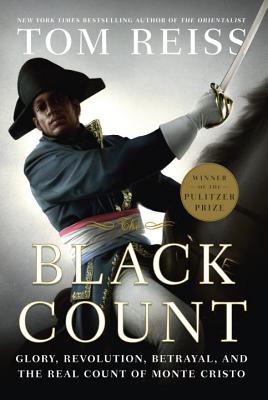
The Black Count recounts the life--and legacy--of this great man in extensive detail. Tom Reiss (The Orientalist) draws on over six years of primary research to tell Dumas's story. But the book is much more than a biography of a great French general. It's also a history of civil rights in France, an account of the French Revolution and a tale of Napoleon's rise to power. Woven throughout all of this historical detail is an ongoing analysis of Dumas's influence on his son's famous novels, particularly The Three Musketeers and The Count of Monte Cristo. Though General Dumas is not commemorated with any statue in France today, he remains an important figure in French history and in literature; The Black Count merges the myth of the man contained in his son's novels with the facts of his life, resulting in an impeccable history that reads like a novel but packs the facts of a textbook.
---
Thoughts from other bookworms:
Devourer of Books
NPR Books
We Love This Book
---
You might also like:
The Count of Monte Cristo by Alexandre Dumas
The Three Musketeers by Alexandre Dumas
The Orientalist by Tom Reiss
---
The Black Count | Tom Reiss | Crown | Hardcover | 432 pages | Buy from an independent near you
Book Review: A Century of Wisdom, by Caroline Stoessinger
27 March 2012
Originally published in the March 27, 2012 issue of Shelf Awareness for Readers. Reprinted here with permission.. Receive bi-weekly Shelf Awareness for Readers in your inbox by registering here.
 Born in 1903, Alice Herz-Sommer is the oldest living Holocaust survivor--indeed, one of the oldest women in the world. She has lived through two World Wars, one concentration camp and the death of her son. Through all of this, or perhaps despite all of this, she remains a devoted pianist and an eternal optimist, believing wholly in the power of music and laughter to bring us through the most difficult of times.
With A Century of Wisdom, Caroline Stoessinger presents a catalogue of this amazing woman's philosophy, explaining Alice's banishment of the words "if only" from her vocabulary, her uncanny ability to turn disappointment into generosity and her vigilant guard against prejudice and hate within herself. Placed in the context of Alice's life experiences, from her time in Theresienstadt to her relocation to Israel, and eventually to England, these sentiments read like miniature lessons in how to be happy despite seemingly overwhelming odds. "Only when we are so very old do we realize the beauty of life," Alice muses; while this may be true, A Century of Wisdom could be seen as an attempt to impart this wisdom to those much younger than herself.
Despite the many sad stories in Alice's life, here is a message of hopefulness and happiness contained within her experiences. Alice has touched hundreds, if not thousands of lives with her music, her compassion and her character. With A Century of Wisdom, her words will continue to inspire readers for years to come.
---
Thoughts from other bookworms:
The Teaching Studio
Kirkus Reviews
---
A Century of Wisdom | Caroline Stoessinger | Spiegel & Grau | 9780062004796 | $23.00 Hardcover | 256 pages | March 2012 | Buy from an independent bookstore near you
Book Tour: Joe DiMaggio: The Long Vigil, by Jerome Charyn
26 April 2011
 I'm going to be up front about this: I did not finish Joe DiMaggio. I meant to. Really. I just couldn't get into it. Which is not to say that the book itself is not a good one. It's incredibly well-researched, and Jerome Charyn is a skilled writer and biographer. Rather than simply regurgitating well-known (or even little-known) facts, Charyn inserts his own take on events where appropriate. He draws on myriad sources, quoting heavily when necessary and breezing through details when fitting. The book itself, part of Yale University Press' Icons of America series, is short, topping out at merely 146 pages, and thoughtfully organized, with sections dedicated to his pre-career days, his career, and a lengthy passage on his post-baseball days.
It was the post-baseball days that lost me. Biography is a genre of which I'd like to read more, and baseball is a subject about which I wish I knew more, so the combination struck me as a good candidate. Perhaps it was too far outside of my comfort zone to really strike a chord with me; I'm sure a baseball enthusiast would be more engrossed. Or a biography enthusiast. All in all, Joe DiMaggio is a short, concise biography that is sure to appeal to a certain audience; despite my best efforts, I found that I was not that audience. I'm looking forward to reading more of Charyn's work - it just won't be a baseball book.
Looking for more? Watch:
---
Thoughts from other bookworms:
Tribute Books Reviews
Stiletto Storytime
Reading Between the Lines
... and a whole host of others from the Tribute Books Blog Tour
---
More Jerome Charyn at his website, on Twitter, and on Facebook.
---
Many thanks to Nicole at Tribute Books for inviting me to participate in this tour and providing a copy of the book for review.
Subscribe to:
Posts (Atom)


