The Grapes of Wrath Readalong: One Part Crazy, Another Part Thrilled


Yesterday, I stumbled into a Grapes of Wrath Readalong over at Devouring Texts, and even though the sane part of my brain said not to, I decided to join.

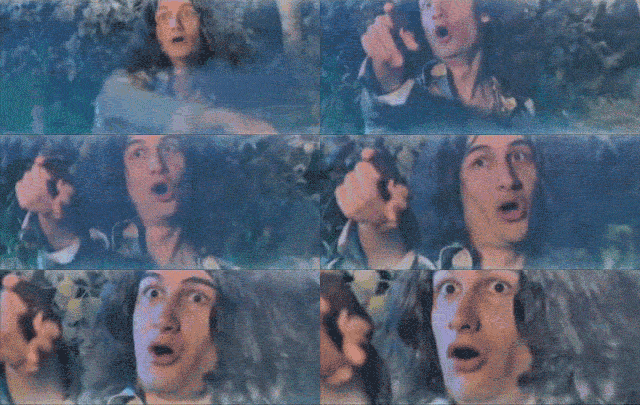
I am one part this:


And one part this:


The Grapes of Wrath is on my list of potential books to read to complete one of the final categories of the Back to the Classics Challenge, and there are some really great participants... so how could I say no? It's like it was destiny.

The only Steinbeck I've read that I actually remember is East of Eden. I know I read Of Mice and Men in middle school (high school?) and that it was sad. Really, really, really sad. But this is my first pass at Grapes of Wrath, and despite the fact that it is one of Steinbeck's most famous novels, I'm ashamed to say I know very little about it. Except that the dude on the cover of my Penguin edition is kind of a stud, and that the book is set during the Great Depression, and therefore I expect it to be great and depressing.

Forward, ho! Reactions to Chapters 1-11 to come next week.

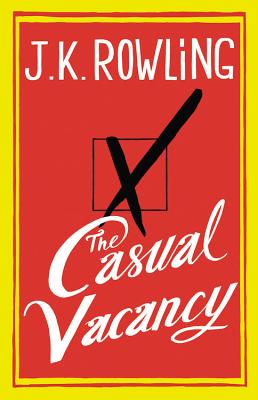
J.K. Rowling's The Casual Vacancy: The Reviews Are In!

After a long embargo and even longer wait, J.K. Rowling's first post-Harry Potter book, The Casual Vacancy, is now available. Reviews started pouring in in a matter of hours, and Rowling's first book for adults has received some mixed reactions:

The Washington Post: Good but Not Great, Generally Lacking in Magic Wands
"Much of the book I admired, even if I didn’t love. There were sentences I underlined for the sheer purpose of figuring out how English words could be combined so delightfully. There were incidents I immediately reread because the developments were surprising or genuinely moving. There were characters that I liked, then disliked, then liked again with reservations." 

The New York Times: Now We're Just Being Downright Mean and Using Bizarre Words Like "Limned"
"It’s easy to understand why Ms. Rowling wanted to try something totally different after spending a decade and a half inventing and complicating the fantasy world that Harry and company inhabited, and one can only admire her gumption in facing up to the overwhelming expectations created by the global phenomenon that was Harry Potter. Unfortunately, the real-life world she has limned in these pages is so willfully banal, so depressingly clichéd that “The Casual Vacancy” is not only disappointing — it’s dull."

The Huffington Post: It's About What You'd Expect, But It's No Harry Potter
"Would this book be published if it weren't for the name on the cover? Almost certainly. Would anyone pay much attention to it, and its message? Probably not. Is it worth reading? Yes, because it's become a talking point among readers, and unlike "Fifty Shades of Grey," reading it is not a painful experience. Is it worthy of awards? Probably not, but I'd definitely be interested in reading her next book, regardless of the baggage carried by the name on the cover."

The Guardian: A Fair and Balanced Review of Not Really a Bad Book After All
"The Casual Vacancy is no masterpiece, but it's not bad at all: intelligent, workmanlike, and often funny. I could imagine it doing well without any association to the Rowling brand, perhaps creeping into the Richard and Judy Book Club, or being made into a three-part TV serial. The fanbase may find it a bit sour, as it lacks the Harry Potter books' warmth and charm; all the characters are fairly horrible or suicidally miserable or dead. But the worst you could say about it, really, is that it doesn't deserve the media frenzy surrounding it. And who nowadays thinks that merit and publicity have anything do with each other?"
So far, I have yet to see a single review from someone who loved the book (Bueller?). I'm still planning on starting in on it this weekend, and I'm participating in Brenna at Literary Musings' Casual Vacancy Readalong. Who else is planning to read it? Skip it? If you've read it already (and bravo, speed-readers!), did you love it? Hate it?

---

The Casual Vacancy | J.K. Rowling | Hardcover | 512 pages | September 2012 | Buy from an independent bookstore near you

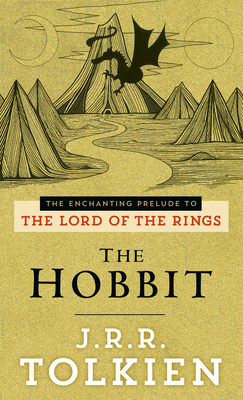
Pseudo-Book Review: The Hobbit, by J.R.R. Tolkien


This book fulfills my "read a book set in a land you will likely never visit" requirement for the 2012 Back to the Classics Challenge.

"In a hole in the ground there lived a hobbit..."

So begins one of the most well-loved, well-read fantasy novels of all time. And one, I am ashamed to admit, that I had not read until this year. Though I read--and loved!--the Lord of the Rings trilogy, I put off reading The Hobbit because I feared it would take as much, well, work as the trilogy did.

Now that I've read it (in a two-day sitting, mind you), none of my reasons for postponement remain valid. The Hobbit is, truly, the younger sibling to the LOTR trilogy: linear, jocular, and downright silly at times. Full of songs and poems and chants, the story focuses on Bilbo Baggins and his adventures, setting off from the Shire on a very Tookish mission to help a band of goblins kill a dragon and recover some stolen treasure. Along the way, they encounter trolls and wolves and eagles and magic and elves and everything in between, setting the magical stage for the world that Tolkien more fully develops in LOTR and beyond.

There's not much I can add to the already numerous conversations that exist around The Hobbit; I'm probably one of the last Tolkien fans in the world to finally get my act together and read it. But I can say that I was pleasantly surprised by the simplicity of a complex fantasy story, the bits that hinted at the world we come to know in more detail in the LOTR trilogy, and the humor and wit sprinkled throughout the text. The Hobbit is a quintessential--perhaps the quintessential--adventure novel, further proving what we all know already: Tolkien was one cool dude.

---

Thoughts from other bookworms:
The Tolkien Professor (Podcast series)
Dauntless Media
The New York Times (1938 review!)

---

You might also like:
The Hobbit and The Lord of the Rings (boxed set) by J.R.R. Tolkien
The Hobbit: Movie Trailer
Why J.R.R. Tolkien's 'The Hobbit' Isn't Just for Kids

---

The Hobbit | J.R.R. Tolkien | Del Rey | Mass Market Paperback | 320 pages | Orig. 1937 | Buy from an independent near you

Book Review: Telegraph Avenue, by Michael Chabon

I read Telegraph Avenue this summer as part of As the Crowe Flies (and Reads!) pre-publication readalong. Though I did post a wrap-up response to the book, I'm compiling all of my thoughts together here. This is less true review (it's nearly impossible to summarize the complicated interwoven stores in any concise way) than a series of reactions to a book that I did, eventually, come to love.

The latest novel from Michael Chabon (The Adventures of Kavalier and Clay) centers on a white family and a black family, co-owners of a used vinyl shop located on the quintessential Telegraph Avenue. Except that it was not quintessential enough for me to immediately know what it was, so I went a-Wikipediaing. Turns out it is a well-known street in Oakland, California, notable as a "home to many restaurants, bookstores, and clothing shops, along with street vendors occupying its wide sidewalks." Apparently, it also "attracts a diverse audience of visitors, including college students, tourists, artists, street punks, eccentrics, and the homeless."

That's helpful to know going into this book, as Telegraph Avenue functions as much as a character as it does a setting. And I love that in a book. Authors that can make places as important as people are awesome.

And yet this book and I had some fits and starts. I read the first two pages (the dedication and the epigraph) and was all I LOVE YOU MICHAEL CHABON. If you're curious, this is the dedication:

To Ayelet, from the drop of the needle to the innermost groove.

And this is the epigraph:

Call me Ishmael. --Ishmael Reed, probably.

Then I read the next fifty pages and was all I HAVE NO IDEA WHAT IS HAPPENING OR WHO ANY OF THESE PEOPLE ARE.

Then I buckled down, made a list of all of the characters I'd encountered and how they were related to each other, and fell in love. Telegraph Avenue, it turns out, is a book of big ideas but small parts, demanding that it be read in long sittings rather than broken up over a series of 15-minute intervals, leaving time to re-read and appreciate Chabon's often stunning, mind-blowingly glorious sentence, often about the most mundane of subjects:
"At 9:45 A.M. the first batch of chicken parts sank, to the sound of applause, into the pig fat. The fat set about its great work, coaxing that beautiful Maillard reaction out of the seasoned flour, the smell of golden brownness mingling with the warm, dense, bay-leafy, somehow bodily funk of the beans, and with the summertime sourness of the greens like the memory of with Keds stained at the toes with fresh-cut grass. Nat stepped through the time portal that reached within the ring of seasoned iron. Riding the kitchen time machine."
It is the beauty of these wonderfully crafted sentences that carries Chabon's story, as the story itself is somewhat slow, at times plodding, and often diverted. He uses words in the most precise and careful way to illuminate what is most important. Above, it is the power of food to bring back a memory, and not just a specific memory, but an entire bank of memories, of a time, and a place, and a person, and a feeling. His descriptions elevate the food beyond food and into the realm of the surreal; Nat's fried chicken is not just a meal, but an invitation.

Similarly, Gwen (a pregnant midwife, married to a less-than-loyal husband)'s emotions flow through Chabon's words, her sorrow, her apologies, her bulk, her weight, her burdens, all standing proud and tall:
"'I'm sorry,' Gwen said again, and this time it was not an expression of regret for the things she had said or done but rather the opposite: Her apology was, as apologies so often are, fighting words. She was sorry only that she was not sorry at all." 
The simplicity of the statement is overwhelming; though Nat sees apologies as "a miracle of language. Cost you nothing and returned so richly," to Gwen, they are an impossibility. Nat is a white man, and can make mistakes and apologize for them; Gwen is a black woman, and cannot afford to make mistakes--nor apologize where no mistake was made. 

Chabon continues to pry at the issue of race--as well as the similarly meta-issues of poverty, death, and family--in this careful, subtle way throughout the novel. Coupled with beautiful prose and the ability to highlight the mundane in the most intricate of ways, the result proves a cohesive, often humorous novel that deals with some of the most important issues of our time. Chabon's writing requires a little work (and not just in remembering everyone's nicknames); he drops you off in the middle of the story with little background information or development, and expects you to keep up. It's not easy, but it's doable--and in the end, worth it. Provided, that is, that you can forgive the 12-page sentence that makes up the entirety of Part III, which will, if nothing else, leave you breathless.

---

Thoughts from other bookworms:

---

You might also like:

---

Note: Thanks to the publisher for providing review copies of this title for the readalong this summer.
Telegraph Avenue | Michael Chabon | Harper | Hardcover | 480 pages | September 2012 | Buy from an independent near you

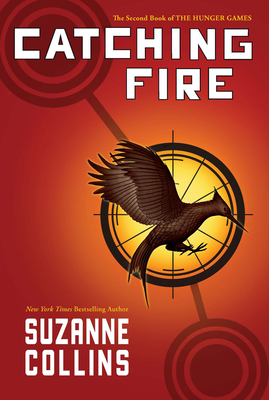
Late to the Party: Catching Fire & Mockingjay, by Suzanne Collins


I'm way late to this party, I know. Not only did I read the books after everyoneelseintheworld, but I have now waited nearly four months between reading the books and writing about them. Oops?

I read both of these on my Nook back in April when flying to and from Italy. They seemed like perfect travel reading to me: easy to get into, easy to get hooked on, and easy to get lost in. What more could you need for 7+ hour flights with crappy in-flight movies as an alternative?

I was right on all accounts. The books are easy to get into (though you definitely have to have read the first to get the second and third), easy to get hooked on, and totally make the time fly. Collins builds further on the world she developed in The Hunger Games, bringing back some favorite characters, introducing some new characters, and giving life to characters previously mentioned only in passing. There's guts, there's gore, and there is, of course, a healthy dose of sappy romance.

Overall, I'd still call The Hunger Games my favorite of the three, but the trilogy works as a whole. I'll never call these great literature, but they are definitely great stories (despite some obvious plot flaws in Mockingjay).

And for those wondering, I'm all about Team Peeta. FTW.

---

Catching Fire | Suzanne Collins | Scholastic Press | September 2009 | Hardcover | 400 pages | Buy from an independent bookstore near you

Mockingjay | Suzanne Collins | Scholastic Press | August 2010 | Hardcover | 400 pages | Buy from an independent bookstore near you

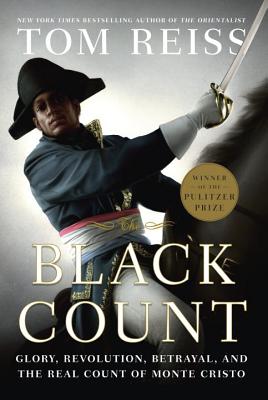
Book Review: The Black Count, by Tom Reiss

This review originally ran in the Friday, September 21, 2012 issue of Shelf Awareness for Readers. If you don't already subscribe, sign up here to receive a bi-weekly dose of readerly goodness in your inbox.

General Thomas-Alexandre Dumas, father of the famous French writer Alexandre Dumas, lived a life that sounds like fiction: the son of a white aristocrat and freed slave, he was sold into slavery by his father before being repurchased and freed in France to live the life of an aristocrat's son. From there, he joined the French Army, where his physical stature and military prowess launched him through the ranks under Napoleon--until he was captured and held prisoner in Sicily for more than two years.

The Black Count recounts the life--and legacy--of this great man in extensive detail. Tom Reiss (The Orientalist) draws on over six years of primary research to tell Dumas's story. But the book is much more than a biography of a great French general. It's also a history of civil rights in France, an account of the French Revolution and a tale of Napoleon's rise to power. Woven throughout all of this historical detail is an ongoing analysis of Dumas's influence on his son's famous novels, particularly The Three Musketeers and The Count of Monte Cristo. Though General Dumas is not commemorated with any statue in France today, he remains an important figure in French history and in literature; The Black Count merges the myth of the man contained in his son's novels with the facts of his life, resulting in an impeccable history that reads like a novel but packs the facts of a textbook.

---

Thoughts from other bookworms:
Devourer of Books
NPR Books
We Love This Book

---

You might also like:
The Count of Monte Cristo by Alexandre Dumas
The Three Musketeers by Alexandre Dumas
The Orientalist by Tom Reiss

---

The Black Count | Tom Reiss | Crown | Hardcover | 432 pages | Buy from an independent near you

Book Review: The Dangers of Proximal Alphabets

Every so often, there is a book that crawls its way into your heart and nestles itself there, almost defying explanation but demanding that it be shared with the world.

For me, A Danger of Proximal Alphabets is that book. Kathleen Alcott's debut reads more like linked vignettes than a straight narrative, moving through time in fits and starts and then in smooth progression in a way that mimics our own memory and recall of the past. The story takes its time in unfolding: Ida grew up across the street from Jackson and James. Ida's mother is dead, Jackson and James' father has left. Throughout childhood, the three are inseparable; where there is an I, there is also a J.

But, as Ida learns, that does not always mean that where there is an Ida, there will also be a Jackson--or a James:

"But even one letter changes a meaning entirely; no matter their proximity, different points of an alphabet refuse to be represented as the same: there's no guarantee that someone standing at precisely the same longitude and latitude as you will remember the view the same way, no promise that one person's memory of a moment or a month will parallel yours, retain the same value, shape the years of living that follow."

As the three creep slowly into adulthood, their relationships morph and change but never completely disappear; James gets in trouble, Jackson and Ida move in together, Jackson's night talks become night walks become night problems. Though they are not family in the true sense of the word, they behave as one. That is, until they don't:
"I had let myself forget: that honest-to-goodness, forever families are made of blood. That a history doesn't guarantee a future."
How simple, and yet how heartbreaking--the thought that just because it has always been does not mean it will continue to be.

In this way, Alcott inches her way into questions of love and friendship and family and death. Can we redefine the traditional nuclear family, setting aside "mother," "father," "siblings," in favor of "neighbor," "friend," and "confidant"? Can love last forever, even if a relationship must end?

Alcott's simple prose is as capable of captivating the voice of children as it is the innermost thoughts of adults; her ability to play with language and imagery sheds light on the average and the everyday in ways we may not have done on our own:
"Autumn was decidedly adult: the nuanced colors--muddled oranges and browns, the uncertain gray of the clouds--were much harder to love, to understand, than the sticky pinks of popsicles, the confident thick greens of happy grass and plants, the haughty blue of the sky above it all."
Ultimately, this ability to make us open our eyes to what we already know and see is what makes The Dangers of Proximal Alphabets as successful as it is, just as any novel is heralded as among the best of the best when it makes us reconsider the familiar. I'm looking forward to seeing more from Alcott in the future--she's definitely a talent to watch out for.

---

Thoughts from other bookworms:
Publisher's Weekly
Lonely Owl Books
Real Simple

---

You might also like:
Day for Night by Rick Reiken
Letter to My Daughter by George Bishop
The Lover's Dictionary by David Levithan

---

Note: Thanks to Other Press for providing a copy of this title for review. Opinions, as always, are my own.
The Dangers of Proximal Alphabets | Kathleen Alcott | Other Press | Trade Paper | 224 pages | Buy from an independent bookstore near you