Showing posts with label blog tour. Show all posts

Guest Post: Ben H. Winters Recommends Mystery Books for Aspiring Writers

I recently read (and adored) Ben H. Winter's Last Policeman trilogy (see my reviews of The Last Policeman and Countdown City, as well as the final volume, World of Trouble, on sale this week). So when the publisher, Quirk Books, asked if I'd be interested in participating in a blog tour with Winters, I couldn't resist. Below, find Winters discussing his #fridayreads picks for aspiring mystery writers. And if you're interested, you can check out all of Winters' other tour stops over on the Quirk blog
If you haven't already read the trilogy, you can also enter to win all three of the books, courtesy of Quirk Books, by filling out the form here.

YOU READ FOR A WHILE, AND THEN YOU WRITE, by Ben H. Winters


I frequently say that the best way to learn to write a book is to read a lot of books. It’s kind of a cheap and useless piece of advice, though, isn’t it—because first of all I think probably everybody who wants to write a book has already figured that out (although every once in a while you meet an aspiring writer who says something like “I don’t really like to read that much,” which is pretty astonishing).

And then also the obvious question is, “Any books in particular?”

So let me see if I can make some suggestions. Here are a bunch of books that will not in and of themselves teach you how to write a mystery, but which I know I am a better writer because I have read them.

The first thing you want to do, actually, is read this short opinion article by Lee Child, the guy who writes all those Jack Reacher novels. He will explain to you that your primary job is NOT to create interesting events and secrets, that’s the SECONDARY job. The PRIMARY job is is make the reader wait, so they are so eager to get to the interesting events and secrets that they fall into that intense feverish state we call the pleasure of reading.

Get that, and then read Agatha Christie’s The Murder of Roger Ackroyd, greatly and justly acclaimed as a Golden Age masterpiece; when you are done and have recovered from the shock of the final chapters, go back and read it again, noting those precise moments where information is omitted, or presented wrapped in veils or buried in a maze of misdirection.

Then you gotta read Who Killed Roger Ackroyd?, by the French psychoanalyst and literature professor Pierre Bayard. Engaging with Bayard’s cerebral (and at times maddening) book-long dissection/celebration of Ackroyd isn’t fun, exactly, but the guy points to and explains all of Christie’s tricks—it’s like the part of a Penn & Teller show where they go, “Okay, here’s how we did it…”

Then go ahead and read Hammett’s The Maltese Falcon, which besides being the progenitor of a thousand hardboiled crime novels set on a thousand rainswept streets, is another wickedly deceptive piece of work. Details hide between sentences, they are flashed at us like the bottom card on a deck and then tucked away before we can process them.

Lots of brilliant books (not to mention lots of tedious parodies) can point to Falcon as a big influence; two to read, for sure, are James Ellroy’s The Black Dahlia and Michael Chabon’s The Yiddish Policeman’s Union. Note how both of these guys, in very different ways, take the cool steely surface of the Falcon and pry it open, show how much is going on beneath, in the anxious minds and wild hearts of the detectives.

But the novel that can teach you the most—not only how to deceive and delay, but also how to give the reader real human characters with real human hearts—is Clockers, by Richard Price. For my money, that’s the finest crime novel out there, because it so successfully marries the imperatives of the genre (solve the puzzle! Trick the reader!) with the imperatives of all great art: make us believe, make us care, challenge our expectations about ourselves and about other people.

There are pieces of all these books, influences of all of them, in The Last Policeman and its sequels. But hopefully I absorbed the lessons of the genre and then I made it my own. That’s how you do it, ultimately, you take what you can, and you go. You read for a while, and then you write.

---

What are your go-to mystery reads? And what books would you recommend to aspiring writers?

Book Review: NOS4A2, by Joe Hill

Hoooo boy. This book reminded me seven times to sideways why I read horror novels as infrequently as I do (mostly due to the lack of sleep that inevitably covers the days of reading), but why I still turn back to them even though they make my skin crawl and generally leave me sleeping with the lights on.

NOS4A2, Joe Hill's most recent novel, centers on Victoria "Vic" McQueen and her (pardon the term) arch-nemesis, Charlie Manx. Both have the power to bend the world as we know it to their own reality: Vic can locate lost items by riding a six-speed bike over a decrepit covered bridge, Manx can drive children to a world called "Christmasland" in his antique Rolls Royce (with the appropriately inappropriate and titular license plate number NOS4A2). When Vic goes off in search of Manx, her covered bridge takes her right to him--and when she escapes his wrath, she becomes the first of his victims ever to survive.

But when Vic returns to reality and Manx is locked up in jail, she finds she remembers two versions of the events: the first, full of fantastical covered bridges, impossible sights, impractical things; the second, that she was kidnapped and drugged and held captive by Manx for days. In the face of reality, she--and her shrinks--push her mind to accept the latter as the truth.

Vic spends her entire adult life running from her past, moving from one mental hospital to the next as she tries to screw herself back into reality and forget Manx ever existed.

But Manx will never forget her, and when he escapes, he heads straight for her--and her son Wayne--vowing to kill Vic and take Wayne to Christmasland.

NOS4A2 is the kind of creepy, weird, totally screwed up story that absolutely defies summation, so take the summary above with a grain of salt, please.

Hill has a knack for stories and storytelling, teasing enough detail to bring the fantastical to life without ever getting bogged down in worldbuilding, and an imagination in which it is easy to get lost. Every seemingly innocuous action in NOS4A2 is packed with meaning and consequence, which makes what could have sufficed simply as an excellent horror novel function on so many more levels; Hill forces us, through Vic, to reconsider our interpretations of what is real versus what is imagined:
"I kind of think it is our world. A version of it anyway. Everyone lives in two worlds, right? There's the physical world... but there's also our own private inner worlds, the world of our thoughts. A world made of ideas instead of stuff. It's just as real as our world, but it's inside."
In Charlie Manx, Hill brings evil to life--but also pity. In Vic's friend Maggie Leigh, Hill applauds the power of libraries and librarians. In Vic's boyfriend Lou, he captures the nice guy with an eating disorder who spends an entire life just trying to get something right. In Vic's parents, the unstable, unhappy marriage that isn't great but isn't pure evil; in Vic's love for her son the love of a mother who refuses to abandon her child no matter how many mistakes she's made in the past.

The world of NOS4A2 is complicated and messy and difficult, just like ours, with enough tweaks to our reality--or at least reality as we know it--to bring the stuff of nightmares, quite literally, to life. It is horror in a world at once so different from ours that we know it couldn't possibly be real, but the details of Hill's characters are so true and so realistic that it is quite easy to find oneself questioning just why, for instance, you might be humming "Jingle Bells" in the middle of September. Perhaps you've heard Manx driving by on his way to Christmasland--or perhaps you've just been reading too many Joe Hill novels.

---


This review is part of TLC's book tour for NOS4A2.
For thoughts from other bookworms, see the full tour schedule.


---

Thanks to the publisher for providing a copy of this title for review.
NOS4A2 | Joe Hill | William Morrow | Trade Paper | October 2013 (reprint edition) | 720 pages

Book Review: Buying In, by Laura Hemphill

When Sophie Landgraf graduates from college in 2008 with a degree in applied math (smartypants), she scores a fast-paced, high-power job working on Wall Street as an analyst. Or so she thought, anyway. The pace is fast, of course, but the high-power job she yearns for remains just out of reach, as her advice is overlooked and her presence not wanted at client meetings. She sticks with it, though, working such long hours that her personal life suffers, pushing for the job she wants rather than just the job she has.

When her firm spots a potential merger in the works, Sophie hits it off with the client and suddenly finds herself in the position she's always dreamed of. But the credit crisis is looming, and Sophie's not sure who to trust or to turn to in her new shiny life; in order to succeed, she has to decide just how far she wants to go--how much she wants to buy in--before she can sell out.

Buying In can, occasionally, get bogged down in financial details that would probably be more interesting to anyone who's worked in finance, and some of the secondary characters--like Sophie's father, and her best friend from high school--seem half-formed and out of place in Sophie's story. But if you're willing to look past this, the story is, at its heart, an interesting one, asking tough questions about careers, life, and what we will do to reach our goals. Not everyone will agree with Sophie's decisions, but the beauty is that they are her decisions. She can decide, as a recent college grad, how much she wants to dedicate to her job; as a woman, how much she wants to fight for recognition; as an individual, how much her job will define her personality or vice versa. Each and every one of us will approach these questions differently, but, like Sophie, they are questions we will ultimately have to answer.

---
This review is part of the TLC book tour for Buying In. Check out what others thought about the book.

---

Note: Thanks to the publisher for providing an e-galley of this title for review.
Buying In | Laura Hemphill | New Harvest | November 2013 | Hardcover | 304 pages

Book Review: Painted Hands, by Jennifer Zobair

Jennifer Zobair's debut novel, Painted Hands, is the story of four very, very different women: Zanaib, a Muslim woman working for a conservative political candidate; Amra, also a Muslim woman working to make partner in a Boston law firm; Hayden, Amra's heartbroken, hopeless co-worker; and Rukan, Zainab and Amra's friend from childhood. Their stories weave together as the friends fight and make up, meet men and break up, and search for love and give up.

I was intrigued by Painted Hands because it is so very different from the majority of my reading; I, ashamedly, cannot recall the last time I read a book with a Muslim main character, if at all--let alone three of them. Ever ready to learn something about which I know very little, I dove into this with gusto, and was not disappointed.

Zobair, herself a Muslim convert and advocate for Muslim women's rights, incorporates varying perspectives on the religion in her story. Zainab is a relapsed Muslim, somewhat like a "Christmas Catholic," holding to some aspects of the religion but despising what she sees as the oppressive treatment of women. Amra takes a more middle-of-the-road approach, holding to her faith but determined to be her own person, even after marriage and motherhood. Rukan yearns for the love and respect of her family, but when she falls in love with a non-Muslim man, is forced to make difficult decisions. And Hayden, wallowing in loss and unhappiness, comes to Muslim as a convert and is subject to questionable advice from her Muslim leaders.

Through the experiences of these four women, we hear how politically and culturally divided the Muslim community is, we see the hate speech and discrimination these women are forced to live with, and we are treated to glimpses of the traditions of a rich, historical culture. But these are four smart, independent women who have the same life issues that face non-Muslim women as well: How do I balance my morals with my sense of ambition? How do I balance work and children? How do I make my husband happy? How do I make myself happy? These questions apply to women everywhere, regardless of culture, tradition or religion, and when we happen into a book that allows us to think about them while also learning of another culture, all the better.


This review is part of the TLC Book Tour for Cartwheel. Be sure tocheck out what others thoughtof the novel.
---

Thanks to the publisher for providing a review copy of this title.
Painted Hands | Jennifer Zobair | Thomas Dunne Books | June 2013 | Hardcover | 336 pages

Book Review & Giveaway: Cartwheel, by Jennifer duBois

Jennifer duBois' second novel, Cartwheel, is based loosely on--or perhaps "inspired by" would be a more accurate way to describe it--the events of the Amanda Knox murder trials of recent history. The story centers on Lily Hayes, an American college student studying abroad in Buenos Aires. While there, her roommate is found stabbed to death in their shared apartment; Lily is arrested for the crimes, and in short order, her entire life is on display for the prosecutors, judges, media, and entire world to see.

What is revealed, in bits and pieces, is Lily, as a person, as a friend, as a daughter, as a lover, as a suspect. She is a 20-year-old girl struggling to become a 21-year-old woman; she tries not to care about her looks, but probably does; she fancies herself liberated enough not to believe in monogamy, but yearns for love nonetheless; she decides to be independent and grown-up and operate without parental advice as much as possible, but needs their love and support more than she can say.

"She was typical," her father reflects, not unkindly, "She was aggressively typical--all the more so if she didn't quite know it yet."

Over the course of the fast-paced, captivating novel, duBois reveals small details about Lily and her actions, both leading up to and after her arrest. Some of the details are small, insignificant, mundane: Lily dropped a glass at work, breaking it; Lily once killed a slug as a child; Lily liked Winnie-the-Pooh growing up. Others are more crucial: Lily kissed her boyfriend passionately, in public, mere hours after her roommates death; Lily had been smoking marijuana; Lily had blood on her face; Lily's DNA is at the crime scene. And one is the most important of them all: Lily did a cartwheel after being interrogated.

It is these details that give us the rest of the characters in Cartwheel: How do her parents view her actions? Her sister? What does the prosecution make of them? What of her boyfriend? How does the media make this look?

As duBois skillfully peels back the layers of Lily's life, from the photographs she took on her arrival in Argentina to stories of her childhood to her strange actions after her arrest, Lily's world comes to life before us. She is the daughter of parents who lost their oldest child; she is the older sister to a girl who feels overlooked; she is the not-so-liberated girl who might be falling in love with an oddball; she is the roommate of a student who appears to be perfect; she is the fall-guy for her host parents when things go wrong.

What Lily's life reveals in its ordinary details, in her daily emails with her family, her fights and makeups with her roommate, her strange conversations with her neighbor, is precisely that it is ordinary. And yet this extraordinary thing has happened to her--murder, and arrest, and it casts everything in a new light.

duBois is no stranger to using the mundane to reveal a bigger, grander story about what it is to live; her skill with language, her impeccable sentences, and her tendency to probe the philosophical questions of life were what made me fall in love with her debut, A Partial History of Lost Causes. In Cartwheel, she has turned these skills to answering the typical whodunit question, "Did she do it?" But what comes to light as she progresses is that that is not the important question at all; what really matters is how we answer the question, "Could she do it?" This is the driving force behind the narrative in Cartwheel, and what keeps a well-covered subject from every feeling stale in duBois' very skilled hands.


This review is part of the TLC Book Tour for Cartwheel. Be sure to check out what others thought of the novel, and if you're interested in reading it yourself, good news! Thanks to TLC Book Tours, I have one copy available to giveaway. US only, please. Contest closes 10/11.

a Rafflecopter giveaway
---

Thanks to the publisher for providing an e-galley of this title for review.
Cartwheel | Jennifer duBois | Random House | Hardcover | September 2013 | 384 pages

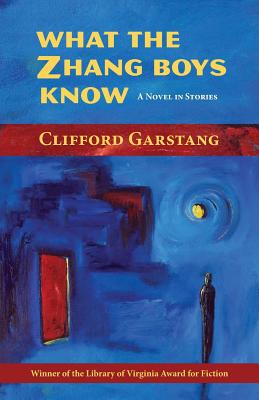
Review & Giveaway: What the Zhang Boys Know, by Clifford Garstang

What the Zhang Boys Know is, as the subtitle suggests, a novel of stories: more than ten interlinked short stories that tell the story Nanking Mansion, an up-scale condo building in a less-than-upscale neighborhood of Washington, D.C. The residents of the building--a lawyer, a painter, a sculptor, a young couple, a widower and his two boys--are generally unhappy with the neighborhood, living on the forefront of gentrification as they do.

But they are also unhappy with their lots: a painter who pines for his lover and whose work is not popular; a widower who struggles to cope with his two young boys (the Zhang boys) in the wake of his wife's early death; a young woman who is no longer happy with her long-term boyfriend but does not know how to leave him; a recent divorcee who cannot pay her mortgage, let alone feed herself. In each story, we are treated to a different narrator, getting a glimpse further into a life that was mere backdrop in the stories preceding. In this way, Clifford Garstang reveals the inner workings of the residents of the Nanking Mansion, at once making us know and not know the characters we encounter.

Though there are a lot of characters here -- nearly a dozen narrators and even more supporting roles -- the ways in which Garstang brings them neatly to the forefront and then sets them back again keeps them from ever becoming burdensome. Instead, they are what keep the stor(y/ies) engaging, as characters re-emerge in new lights and from new perspectives. The resulting collection of their tales is at once delightful and haunting, giving readers insight into the myriad lives that can live in one building, so close together and yet so distinct from one another.

---

Thanks to the publisher and TLC Book Tours, I am able to offer one copy of this title as a giveaway. To enter, simply leave a comment below. +1 for followers, +1 for sharing this giveaway on Facebook or Twitter. Giveaway closes Monday, Nov 5 and I will announce the winner on Tuesday, Nov 6.

---

Thoughts from other bookworms (via TLC Book Tours)

---

Note: Thanks to the publisher and TLC Book Tours for the review copy.
What the Zhang Boys Know | Clifford Garstang | Press 53 | October 2012 | 218 pages | Buy from an independent near you


Book Tour: Joe DiMaggio: The Long Vigil, by Jerome Charyn

I'm going to be up front about this: I did not finish Joe DiMaggio. I meant to. Really. I just couldn't get into it. Which is not to say that the book itself is not a good one. It's incredibly well-researched, and Jerome Charyn is a skilled writer and biographer. Rather than simply regurgitating well-known (or even little-known) facts, Charyn inserts his own take on events where appropriate. He draws on myriad sources, quoting heavily when necessary and breezing through details when fitting. The book itself, part of Yale University Press' Icons of America series, is short, topping out at merely 146 pages, and thoughtfully organized, with sections dedicated to his pre-career days, his career, and a lengthy passage on his post-baseball days.

It was the post-baseball days that lost me. Biography is a genre of which I'd like to read more, and baseball is a subject about which I wish I knew more, so the combination struck me as a good candidate. Perhaps it was too far outside of my comfort zone to really strike a chord with me; I'm sure a baseball enthusiast would be more engrossed. Or a biography enthusiast. All in all, Joe DiMaggio is a short, concise biography that is sure to appeal to a certain audience; despite my best efforts, I found that I was not that audience. I'm looking forward to reading more of Charyn's work - it just won't be a baseball book.

Looking for more? Watch:


---

Thoughts from other bookworms:

Tribute Books Reviews
Stiletto Storytime
Reading Between the Lines
... and a whole host of others from the Tribute Books Blog Tour

---

More Jerome Charyn at his website, on Twitter, and on Facebook.

---

Many thanks to Nicole at Tribute Books for inviting me to participate in this tour and providing a copy of the book for review.