Showing posts with label cookbook. Show all posts

"All the Leftovers" Bone Broth + Bare Bones Broth Cookbook

Bone broth has slowly become one of my very favorite kitchen routines: it's an efficient use of food leftovers and scraps for those of us who don't live in a place that lends itself to compost; it's cheap; it makes the house smell divine; and it leaves me with a near-constant supply of hearty, homemade, smooth, velvety stock for any sauce, soup, stew, or other liquid recipe. My recipe (such as it is) is included below).

It sounds silly, perhaps, but the difference between store-bought broth, store-bought stock and homemade is simply astounding; as for the difference between this and Bouillon, well... they might as well be considered different food groups. 

But now I'm generating broth at a rate that far exceeds my current consumption of broth-based dishes... and so I was delighted to stumble upon The Bare Bones Broth Cookbook: 125 Gut-Friendly Recipes to Heal, Strengthen and Nourish the Body at the library recently. Though the book includes recipes for variations on the broth itself, I'm choosing to skip over those in favor of my own freezer-bag version (it seems silly to plan and purchase specific ingredients to make stock, though I suppose the how-tos here could be useful to someone who prefers more specifics than outlined below). With recipes for everything from breakfast to dinner, I'm excited to experiment with some new variations on traditional plates, learn how to incorporate broths into dishes I might otherwise not have, and try new things altogether (Coconut and Lime Sipping Broth? Rosemary and Garlic sipping broth?).

Bonus: Katherine and Ryan Harvey, authors of The Bare Bones Broth Cookbook, sell Bare Bones Broth (though really, please, make your own--it's so easy!) and have a blog featuring many recipes from their cookbook.

---

Cheap, Easy, Effective Bone Broth: No Special Grocery Lists Necessary


The concept is simple, really. I start with a brown paper shopping bag and a spot in the freezer (that latter part is often the hardest for me...). As I cook other meals, I keep any and all vegetable ends and meat bones and add them to the bag. This might include:


  • the bones from any bone-in steak or pork meal
  • the carcass from a roast chicken (or leftover leg bones if you're just having bone-in legs)
  • garlic and onion peels
  • the ends of vegetables you don't chop up into your main dish (tops of carrots, roots of celery, ends of zucchini, ends & skins of onions)
  • the inevitable leftover herb stems you have after you buy thyme, rosemary or other aromatics for just one recipe and find that the bunch at the grocery store is definitely too large and is going to go bad before you remember to use it all up
  • any vegetable you've got hanging around that is at the end of its life but you know you won't use or eat before it goes bad
I do recommend avoiding:

  • potato skins, unless they are really, really well scrubbed in advance (you don't want dirt in your food, do you?)
  • similarly, any sandy or possibly dirty vegetable that hasn't been properly and thoroughly scrubbed down
  • leafy vegetables (spinach, kale, chard, Brussels sprouts, etc.), as these will just turn the stock bitter as they cook and add little to no appetizing flavor
  • fish parts, unless you have enough to make an entire batch of fish stock (bones, shrimp shells, etc.)
Assuming you're using a standard paper shopping bag, when the bag's about 1/4 way full, toss all of the contents into a slow cooker, fill with cold water, and add 1/4 cup of apple cider vinegar. (I personally do not add salt to mine, because I prefer an unsalted stock in case I choose to use it for reductions or long-simmering sauces. But you could salt it at this step if you prefer.)

Cook for 12-24 hours (this is the part where your house smells amazing). Remove the liner from the slow cooker and let cool to room temperature. Strain through a fine mesh strainer into storage containers of your choosing.* Refrigerate for 2-3 hours, just long enough that the fat cap floats the top and solidifies, so it can easily be removed with a spoon and tossed. After tossing the excess fat, the stock will store 4-5 days in the fridge or a few months in the freezer. [Stocks made with fattier meats/bones, like steak or pork, will have a thicker fat cap than stocks made with lean meats, like chicken breasts, or just veggies, which may not need this step at all.]

*We order from the local Vietnamese restaurant entirely too often, so I use leftover pho containers for this task (they hold exactly 3.5 cups of liquid). When storing in the fridge, I also use leftover pasta sauce jars (I try not to freeze the glass jars though, as they make break as the liquid expands). Every few batches of broth, I fill ice cube trays with the liquid to freeze for instances when I want just a splash or two of stock instead of an entire container.

Cookbooks for Newlyweds (and really, everyone else too)

I wrote a thing for MarthaStewartWeddings.com on cookbooks for newlyweds...


...what would you add to the list?


Book Review & Interview: The Food Lab, by J. Kenji Lopez-Alt

I just realized that despite my gushing over this book, I failed to post the review and interview here that I did for Shelf Awareness for Readers. So, without further ado, a great many words on what I will call the best cookbook of 2015 (and the first cookbook I've ever sat down and read cover-to-cover).


This review and interview originally ran in Shelf Awareness' Maximum Shelf on August 26, 2015.

Rosemary Parmesan Cupcakes: Recipe & Review (Sweet, Savory, and Sometimes Boozy Cupcakes)

parmesan rosemary cupcakes with lemon zest frosting from sweet, savory, and sometimes boozy cupcakes cookbook

Today's my dad's birthday (happy birthday Dad!)--and also my sister's birthday (happy birthday Ashley!)--and also my cousin's birthday (happy birthday David!). What better excuse to break out the cupcake this new cupcake cookbook (sent by the publisher for review--and what better way to review a cookbook than to, I don't know, cook from it?)?

We're not a big dessert family, so I opted for one of the savory options from Sweet, Savory, and Sometimes Boozy Cupcakes: Rosemary Parmesan Cupcakes + Lemon Zest Frosting.

#BEA15: By the (Cook)books

One last round-up of BEA goodies for those, like me, who believe cookbooks are special part of the publishing world. Because of production costs, cookbook galleys can be limited, so BEA's a great opportunity to connect with cookbook publishers and get a sneak peek of what's coming up:


Crossroads (Artisan, October 2015): I'm as surprised as the rest of you that this vegan cookbook caught my eye, but the publicist promises it's divine--and the brief glimpse I got supports his claims.

The Lost Recipes of Prohibition (The Countryman Press, October 2015): HOW COULD I NOT LOVE THIS.

Sweet, Savory (and sometimes Boozy) Cupcakes (The Countryman Press, August 2015): See above.

Sweet Envy (The Countryman Press, October 2015): Super fancy, super simple. My kind of baking.

The Food Lab (Knopf, September 2015): This looks to be the bible of all cookbooks coming out this year; in-depth coverage to come in Shelf Awareness.

Hartwood (Artisan, October 2015): One breathtaking cookbook (in a world of breathtaking cookbooks), exploring food from the Yucatan (which I'll fully admit to knowing little about).

Making Dough (Quirk, November 2015): Back to basics with the quirkiest of publishers--dough! This is a weak spot in my own cooking repertoire, so I'm intrigued.

The Up South Cookbook (The Countryman Press, October 2015): Southern food, Brooklyn-style.

As with other books acquired at BEA, I'll be covering these closer to publication date, so stay tuned for more depth on each. 

Book Review: A Mouthful of Stars, by Kim Sunee

Originally published in Shelf Awareness for Readers. Reprinted here with permission. If you don't already receive it, sign up here to receive a bi-weekly dose of readerly goodness in your inbox.

In her foreword, Frances Mayes (traveler and author of Under the Tuscan Sun) writes that chef and food writer Kim Sunée (Trail of Crumbs) had gone on more adventures by the age of 30 than most have in an entire lifetime. Consider: Sunée was born in South Korea before being adopted and raised in New Orleans; she then traveled to Sweden and spent 10 years in France. This international background is reflected in Sunée's cookbook, A Mouthful of Stars, which Mayes calls "astonishing" proof of Sunée's aim to "cook as she lives, passionately and expansively."

This passion could not shine through any more brightly in Sunée's colorful, sometimes whimsical cookbook, which compiles reflections from her travels with recipes from places that have played a strong role in her growth as a chef: Seoul, North Africa, Provence, Paris, Sweden, the Southern U.S. and Tuscany. Each recipe here is based on the traditional dishes of these delectable cuisines, such as Pan-Fried Peppers with Coconut and Tamarind (India), Provençal Beef Stew, Spicy Fried Chicken (American South) and Swedish Beet and Apple Salad. The recipes are simple and easy to follow, though home cooks with less experience in the kitchen may miss introductory information like total preparation time and required equipment, which is not included. Details aside, however, lovers of food or travel or both will likely delight in this diverse collection of dishes (complemented by Leela Cyd's stunning photographs) and Sunée's travel anecdotes.

---


A copy of this title was provided by the publisher for review.
A Mouthful of Stars | Kim Sunee, foreword by Frances Mayes | Andrews McMeel | Hardcover | May 2014

Cooking with Joy: Coq Au Vin

Let's me start with this warning: I am not a chef. Unlike my husband, I cannot look at a row of ingredients and just magically know what to do with them. I am not magic. I can, however, follow directions - hence my love of cookbooks.

And because cookbooks are books to, and because I get to determine what I want to write about (that's the beauty of writing for myself), I decided to start documenting my kitchen forays.

Where better to start than with The Joy of Cooking? I actually wrote a research paper on the cookbook. Written by Irma Rombauer, Joy of Cooking was the first cookbook to try to make cooking accessible. Think of that blond bimbo you see on Food Network when you accidentally turn on Semi-Homemade with Sandre Lee. Yep, Rombauer was the Sandra Lee of her time, but I'm not talking about looks. No, instead, Rombauer looked to pre-made ingredients - like canned soup - for her recipes. Simplify, simplify, simplify. I like that.

Accompanying these recipes, of course, is the narrative that fans of Joy are so familiar with. Or are we? In fact, the narrative bits (and the recipes, too, for that matter) from one edition to the next are vastly different, depending on which editor's red pen and which family member's oversight the edition was subject to. So don't assume that your 75th anniversary edition (which is the one I have) is the same as your mother's 1960s edition. It's not.

Ok, now that I've gotten that off my chest, I'll turn to coq au vin. Cock in wine. Who doesn't love that? Essentially, this is browned chicken, cooked to doneness in a red wine soup of sorts, and then the red wine soup is reduced to a gooey red wine sauce with mushrooms that gets poured over the chicken. And if you're like me and you love little tiny pasta bits, you probably would pour it over chicken on top of cous cous. Look how simple!


Step 1: Pour red wine. This will ultimately
come in handy for the cooking parts, too.


Step 2: Brown those chicken parts. In bacon grease.

Step 3: Remove chicks and brown veggies.
We used breasts, which meant adding
oil here, but if you used thighs or
parts with skin, you should be ok.
You can always add more bacon, too.


Step 4: Add the saucey bits.
Then add chicken bits and bacon bits.
Simmer until chicken bits are cooked through.

Step 5: Meantime, brown some mushrooms.
Save that mushroom juice.

Step 6 (not pictured): Remove chicken bits.
Add mushroom and precious mushroom juice to pot.
Reduce saucey bits until thick.


Step 7: Place chicks on a lovely bed of cous cous.
Pour sauce over chicks.
Eat! Enjoy!
And also drink more wine.

Tada! I made coq au vin, and I didn't even burn anything. I'd always thought of this as an extremely complex dish (When my dad makes it, he lights things on fire. On purpose.), but thanks to good ol' Irma and a solid Le Creuset dutch oven, I managed to pull it off. Speaking of which, that Le Creuset stuff is speeeeeensivo, but totally worth it. Cleaning up was a breeze.

September is for Slow Cooking

The weather is steadily drifting fall-wards around these parts, and I'm turning my full attention to fall cooking: roast chickens, hearty salads, and lots of apple-y themed baked goods. With only a small kitchen and no oven this fall, however, I'm spending more and more time with the slow cooker--which of course meant more time searching for slow cooker recipes. Two new cookbooks on NetGalley caught my eye, both challenging the standard "slow-cookers-are-for-cold-weather" assumptions:

 Year-Round Slow Cooker: 100 Favorite Recipes for Every Season, by Dina Cheney (Taunton Press): Dina Cheney has worked to combat the common myths of the slow cooker: that they are for winter meals, and/or that they only turn out goopy, mushy, watery dishes. While both of those things can be true--who doesn't love a goopy stew in the winter, after all?--she argues that there is so much more the slow cooker, and the 100 recipes here back her up. Level of effort ranges from easy (chop, put in slow cooker, return to meal in 8-10 hours) to more complicated (with stovetop browning, mixed ingredients, temperature changes during cooking). Even the more complicated dishes, though, are straightforward and easy to follow, and the extra steps are absolutely worth the extra flavor. I've made three meals from this book so far, and with the recipes broken out by season (based on both seasonal appropriateness, because no one wants to eat beef stew in July, and seasonal ingredients), I don't plan to stop any time soon.

365 Slow Cooker Suppers, by Stephanie O'Dea (Houghton Mifflin Harcourt): Stephanie O'Dea runs the popular blog A Year of Slow Cooking, and this book is a collection of her latest and greatest. Where Cheney's recipes aim to re-invent the slow cooker, O'Dea stays more within the realm of the "fix-it-and-forget-it" recipes. This is not necessarily a bad thing, however, as some of these recipes result in a stunning amount of flavor with a shockingly little amount of work. Take, for example, 2-Packet Chicken, which calls for frozen chicken pieces, 1 packet of taco seasoning, 1 packet of ranch dressing seasoning, and 1 can of tomatoes, cooked on low for 8 hours. It doesn't get much simpler than that, and while most of the recipes in 365 Slow Cooker Suppers are not quite that simple, this recipe gets at the heart of O'Dea's mission (as a person who owns no less than 15 slow cookers herself): simple, easy-to-prepare dinners that can fit into the lives and households of very, very busy people.

The verdict: 365 Slow Cooker Suppers is a traditional, well-planned collection of recipes for the worker-bee in all of us. They call for very little potching (I broke out the food processor and did the "chopping" for five recipes in one afternoon, pre-bagging all of the ingredients in the freezer for later meals), and most cook on low for 7+ hours, meaning those of us that leave the house for a full workday can turn the slow-cooker on in the morning and come home to dinner (not to mention wonderful aromas). Year-Round Slow Cooker takes the slow cooker one step further, challenging readers to think of the slow cooker not just as the solution for fix-it-and-forget-it meals, but as a tool that can result in complex, flavorful dishes. Unfortunately, these complex flavors often come from pre-browning, roasting, toasting, and similar, and many of the recipes cook for under 7 hours, relegating them to weekend dinners for anyone with a 9-to-5. Combined, though, these two cookbooks present interesting new ideas and recipes for what is, for many, a well-loved but oft-discounted kitchen gadget (and would make great accompaniments for anyone gifting a slow cooker these days).

---

Thank you to the publishers for providing e-galleys of both cookbooks for review.
Year-Round Slow Cooker | Dina Cheney | Taunton Press | January 2013 | Paperback | 224 pages
365 Slow Cooker Suppers | Stephanie O'Dea | Houghton Mifflin Harcourt | September 2013 | Paperback | 336 pages

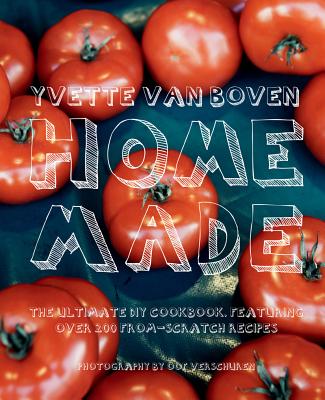
Cookbook Review + Recipe: Home Made, by Yvette bon Boven

There are a few things that, without fail, can make a bad day just a little bit better. Fresh flowers (hint, hint). Elvis Presley. And, of course, baked goods.

So when last week proved to be anything but my week, I came home and baked. I didn't have a proper baking-only cookbook at the time (I've since acquired two), so I flipped through cookbooks I already owned to find something to satisfy my baking urge. I landed on Home Made, a cookbook I reviewed last fall for Shelf Awareness' cookbook issue.

The beauty of Home Made lies in its simplicity; these are not recipes that incorporate the latest food trends, or fancy cookware, or even multiple ingredients. This is simple, down-to-earth cooking of the home made variety. It's like eating Grandma's food, only with the pride of knowing you made it yourself.

The Rosemary Shortbreads contained herein are no exception. The recipe that follows is my own modified version (for Lemon Rosemary Shortbreads), based on the original recipe from Home Made. They're simple, low-effort, and crumbly delicious.


Ingredients:
1.25 sticks of butter
1/4 cup sugar
1 tbsp honey
1.5 cups flour
1 tsp baking soda
2 pinches of salt (I prefer Kosher)
2 tbsp finely chopped rosemary
1-2 tbsp lemon juice
Zest of 1 lemon

Preheat the oven to 350 degrees Farenheit. Grease a cake pan, pie pan, springform pan, or any other pan that has a large lip and is roughly 25 square inches. I used a 7x4 Pyrex dish and it worked wonderfully.

Beat the butter, sugar and honey together with a stand mixer, hand mixer, or (god forbid) a whisk. (Note: if you are using a whisk, that part where I said this is easy and low-effort was a lie.) Stir in (or beat at low speed) all other ingredients except the lemon juice and zest.

Taste. (Don't worry, there are no raw eggs, so it's perfectly safe to eat this batter raw.) Add lemon juice until the dough is a thick consistency (think of something that can be easily rolled into a ball). Don't overdo it - you don't want a sticky mess. Add lemon zest to taste.

Dump (not pour or glop -- the verb choice is intentional here to better illustrate what kind of dough you're looking for) the mixture into your greased pan, and press down into the corners to form an even layer across the bottom. Prick with a fork throughout. Cut into cookie-size pieces before baking.

Bake for 15-20 minutes, until edges are a light golden brown. Leave to cool in the pan for 10 minutes, then re-cut along the lines you made in the raw dough. Remove cookies gently (I warned you they were crumbly), cool completely on a wire rack.

Enjoy.

---

Home Made | Yvette van Boven | Stewart, Tabori and Chang | Hardcover | 432 pages | September 2011 | Buy from an independent near you

Julie and Julia


I picked up a copy of Julie and Julia about a year ago because it had this subtitle: 365 days, 524 recipes and 1 tiny apartment kitchen (the subtitle changed in later editions). And it was about a woman have a bit of a life crisis. In Queens. It was like it was made for me.


Then I didn't read it. Until the movie came out, and it skyrocketed to the front of everyone's reading lists, and suddenly I was victim to that classic faux-pas I love to hate on: reading a book because it was made into a movie...


And let me tell you, Powell's memoir is well worth the read, whatever your motivations. She is quick, witty and poignant, scattering her adventures in the kitchen-and in life-with enough life lessons to keep one's mind turning. Not to worry, however: her self-deprication and humor, combined with her refusal to wallow for too long in self pity, keeps it from turning into her own personal sob story.


This is not a me-me-me memoir, as so many are wont to be. Instead, it is an honest, laugh-out-loud (dear, instant messaging has ruined that turn of phrase, hasn't it?), touching and thought-provoking account of one woman's realization that her life is in shambles -- and her (relatively successful) attempt to change that.


What Powell has created in this process is an imagination of Julia Child - and it turns out to be just that, an imagination - and a lot of buttery French food. What she learns in the process is that life is what you make of it. And what she made of it was 524 recipes, a popular blog, and a great book.


Bottom line: Prepare to laugh, cry, and suddenly find yourself craving bone marrow and lobster at odd times of the night. Powell's writing is as delicious as one would imagine her food to be.

Julia Makes a Comeback (and on her birthday, no less)

The two books alternating between the number one bestselling spot on Amazon this week have been The Time Traveler's Wife and Mastering the Art of French Cooking. Coincidence that both are movie tie-ins? I think not. But to focus on Julia Child, as today is her birthday: does anyone else find it interesting that it was a movie based on a book about a cookbook that made the original book (the cookbook) a bestseller for the first time in its fifty-year history?

Granted, the cookbook is permanently engrained in the American psyche, having sold over a million copies - yes, you read right, one million copies - in its lifetime, but before the release of the Nora Ephron, Meryl Streep, Amy Adams power-trio, no one had heard of the memoir of Julie Powell and poor Julia Childs had never seen her name printed in that yearned-for #1 bestseller spot. Last year, Knopf (the publisher), sold approximately 25,000 copies of the classic cookbook; this year, the book has gone through four printings for the movie, three in the last week alone, adding another 225,000 copies to the book's lifetime sales. (Info from a Knopf release discussed in Friday's Shelf Awareness)

I used to despair that it took a movie to encourage people to read, but the more I think about it, the more I have decided that it doesn't matter what the motivation is. Just read. Anything at all. I haven't read Powell's original memoir yet, but I did pick up the old hardcover version on a bargain rack about a year ago, so once I unpack those books, it will move somewhere to the top of the stack. See? Even I'm influenced in my reading decisions by films and TV.

----

Post Script: Best Julia quote? "Life itself is the proper binge."